


Why Aerobic Septic Systems are a Game-Changer
Aerobic septic systems are revolutionizing how we handle wastewater. Unlike conventional systems, which rely on anaerobic bacteria, these systems use oxygen to break down waste more efficiently. This oxygen-rich environment improves the performance of aerobic bacteria, resulting in cleaner wastewater that’s safe for the environment.
Key Highlights:
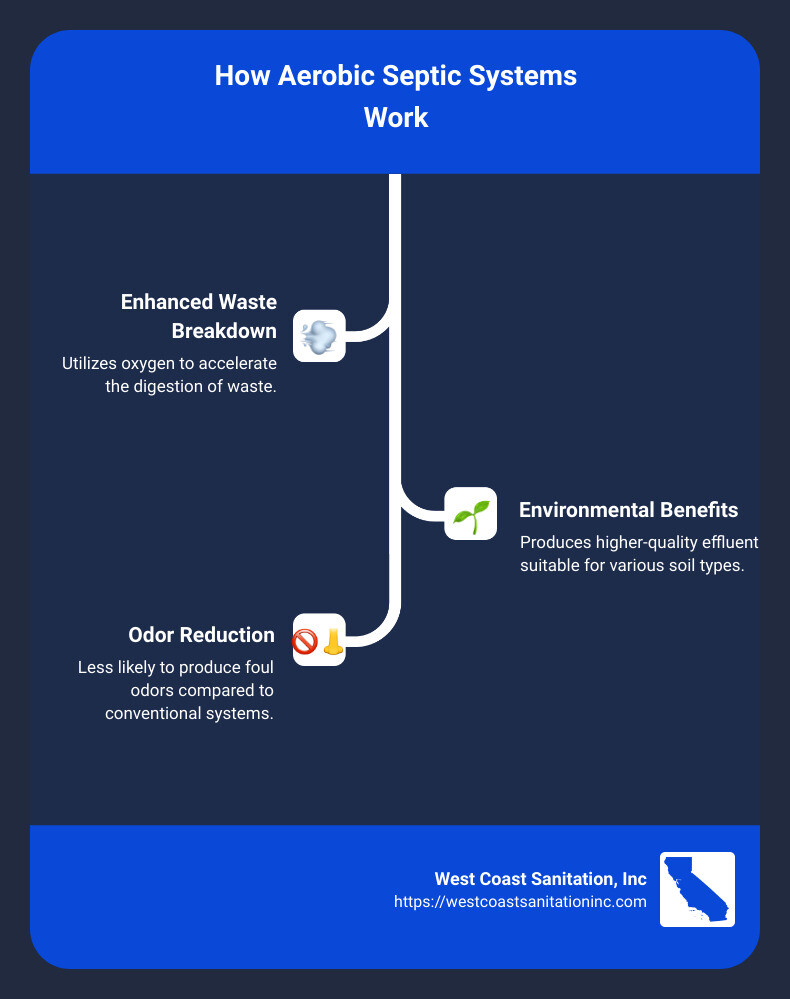
- Improved Waste Breakdown: Uses oxygen to accelerate the digestion of waste.
- Environmental Benefits: Produces higher-quality effluent suitable for various soil types.
- Odor Reduction: Less likely to produce foul odors compared to conventional systems.
For Southern California homeowners, especially those in the Inland Empire, switching to an aerobic septic system can solve recurring septic issues and improve overall system efficiency. West Coast Sanitation, Inc brings best reliability and advanced technology to ensure your septic system operates smoothly.
What Are Aerobic Septic Systems?
Aerobic septic systems are a type of wastewater treatment system that uses oxygen to break down waste more efficiently than traditional septic systems. These systems incorporate mechanical parts to create an oxygen-rich environment, enabling aerobic bacteria to thrive and treat wastewater effectively.
Definition and Key Components
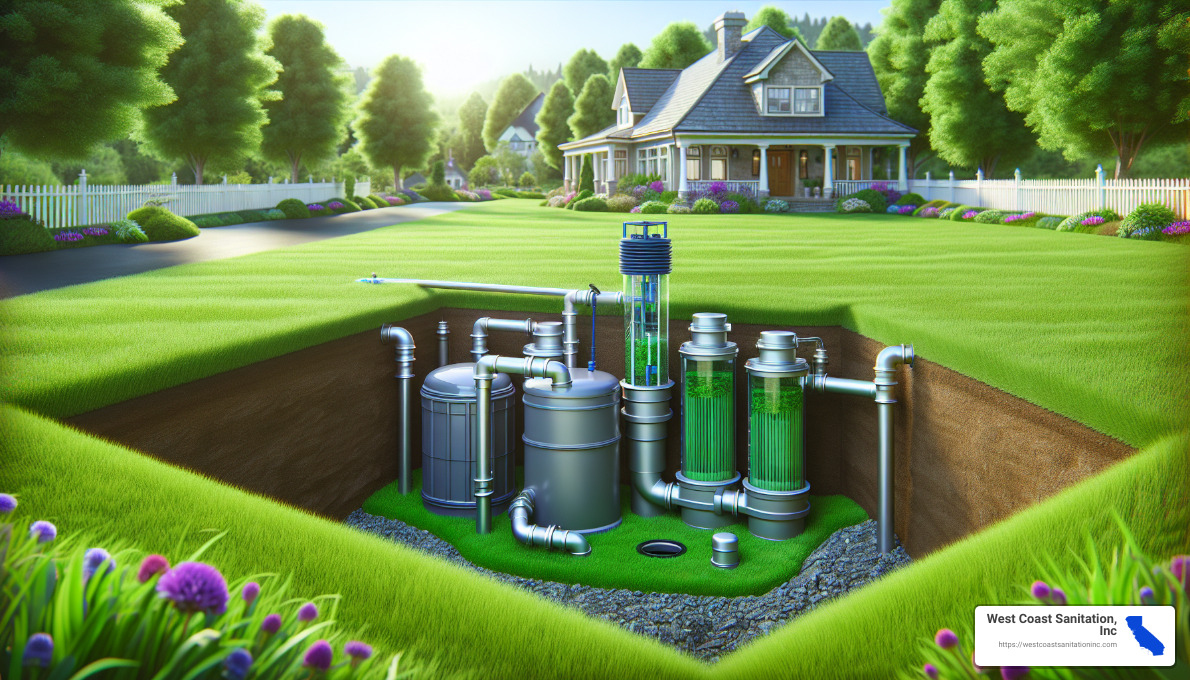
Aerobic septic systems consist of several key components:
- Trash Tank: This initial stage separates solids from the liquid wastewater.
- Aerobic Treatment Unit (ATU): Here, compressed air bubbles are forced through the wastewater, creating an oxygen-rich environment.
- Disinfection Chamber: The treated water undergoes further disinfection, making it safe for surface dispersal.
- Pump Tank: Finally, the treated effluent is transported to a surface sprinkler irrigation system or a drip irrigation field.
Aerobic Bacteria: The Star Players
In these systems, aerobic bacteria play a crucial role. Unlike anaerobic bacteria that thrive in oxygen-free environments, aerobic bacteria need oxygen to survive and work. These bacteria are highly efficient at breaking down organic waste, making the treatment process faster and more effective.
Maintaining a healthy balance of these bacteria is essential. Avoid pouring harmful chemicals down the drain to ensure these beneficial microbes can do their job.
Mechanical Parts and Oxygen-Rich Environment
The mechanical parts in an aerobic septic system include:
- Aerators: Devices that circulate oxygen within the treatment unit.
- Pumps: Used to move wastewater through the system.
- Spray Heads: Disperse treated wastewater into the absorption field.
These components work together to create an oxygen-rich environment, which is vital for the efficient functioning of aerobic bacteria.
Benefits of Oxygen in Treatment
The infusion of oxygen not only speeds up the digestion of waste but also improves the overall quality of the treated effluent. This makes aerobic septic systems particularly suitable for areas with poor soil conditions or high water tables.
By using aerobic septic systems, homeowners can ensure a more efficient and environmentally friendly wastewater treatment process. This system’s ability to produce high-quality effluent and its adaptability to various soil types make it a popular choice for many.
Benefits of Aerobic Septic Systems
Aerobic septic systems come with a host of benefits that make them a superior choice for wastewater treatment. Let’s break down why these systems are so advantageous.
High-Quality Effluent
One of the standout benefits of aerobic septic systems is the production of high-quality effluent. The oxygen-rich environment allows aerobic bacteria to break down waste more efficiently. This results in cleaner, clearer effluent that is safer for the environment. High-quality effluent is especially crucial in areas close to water bodies, where contamination can be a significant concern.
Suitable for Poor Soil
Traditional septic systems often struggle in areas with poor soil conditions. Aerobic systems excel here. They can be installed in soils that are too dense or too shallow for conventional systems. This makes them ideal for challenging lot spaces and restrictive topographies. Homeowners with less-than-ideal soil conditions can still achieve effective wastewater treatment with an aerobic system.
Water Conservation
Aerobic septic systems are great for water conservation. Many states allow the treated effluent to be used for irrigation. This not only conserves water but also provides a dual-purpose solution for wastewater. Imagine watering your garden with treated effluent—it’s a win-win for both your plants and the environment.
Smaller Leach Field
Another advantage is the smaller leach field requirement. Because the effluent is treated to a higher standard, the drain field footprint can be significantly reduced. This is particularly beneficial for properties with limited space. A smaller leach field also means less land disruption and potentially lower installation costs.
Odor Reduction
One of the less talked about but equally important benefits is odor reduction. Aerobic treatment is so effective at reducing odors that it is the preferred method for odor control in various applications, including farms. A properly functioning aerobic system will produce effluent that smells musty but not like sewage. This makes it a more pleasant option for homeowners and their neighbors.
By choosing an aerobic septic system, you’re not just opting for a wastewater treatment solution; you’re investing in a system that offers high-quality effluent, adaptability to poor soil, water conservation, a smaller leach field, and odor reduction. These benefits make aerobic systems a smart and sustainable choice for modern homes.
How Aerobic Septic Systems Work
Understanding how aerobic septic systems work can help you appreciate their efficiency and effectiveness. Let’s break down each stage of the process in simple terms.
Pre-Treatment Stage
The first stop for wastewater is the trash tank. Here, solids settle to the bottom, forming sludge, while lighter materials like oils float to the top as scum. This separation is crucial because it ensures that only liquid effluent moves on to the next stage.
Aeration Stage
Next, the liquid effluent enters the aerobic treatment unit (ATU). This is where the magic happens. Air is pumped into the tank, creating an oxygen-rich environment. Aerobic bacteria thrive in this setting, breaking down organic matter much faster and more efficiently than their anaerobic counterparts. It’s like having a team of tiny, hardworking microbes cleaning up the wastewater.
Settling Stage
After aeration, the wastewater moves to a settling chamber. Here, any remaining solids settle out of the liquid. This stage ensures that the effluent is as clear as possible before it moves on to disinfection. Think of it as a final polish before the water gets treated further.
Disinfecting Stage
In this stage, the effluent is treated to kill any remaining pathogens. This can be done using chlorine, bleach, or even ultraviolet light. The goal is to make the water safe for its final destination, whether that’s a sprinkler system or a drip irrigation field.
Pump Tank
The treated and disinfected effluent then flows into the pump tank. This tank has a series of floats that monitor the water level. When the effluent reaches a certain level, the pump kicks in to disperse the water. If the water level gets too high, an alarm will notify you that maintenance is needed.
Absorption Field
Finally, the treated effluent is released into the absorption field. This can be through spray heads or drip irrigation. Since the water has undergone multiple levels of treatment, it’s safe to be dispersed onto your lawn or garden. The soil in the absorption field further filters the water, ensuring it’s absorbed safely into the ground.
By following these stages—pre-treatment, aeration, settling, disinfection, and absorption—aerobic septic systems provide a comprehensive and efficient way to treat wastewater. The result is high-quality effluent that is safe for the environment and beneficial for your property.
Installation and Maintenance
Installation Costs
Installing an aerobic septic system can be a significant investment. Costs typically range from $20,000 to $40,000, depending on the system type and location. For example, a Type 2 system using an Aeration Treatment Unit (ATU) can cost between $25,000 and $35,000. If you opt for additional features like a subsurface drip line or an Evapotranspiration bed, expect to pay towards the higher end of the range. Design services usually add another $2,000 to $2,500 to the total cost.
Maintenance Requirements
Maintaining an aerobic septic system is not optional; it’s essential for its longevity and efficiency. Regular maintenance includes:
- Checking system access ports: Usually located within 10 feet of your home.
- Monitoring alarms: Most systems have an alarm light to signal issues.
- Adding chlorine: Essential for disinfecting treated wastewater.
- Inspecting spray fields: Ensure spray heads are functioning correctly.
- Keeping maintenance records: Document all services and tests performed.
Certified Installer
A certified installer must handle the initial installation of your aerobic septic system. They will also perform maintenance for the first two years. After this period, the homeowner takes over these responsibilities. Certified installers ensure that the system complies with local regulations and functions optimally from the start.
Homeowner Responsibilities
After the initial two years, homeowners must take over the maintenance duties. This includes:
- Adding chlorine: Follow manufacturer instructions for frequency and dosages.
- Monitoring system performance: Check alarms and spray fields regularly.
- Keeping records: Document all maintenance activities and test results.
Sludge Removal
Regular sludge removal is crucial for preventing system failure. At least every six months:
- Measure and record the depth of sludge in the trash tank.
- Measure and record the volume of sludge in the aerobic treatment unit.
Proper sludge management ensures that your system continues to function efficiently and safely.
Chlorine Addition
Adding chlorine to your treatment tank is a daily responsibility. Use only septic-friendly chlorine tablets, not pool chlorine, to avoid damaging your system. Chlorine must be stored in a cool, dry, and ventilated area, away from gas and electrical sources.
By understanding the installation and maintenance requirements, you can ensure your aerobic septic system remains efficient and effective for years to come.
Disadvantages of Aerobic Septic Systems
While aerobic septic systems offer many benefits, they come with some drawbacks that you should consider before installation. Here’s a look at the main disadvantages:
Higher Cost
Aerobic septic systems are generally more expensive than traditional systems. Installation costs can range from $20,000 to $40,000, depending on the type and location. This includes equipment, design services, and additional features like subsurface drip lines or Evapotranspiration beds. These higher initial costs can be a significant barrier for many homeowners.
Frequent Maintenance
Regular maintenance is not optional with aerobic septic systems; it’s a necessity. Homeowners must:
- Check system access ports regularly.
- Monitor alarms to catch issues early.
- Add chlorine to disinfect treated wastewater.
- Inspect spray fields to ensure proper functioning.
Maintenance activities must be done at least every six months to keep the system running smoothly. Neglecting these tasks can lead to contamination and costly repairs.
Power Usage
Unlike conventional septic systems, aerobic systems require a constant power supply to operate their mechanical parts, such as air pumps and aerators. This means higher electricity bills and the risk of system failure during power outages. For instance, a power outage could halt the oxygenation process, leading to inefficient wastewater treatment.
Ventilation Needs
Aerobic systems can produce unpleasant odors if not vented properly. Proper ventilation is essential to prevent these smells from becoming a nuisance. If the system is not correctly vented, it can also lead to the buildup of harmful gases like hydrogen sulfide, which can be dangerous if inhaled.
Insulation in Cold Climates
In regions with cold weather, aerobic septic systems need insulation to function effectively. Cold temperatures can affect the efficiency of the aeration process, leading to incomplete treatment of wastewater. Insulating the system adds to the initial installation costs and requires ongoing maintenance to ensure the insulation remains effective.
By understanding these disadvantages, you can make a more informed decision about whether an aerobic septic system is right for you.
Next, we’ll answer some frequently asked questions about these systems to help you further understand their pros and cons.
Frequently Asked Questions about Aerobic Septic Systems
What are the disadvantages of an aerobic septic system?
Cost: Aerobic septic systems are generally more expensive to install than conventional systems. Installation costs can range from $20,000 to $40,000, depending on your location and the specific system features you need.
Maintenance: Regular maintenance is a must. You need to check system access ports, monitor alarms, add chlorine, and inspect spray fields at least every six months. Neglecting these tasks can lead to system failure and contamination.
Power Usage: These systems require a constant power supply to operate air pumps and aerators. This means higher electricity bills and the risk of system failure during power outages.
Ventilation Needs: Proper ventilation is essential to avoid unpleasant odors and the buildup of harmful gases like hydrogen sulfide. Improper ventilation can be a major issue.
Insulation in Cold Climates: In colder regions, aerobic systems need insulation to work effectively. Cold temperatures can disrupt the aeration process, leading to incomplete wastewater treatment. Insulating the system adds to both installation and maintenance costs.
Do aerobic septic systems need to be pumped?
Yes, aerobic septic systems need to be pumped, but the frequency can vary. The United States Environmental Protection Agency (EPA) recommends getting your residential septic tank inspected and pumped every three to five years for conventional systems. For aerobic systems, annual inspections and pumping are often recommended due to their complexity and the need for regular maintenance.
Always hire a licensed contractor for pumping and inspections to ensure the job is done correctly.
Can you flush toilet paper with an aerobic septic system?
Yes, you can flush toilet paper with an aerobic septic system, but it’s important to use high-quality, septic-safe toilet paper that breaks down easily when wet. Avoid flushing non-biodegradable materials like baby wipes, Q-tips, and sanitary products, as these can cause clogs and damage the system.
What is the life expectancy of an aerobic septic system?
The life expectancy of an aerobic septic system can vary, but with proper maintenance, they can last between 20 to 30 years. Some high-quality systems can even last beyond 40 years. The key factors affecting longevity include:
- Maintenance: Regular inspections, pumping, and proper use are crucial.
- Installation Quality: Proper installation by certified professionals ensures the system operates efficiently from the start.
- Usage: Limiting the use of harmful chemicals and non-biodegradable materials will extend the system’s life.
By following these guidelines, you can maximize the lifespan of your aerobic septic system.
Next, we’ll wrap up with a summary and provide contact information for West Coast Sanitation, Inc.
Conclusion
In summary, aerobic septic systems offer numerous benefits, including high-quality effluent treatment, suitability for poor soil conditions, and better water conservation. However, they also come with higher costs, frequent maintenance needs, and power usage requirements. Understanding these pros and cons can help you decide if an aerobic septic system is the right choice for your home.
Regular maintenance is crucial to keep your system functioning efficiently. This includes tasks like adding chlorine, inspecting spray fields, and pumping the system. Neglecting these tasks can lead to system failure and costly repairs.
At West Coast Sanitation, Inc., we are committed to providing reliable and professional services for all your septic system needs. From installation to maintenance, our certified experts ensure your system operates smoothly and efficiently.
If you have any questions or need assistance with your septic system, don’t hesitate to reach out to us. We are here to help you every step of the way.
For more information about our services or to request a quote, visit our Residential Septic System Installation page.
A well-maintained septic system is key to a healthy home and environment. Trust West Coast Sanitation, Inc. for all your septic system needs!