


Understanding the basic components of a septic system is crucial for anyone dealing with recurring septic issues. Think of a septic system as a mini wastewater treatment facility right in your backyard. It’s designed to handle all the wastewater from your home, and knowing the key parts can help you maintain it efficiently and prevent costly emergencies.
Here’s a quick look at the main components:
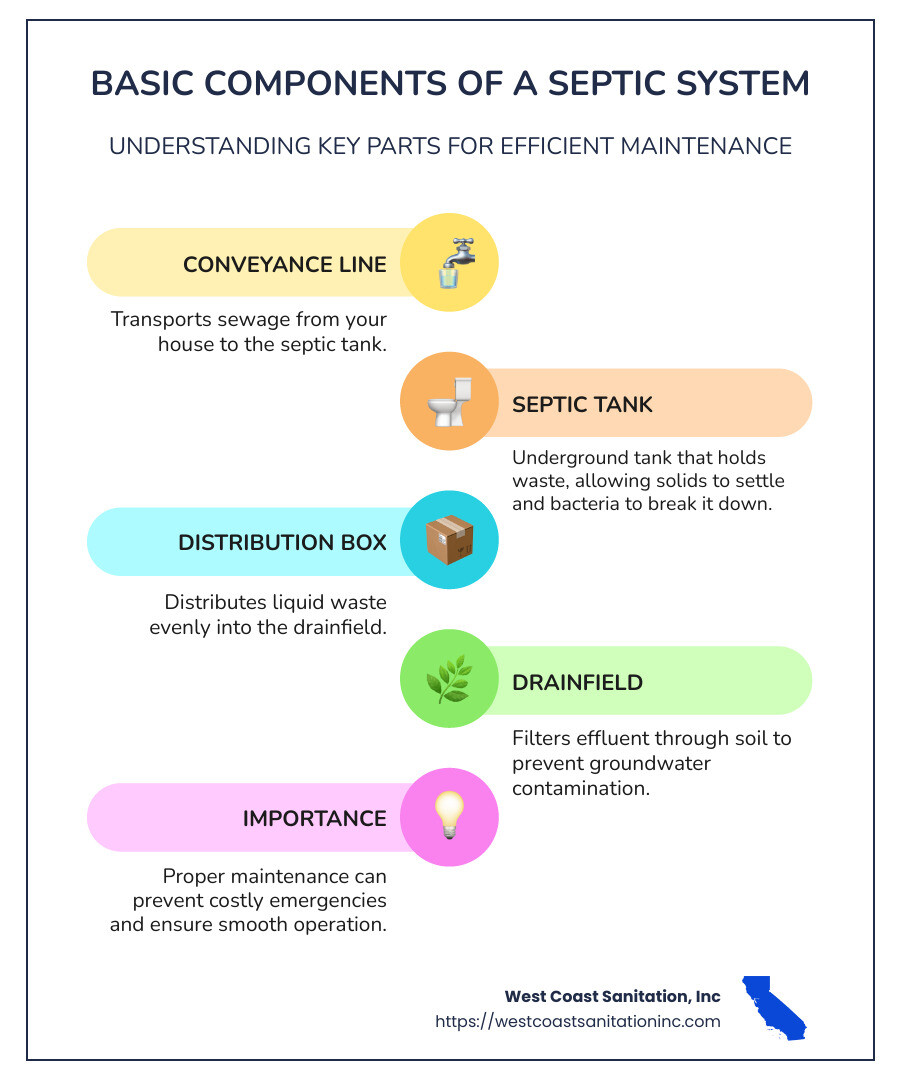
- Conveyance Line: This pipe moves the sewage from your house to the septic tank.
- Septic Tank: This underground tank holds the waste, allowing solids to settle and bacteria to break it down.
- Distribution Box: This part evenly distributes the liquid waste into the drainfield.
- Drainfield: Also known as the leach field, where effluent filters through the soil.
A septic system might not be something you think about every day. But for the 21% of American households using one, it’s vital. Proper understanding and maintenance can prevent soggy lawns, foul odors, and health hazards. Taking care of your system translates into smooth operation and could save you from a plumbing disaster in the future.
Basic Components of a Septic System
A septic system functions as a private wastewater treatment facility for your home, comprising four main components: the conveyance line, septic tank, distribution box, and drainfield. Each part is crucial in ensuring the safe and efficient treatment and disposal of household wastewater.
Conveyance Line
The conveyance line, also known as the primary drain line or sewer line, initiates the septic system process by transporting wastewater from your home to the septic tank. This line typically relies on gravity to move waste, but in certain situations, such as hilly terrain, a pump system may be required to assist in the wastewater’s journey.
Septic Tank
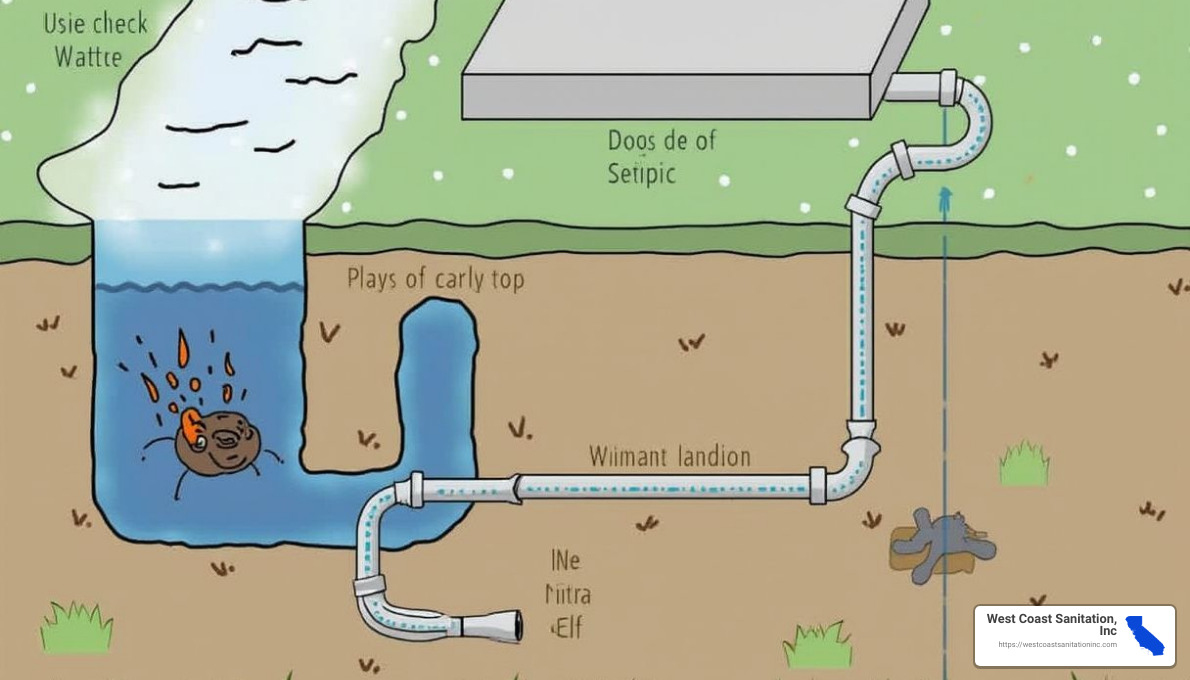
The septic tank is a buried, watertight container, typically constructed from concrete, fiberglass, or polyethylene. Its primary function is to separate solids from liquids in the wastewater. Within the tank, solids settle at the bottom, forming a sludge layer, while lighter materials like oils and grease float to the top, creating a scum layer. The middle layer, known as effluent, is mostly liquid and flows out to the next stage of the system. Anaerobic digestion occurs in the tank, where bacteria break down solids without oxygen, reducing the volume of sludge.
Distribution Box
The distribution box is a small yet essential component made from concrete or plastic. It receives effluent from the septic tank and evenly distributes it into multiple trenches in the drainfield. Equal distribution is vital to prevent overloading any single area of the drainfield, which could lead to system failure.
Drainfield
The drainfield, also known as the leachfield, is where the final treatment of wastewater occurs. It consists of a series of perforated pipes laid in gravel-filled trenches. As effluent flows through these pipes, it seeps into the surrounding soil. Here, natural processes like soil absorption and evaporation help remove remaining impurities. The soil acts as a filter, and microbes in the soil break down any remaining organic matter, protecting groundwater from contamination.

Understanding these basic components of a septic system helps homeowners maintain their systems effectively. Regular maintenance ensures that each part functions optimally, safeguarding both your home and the environment.
How a Septic System Works
Understanding how a septic system works can help you manage it better. Let’s break it down into simple steps.
Wastewater Flow
When you flush a toilet or run the sink, the wastewater flows from your home into the septic tank through the conveyance line. This process is usually driven by gravity, but sometimes a pump is needed, especially in hilly areas.
Separation of Solids and Liquids
Inside the septic tank, the wastewater undergoes a separation process. Solids settle at the bottom, forming a layer called sludge. Oils and lighter materials float to the top, creating a scum layer. The liquid in between, known as effluent, is what moves on to the next stage.
Soil Microbes
The effluent flows from the septic tank into the drainfield. Here, the real magic happens. The drainfield consists of perforated pipes laid in gravel trenches. As the effluent seeps through these pipes, it enters the surrounding soil, which acts as a natural filter.
Microbes in the soil play a crucial role. They break down any remaining organic matter in the effluent. This process is essential for cleaning the wastewater before it reaches the groundwater.
Groundwater Protection
One of the primary goals of a septic system is to protect the groundwater. As the effluent filters through the soil, harmful bacteria, viruses, and nutrients are removed. This ensures that the water returning to the environment is clean and safe.
By understanding how these processes work, you can appreciate the importance of each component in maintaining a healthy septic system. Proper maintenance and regular inspections can help prevent issues and ensure your system continues to protect your home and the environment effectively.
Maintenance Tips for Septic Systems
Keeping your septic system in top shape requires regular attention. Here are some simple tips to help maintain the basic components of a septic system.
Regular Pumping
Regular pumping is crucial. Most systems need pumping every 3-5 years, but check local guidelines and your system’s needs. Pumping removes the sludge and scum that build up in the septic tank. If not removed, these can overflow and cause blockages or damage to the drainfield.
Cleaning Conveyance Lines
The conveyance line is the path wastewater takes from your home to the septic tank. Keeping these lines clear is essential. Avoid pouring grease, oils, or chemicals down the drain, as these can clog pipes. Regular checks for leaks or blockages can prevent bigger issues.
Avoiding Large Objects
Be mindful of what goes down your drains. Only flush human waste and toilet paper. Avoid flushing items like baby wipes, feminine products, or cat litter. These can block pipes and lead to costly repairs. In the kitchen, scrape food scraps into the trash instead of using a garbage disposal, which can overload the system.
Inspecting Components
Regularly inspect all parts of your septic system. Check the septic tank, distribution box, and drainfield for signs of wear or damage. Look for pooling water, bad odors, or slow drains, which could indicate a problem. If you notice any issues, contact a professional for an inspection.
Maintaining your septic system is not just about protecting your home—it’s about safeguarding the environment too. By following these tips, you can ensure your system works efficiently and lasts longer.
Common Issues and Troubleshooting
Even with regular maintenance, septic systems can face issues. Understanding these problems helps in quick identification and resolution, minimizing damage and costs.
Blockages
Blockages are common and can occur in various parts of the system, including the conveyance line and septic tank. They often result from flushing inappropriate items like wipes or excessive grease. A blocked line can cause slow drainage and backups in the home. To tackle this, ensure only appropriate waste is flushed and consider having your lines inspected regularly.
Unequal Distribution
The distribution box is key in ensuring wastewater is evenly spread across the drainfield. If this box malfunctions, it can lead to unequal distribution, causing some areas to become overloaded while others remain unused. This can lead to drainfield failure. Regular inspection of the distribution box can prevent this issue.
Drainfield Failure
Your drainfield, or leachfield, is where the final treatment of wastewater occurs. Overloading it with too much water or solids can lead to failure. Signs of drainfield trouble include soggy patches in your yard or sewage odors. If you notice these, it may be time to consult a professional to assess the extent of the issue.
Backups
Backups occur when wastewater cannot flow through the system as intended. This can happen due to blockages or drainfield saturation. If you experience backups, it’s crucial to address them immediately to prevent health hazards and property damage. Regular pumping and avoiding excess water use can help prevent backups.
Flooding
Flooding can occur when the drainfield becomes saturated, often due to excessive water use or heavy rainfall. This can cause untreated sewage to surface, posing significant health risks. To prevent flooding, manage water use carefully and ensure proper drainage around your property.
By understanding these common issues and taking proactive measures, you can keep your septic system running smoothly. If problems persist, don’t hesitate to seek professional help.
Frequently Asked Questions about Septic Systems
What are the components of a septic system?
A septic system is made up of four key components: the conveyance line, septic tank, distribution box, and drainfield. Each part plays a vital role in managing and treating wastewater from your home.
- Conveyance Line: This is the primary sewer line that carries wastewater from your home to the septic tank. It generally works by gravity, but some systems use pumps, especially in hilly areas, to move the wastewater.
- Septic Tank: This is a buried container, typically made from concrete, fiberglass, or polyethylene. Inside the tank, solids settle to form a sludge layer at the bottom, while oils and grease create a scum layer on top. The liquid part, known as effluent, flows out to the next stage.
- Distribution Box: This component helps spread the effluent evenly into the drainfield. Made of concrete or plastic, it connects to multiple trenches, ensuring that the wastewater is distributed uniformly.
- Drainfield: Also known as a leachfield, this area consists of trenches filled with gravel and perforated pipes. It allows the effluent to seep into the soil, where natural processes further treat it. Proper soil absorption is crucial to prevent groundwater contamination.
What are the basics of septic tanks?
A septic tank is a watertight container, usually made of concrete, fiberglass, or polyethylene, buried underground. Its primary function is to separate solids from liquids in the wastewater. As wastewater enters the tank, solids settle at the bottom to form sludge, while lighter materials like oils rise to the top, forming a scum layer. The remaining liquid, or effluent, exits the tank for further treatment in the drainfield.
Anaerobic bacteria in the tank help break down the solids, but this process is not entirely efficient. Over time, sludge accumulates and needs to be pumped out regularly to keep the system functioning properly.
What are the components of a drain field?
The drainfield is a crucial part of the septic system, responsible for the final treatment of effluent. It consists of several components:
- Trenches: These are dug into the ground and filled with gravel. They help distribute the effluent across a wide area for effective absorption.
- Perforated Pipes: These pipes are laid within the trenches and allow the effluent to seep out into the surrounding soil.
- Gravel and Mesh: Gravel surrounds the pipes to support them and facilitate drainage. A mesh layer may be used to prevent soil from clogging the pipes.
- Dirt: Soil above the drainfield acts as a natural filter, removing harmful bacteria and nutrients from the effluent before it reaches groundwater.
By understanding these components and their roles, homeowners can better maintain their septic systems and avoid costly repairs. Next, we’ll explore how a septic system works in more detail.
Conclusion
Maintaining your septic system is crucial for its longevity and efficiency. Regular care can prevent costly repairs and ensure that your system functions smoothly for years. This involves routine inspections, pumping, and being mindful of what you flush or pour down the drain. Ignoring maintenance can lead to issues like blockages, backups, or even complete system failure.
At West Coast Sanitation, Inc, we pride ourselves on our local expertise and commitment to providing top-notch septic services. As a family-owned business in the Inland Empire of Southern California, we understand the unique challenges that homeowners in our area face. Our team uses the latest high-tech equipment to deliver high-quality, same-day service, ensuring your septic system receives the best care possible.
Whether you need installation, repair, or regular maintenance, our skilled professionals are ready to help. By choosing us, you’re partnering with a company that values your home’s health and safety as much as you do.
For more information on our services, visit our Septic Installation and Repair page. Let West Coast Sanitation, Inc be your trusted partner in maintaining a healthy septic system.