


Can I Plant My Vegetable Garden Near My Drainfield? In short, no—it’s not recommended to plant your vegetable garden directly on or right next to your septic drainfield. While the idea of using every bit of yard space is tempting, growing edible crops near a drainfield poses health risks. Contaminants from wastewater can seep into the soil and be taken up by plants, especially root vegetables, which are in direct contact with the soil.
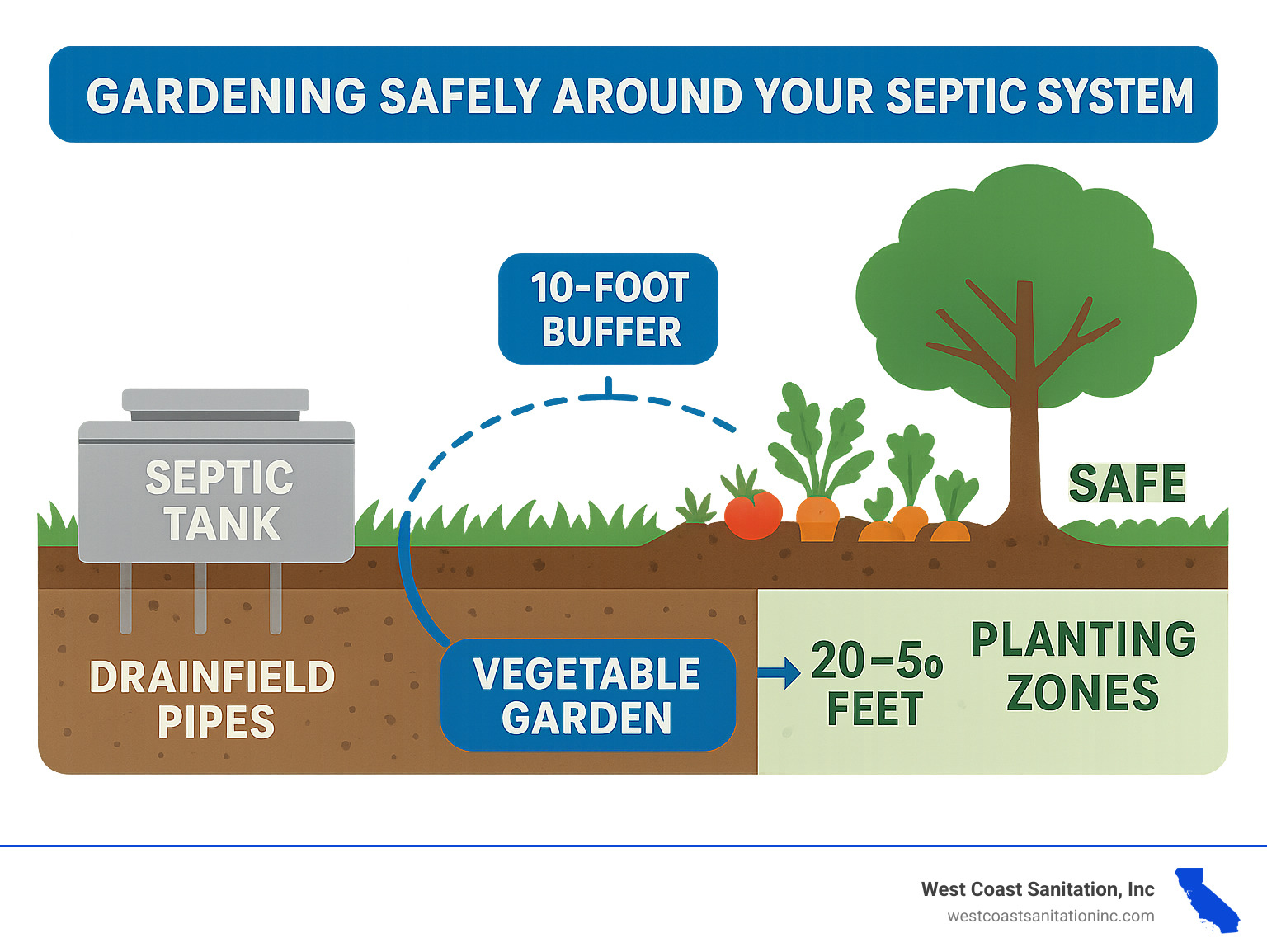
To minimize the risk of contamination, you should keep all edible crops at least 10 feet away from the edge of the drainfield. In some cases, a greater distance may be advised depending on your soil type, slope, and local health department guidelines. If you’re looking to landscape near your drainfield, consider shallow-rooted ornamental plants or grasses that won’t disrupt the system or pose a health hazard.
Gardening Safely Around Your Septic System
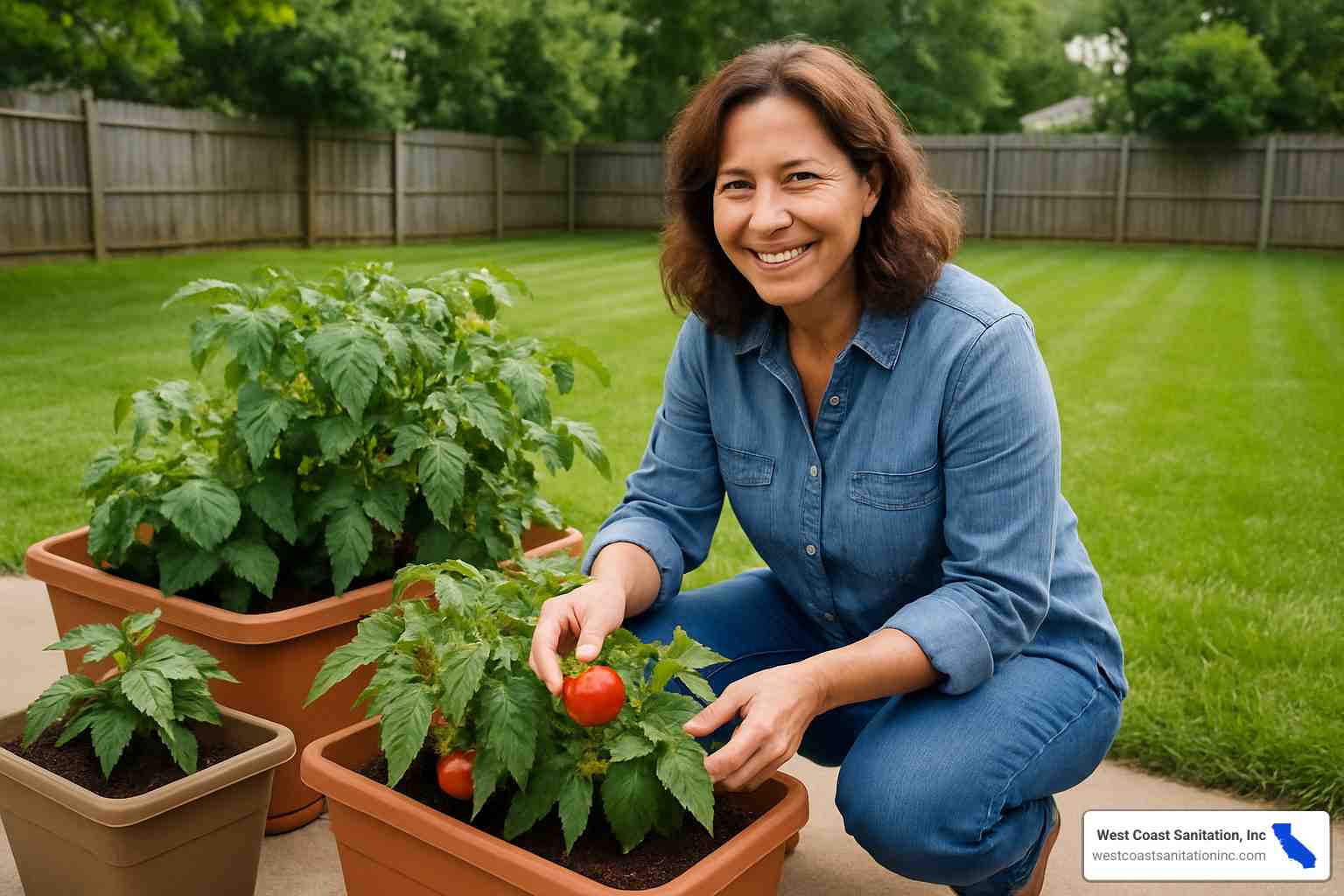
When spring arrives, many homeowners in Southern California look out at their yards and start planning their vegetable gardens. If you have a septic system, you might be eyeing that open area above your drainfield as potential garden space. After all, it’s often one of the sunniest spots in the yard without trees or structures.
But before you start tilling, there’s an important question to consider: is it safe to grow vegetables near your septic drainfield?
According to the U.S. Environmental Protection Agency (EPA), the answer is clear: “Don’t plant a vegetable garden on or near the drainfield.” This isn’t just cautious advice – it’s based on serious health and system functionality concerns.
Approximately 25% of homes in the United States rely on septic systems, and many homeowners don’t realize that the soil above a drainfield can contain pathogens, pharmaceuticals, and household chemicals that may contaminate edible crops. Even well-maintained septic systems can occasionally release contaminants that plants can absorb through their roots.
Additionally, gardening activities like digging, watering, and adding soil can interfere with your drainfield’s critical functions – potentially leading to expensive repairs.
Septic Drainfield 101: Function and Mapping Your System
Before we dive deeper into gardening considerations, it’s important to understand what a drainfield is and how it works. This knowledge will help you make informed decisions about your landscaping and gardening practices.
What Is a Septic Drainfield (Leach Field)?
Think of your drainfield as your property’s natural water purification system. After wastewater leaves your home, it first enters the septic tank where solids settle to the bottom and oils float to the top. The partially treated liquid effluent then flows out to the drainfield, where the real magic happens.
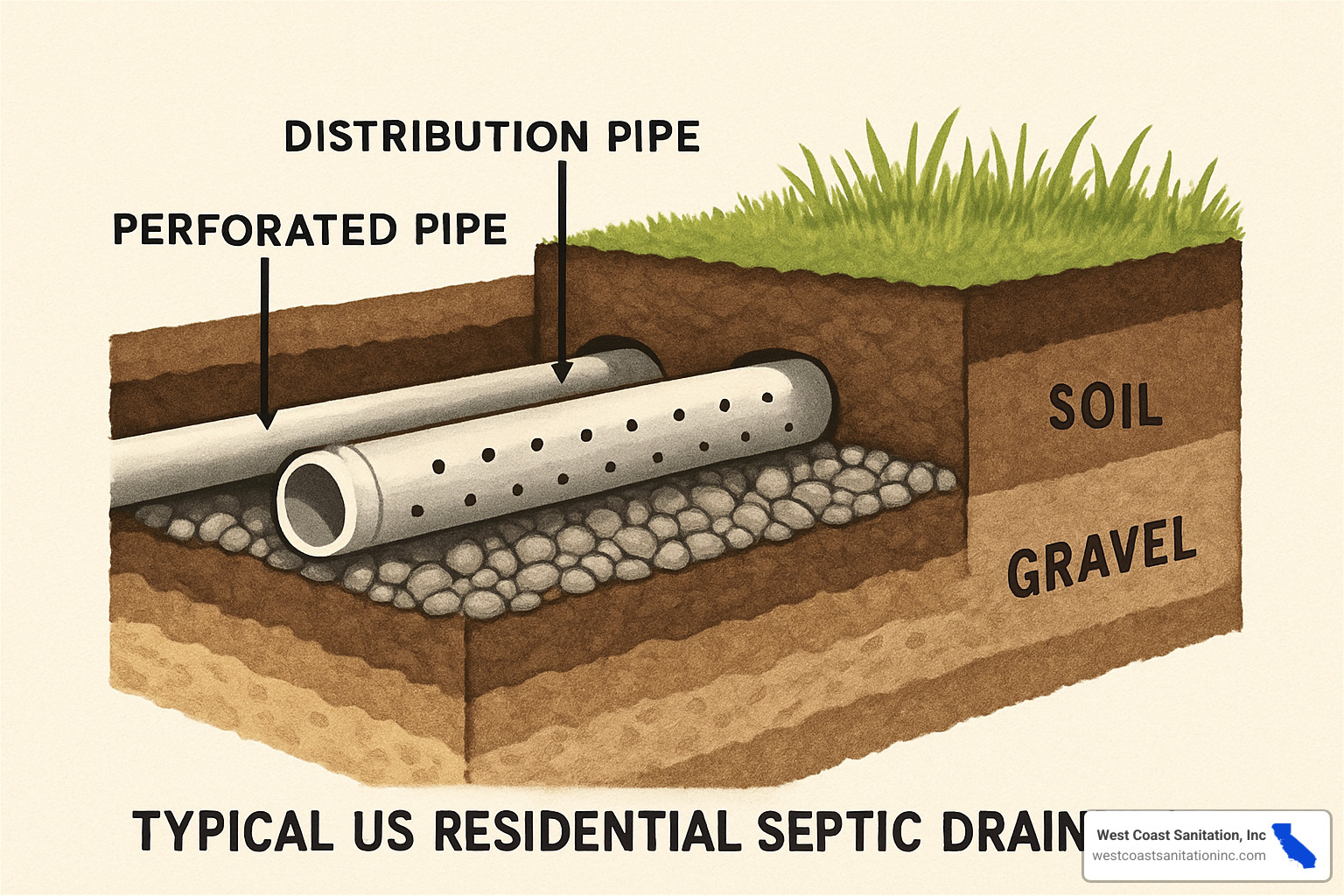
Your drainfield isn’t just pipes in the ground—it’s a living ecosystem. It consists of a network of perforated pipes nestled in gravel-filled trenches. As wastewater seeps through these perforations, it filters through the gravel and into the surrounding soil. Here, helpful aerobic bacteria and other soil microbes break down harmful contaminants before the water eventually returns to the groundwater system.
“I like to tell homeowners that their drainfield is like having a tiny water treatment plant right in their backyard,” says our lead technician at West Coast Sanitation. “Those microbes are working 24/7 to clean your wastewater—they’re the unsung heroes of your septic system!”
How to Locate Your Drainfield on Your Property
Many Inland Empire homeowners aren’t exactly sure where their drainfield is located. If you’re in this boat, don’t worry—here are several ways to find your underground filtration system:
Check your property records: Look for your septic system design form (sometimes called an HHE-200 form), which should show the layout of your system. When you bought your home, this might have been included in your closing documents.
Visit your local health department: Here in Riverside County, San Bernardino County, and Los Angeles County, records of septic system installations are typically maintained by county health departments. A quick phone call might save you hours of guesswork.
Look for visual clues: Mother Nature sometimes reveals what’s beneath. Keep an eye out for slightly raised areas, strips of greener grass in summer, or spots where snow melts faster in winter. These can all indicate drainfield locations.
Call in the pros: At West Coast Sanitation, Inc., we use specialized equipment to locate your drainfield without digging up your yard. It’s like an X-ray for your property, showing exactly what’s hiding beneath the surface.
“Many homeowners in Southern California are surprised to learn their drainfield isn’t where they thought it was,” our technicians often say. “We’ve seen folks who were about to plant trees right over their drainlines—disaster averted!”
Depth & Size Facts Every Gardener Should Know
Understanding the physical characteristics of your drainfield will help you make better landscaping decisions:
Your drainfield pipes typically rest about 18-36 inches below the surface—close enough that deep digging could damage them, but deep enough that shallow-rooted plants won’t interfere. The drain lines themselves are usually spaced 8½-10 feet apart to allow proper filtration through the soil.
Most drainfields have only 4-12 inches of topsoil covering the gravel layer. This relatively thin layer is crucial for oxygen exchange—the aerobic bacteria cleaning your wastewater need to breathe! The size of residential drainfields typically ranges from 300-900 square feet, depending on your household size and soil conditions.
This living filtration system needs breathing room to function properly. Compacting the soil by walking on it frequently, adding too much additional soil, or saturating it with extra water can suffocate those hardworking bacteria. According to scientific research on root spread, even plants you might think are safe can send roots far enough to interfere with your system.
Remember—your drainfield isn’t just empty space waiting to be used. It’s actively working to protect your family and the environment from wastewater contaminants. Treating it with care ensures it will function properly for years to come.
Can I Plant My Vegetable Garden Near My Drainfield? – Risks, Distances & Raised Beds
Now that you understand how your drainfield works, let’s address the main question: can you safely grow vegetables near it?
Health Risks of Growing Food on a Drainfield
When I talk with homeowners about growing vegetables near drainfields, I often see their faces fall when they learn about the risks. Trust me, I understand the disappointment – that sunny, open space above your drainfield looks like prime gardening real estate!
Unfortunately, there are serious health concerns to consider. Even when your septic system is working perfectly, the soil around your drainfield can contain unwelcome guests you definitely don’t want in your salad bowl.
Pathogen problems are the biggest concern. E. coli bacteria, intestinal parasites, and various viruses can make their way into the soil around your drainfield. Vegetables can absorb these nasties through their roots or get contaminated when soil splashes onto leaves and fruits during watering.
Household chemicals pose another risk. Think about everything that goes down your drains – residues from cleaning products, medications flushed down toilets, and personal care items. Many vegetables are particularly good at absorbing and concentrating these chemicals in their edible portions.
One Riverside County homeowner shared her experience with me: “I had been growing the most beautiful tomatoes over my drainfield for years without knowing the risks. After learning about potential contamination, I moved my garden and now I can enjoy my homegrown produce without worrying about what might be in it.”
The EPA and health departments aren’t just being overly cautious – studies by the University of Minnesota Extension have confirmed that drainfield soil typically contains liftd levels of nitrates, phosphates, and potentially harmful bacteria. While these elements help with the natural treatment process in your septic system, they’re definitely not what you want feeding your vegetables.
Minimum Setback Distances for Vegetable Gardens
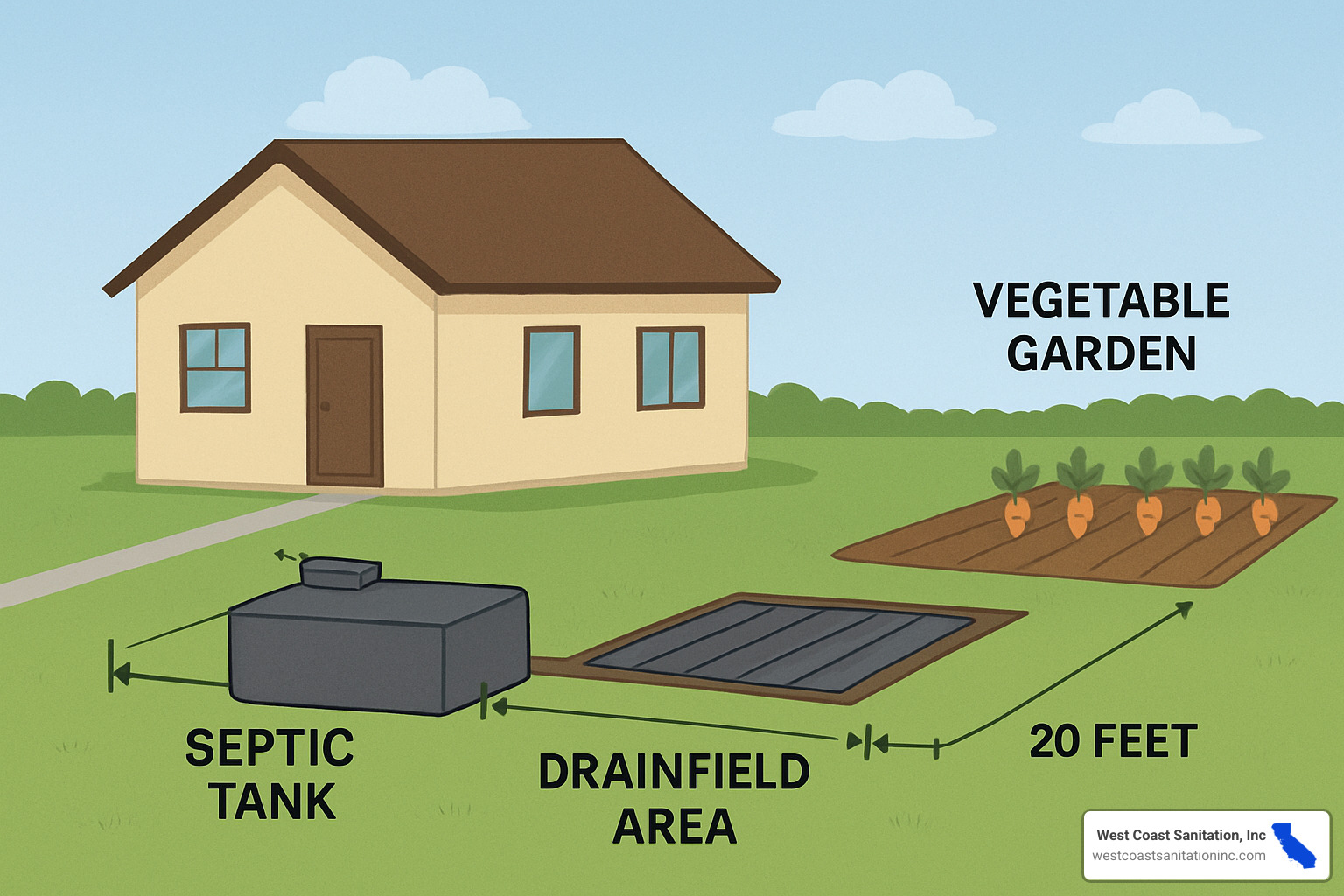
So how far is far enough? Based on extensive research and recommendations from multiple extension services, keep all edible crops at least 10 feet away from the perimeter of your drainfield – not just from the center, but from the entire outer edge.
This distance matters even more on sloped properties. If your yard slopes downward from the drainfield toward your garden area, gravity will pull effluent in that direction. In these cases, increase your buffer zone to 15-20 feet to be extra safe.
Different vegetables have different root depths, which is another factor to consider. Shallow-rooted lettuce and radishes pose less risk of interfering with drainfield function than deeper-rooted crops like tomatoes or corn, but the contamination concerns remain the same regardless of root depth.
Local regulations in Riverside, San Bernardino, and Los Angeles counties may have specific requirements beyond these general guidelines. I always recommend checking with your county health department when planning garden spaces near septic components.
The 10-foot buffer isn’t arbitrary – it provides reasonable distance from potential effluent seepage, reduces the likelihood of plant roots growing into the drainfield, and minimizes the risk of your gardening activities disturbing the drainfield’s function.
Can I Plant My Vegetable Garden Near My Drainfield? – Are Raised Beds a Solution?
“But what if I build raised beds?” This is probably the most common workaround I hear from hopeful gardeners. It seems logical that adding a layer of fresh soil would create a safe barrier between the drainfield and your vegetables.
Unfortunately, raised beds aren’t the solution many hope for. Here’s why:
First, raised beds actually inhibit proper evaporation from your drainfield. Your septic system relies on evaporation to help process wastewater, and covering the area with extra soil interferes with this natural process.
Second, the weight of raised beds can damage your system. A typical 4×8 raised bed filled with soil can weigh over 1,000 pounds! This weight compresses the soil below, potentially damaging drainfield components and reducing the oxygen exchange that aerobic bacteria need to treat wastewater.
Third, most vegetables are thirsty plants. The extra water you’ll need to keep your raised bed garden happy can saturate the drainfield below, seriously compromising its function.
Finally, roots don’t respect boundaries. Many vegetable plants have roots that will grow beyond the raised bed soil and potentially reach drainfield depth, creating the same contamination risks you were trying to avoid.
“We often see homeowners trying raised beds as a workaround,” notes our septic specialist at West Coast Sanitation, Inc. “But they’re actually creating two problems: potential food contamination and compromised septic function. It’s just not worth the risk.”
Instead of forcing a garden where it shouldn’t be, consider these safer alternatives:
Container gardens on patios or decks offer a great solution for small spaces. They keep plant roots completely separate from your drainfield and can be quite productive.
Traditional garden beds located at least 10 feet away from your drainfield give you plenty of growing space without the risks.
Vertical gardening using trellises and wall-mounted systems can maximize your growing space in areas away from your septic system.
A properly functioning septic system protects your family’s health and the environment. At West Coast Sanitation, we’ve seen too many preventable septic failures caused by well-intentioned gardening mistakes. Your vegetables – and your septic system – will thank you for keeping them safely apart!
Safe Landscaping Choices: Plants, Trees & Root Management
While vegetable gardens aren’t suitable for drainfield areas, you can still create an attractive landscape over and around your septic system with the right plant choices.
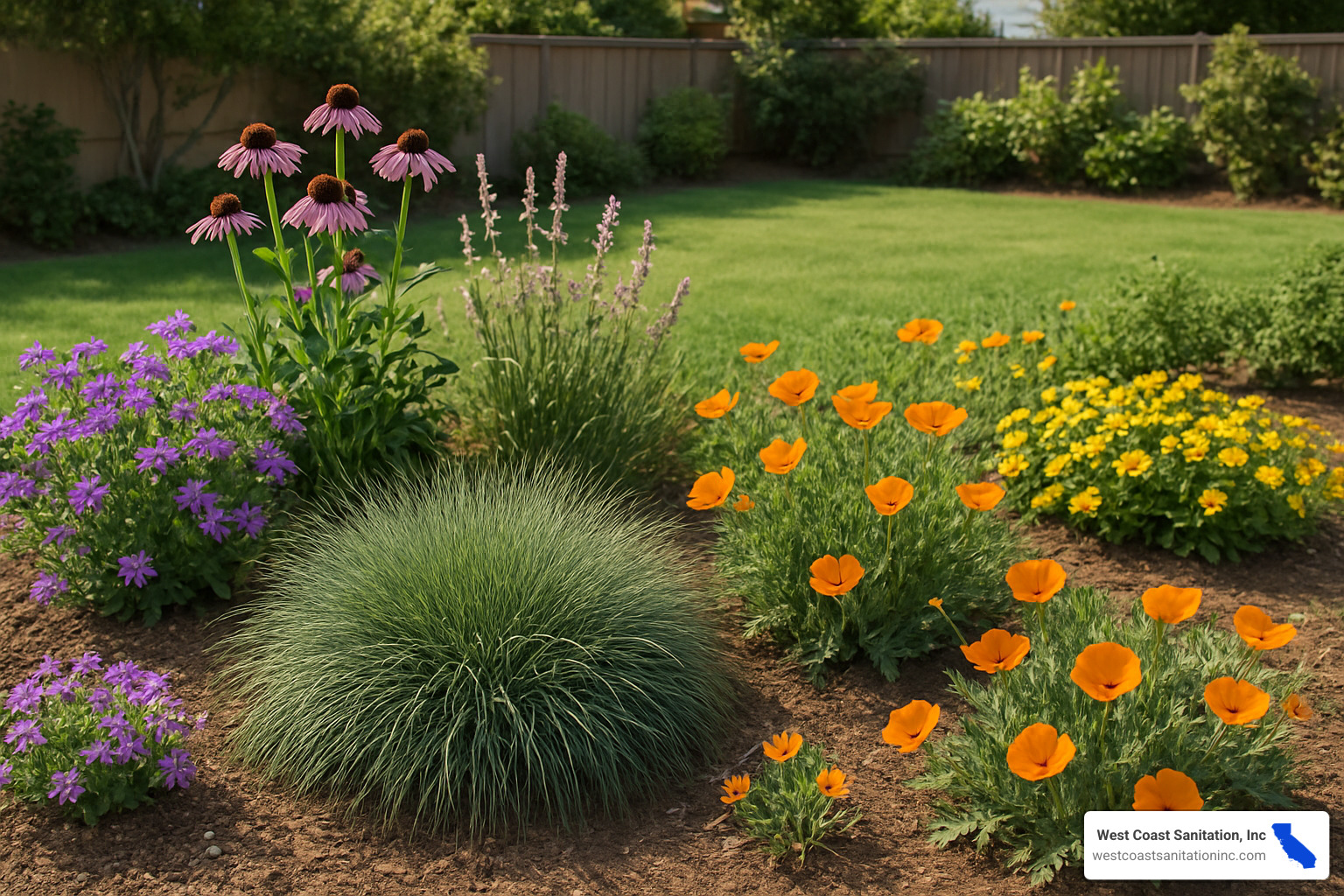
Shallow-Rooted Plants That Help Your Drainfield
The ideal plants for your drainfield are those with shallow root systems that won’t damage pipes but will help with moisture removal and prevent soil erosion. Your drainfield can actually benefit from the right kind of landscaping.
Fescue lawn grasses create an attractive, low-maintenance cover that helps with moisture absorption while requiring minimal care. Many Southern California homeowners find that ornamental grasses like switchgrass or fountain grass not only look beautiful but also promote healthy drainfield function through their moisture-wicking abilities.
If you’re looking for more visual interest, consider shallow-rooted perennials like blanket flower, which adds vibrant color while respecting your septic system’s boundaries. Germander offers a lovely lavender-like appearance and thrives in our local climate without sending aggressive roots downward.
For ground coverage, creeping thyme or sedum varieties spread horizontally rather than vertically, providing erosion control without compromising your system’s integrity. In shadier drainfield areas, periwinkle offers an attractive option that stays where it belongs.
Learn more about suitable landscaping choices in our guide on Landscaping Around a Septic System: Dos and Don’ts.
Trees and Shrubs to Keep Far Away From Septic Lines
While shallow-rooted plants benefit your drainfield, trees and shrubs with aggressive root systems can spell disaster for your septic system. Root infiltration is one of the most common causes of expensive septic repairs we see in the Inland Empire.
Willows are perhaps the worst offenders – their thirsty, far-reaching roots will aggressively seek out the moisture in your drainfield pipes. Poplars and cottonwoods are similarly problematic, with root systems that can extend two to three times the height of the tree. Silver maples might look beautiful, but their roots can crush and infiltrate septic components with surprising force.
One Temecula homeowner learned this lesson the expensive way: “We had a gorgeous weeping willow that started causing sewage backups in our home. When West Coast Sanitation came out, they found roots had completely infiltrated our drainfield pipes. The repair cost us over $8,000 – far more than removing the tree would have cost initially.”
Bamboo deserves special mention as its rhizomatous root system can travel enormous distances underground. Eucalyptus, fig trees, and magnolias should also be kept at least 50 feet away from your drainfield.
A good rule of thumb based on scientific research on root spread is that a tree’s roots typically extend at least as far from the trunk as the tree is tall, and often much further. That 40-foot tall oak? Its roots could reach 60+ feet in all directions.
For more information about problem trees, visit our detailed guide on the Worst Trees for Septic Systems.
Guidelines for Fruit Trees Near a Drainfield
If you’re disappointed about not growing vegetables near your drainfield, fruit trees might seem like a good alternative – but caution is still necessary.
Standard-sized fruit trees should be kept at least 20-30 feet from the drainfield perimeter. Their extensive root systems can travel surprising distances in search of water and nutrients. If you’re working with limited space, semi-dwarf varieties can be planted a bit closer – about 15-20 feet away – while dwarf fruit trees may be acceptable at 10-15 feet if monitored carefully.
For properties with space constraints, installing a root barrier can provide additional protection. A properly installed barrier should be buried at least 2 feet deep, run the entire length of the side facing the drainfield, and be placed about 5 feet from both the drainfield and the planting hole.
“Many of our customers with mound systems are particularly concerned about fruit tree placement,” explains our septic specialist. “Because these systems are more exposed, we typically recommend increasing the setback distances by at least 5 feet and considering dwarf varieties when possible.”
Fallen fruit can attract rodents that might damage your septic system components, so regular cleanup is important for system health. With thoughtful planning and the right plant selections, you can have both a beautiful landscape and a properly functioning septic system for years to come.
Maintenance & Monitoring Tips for Septic & Garden Health
Proper maintenance of both your septic system and your landscaping will help ensure they coexist harmoniously for years to come.
Proactive Septic Maintenance Schedule
Taking care of your septic system isn’t complicated, but it does require consistency. Think of it like changing the oil in your car – a little prevention saves a lot of money down the road.
Your system needs regular check-ups to stay healthy. We recommend having your septic system professionally inspected at least every 1-2 years. Our team at West Coast Sanitation provides thorough inspections throughout the Inland Empire, helping catch small issues before they become expensive emergencies.
Most residential septic tanks need pumping every 3-5 years, though this varies based on your household size and water usage patterns. Regular pumping prevents solids from overflowing into your drainfield – which is much cheaper than replacing a clogged field!
“I tell my customers to mark septic pumping on their calendar just like any other home maintenance task,” shares one of our technicians. “The folks who do this consistently almost never call us for emergency services.”
If your system has an effluent filter (and it should!), have it cleaned every 6-12 months. This simple maintenance step can significantly extend your drainfield’s life by preventing solids from entering it.
Be mindful of your daily habits too. Spread your laundry throughout the week rather than doing it all in one day. Fix leaky toilets promptly. And please – never flush anything besides human waste and toilet paper down your drains. Those “flushable” wipes? They’re not really flushable when it comes to septic systems!
Signs Your System Is Failing—and How It Impacts Garden Safety
Even well-maintained systems occasionally develop problems. Knowing the warning signs can save you thousands in repairs and protect your garden from contamination.
Pay attention if you notice sewage odors inside or outside your home. That distinctive smell isn’t just unpleasant – it’s your system telling you something’s wrong. Slow-draining fixtures throughout your house (not just one sink) often signal a system backup, as do gurgling sounds in your plumbing.
Outside, watch for unusually wet or spongy areas over your drainfield, especially after minimal rainfall. If a section of grass suddenly becomes lushly green during a dry spell, that’s not good luck – it’s likely effluent reaching the surface. And of course, if you experience sewage backing up into your home, call us immediately.
A San Bernardino homeowner recently told us: “I noticed my vegetables were growing like crazy despite the drought, which seemed weird. Then my toilets started draining slowly. West Coast Sanitation found my drainfield was failing and effluent was reaching my garden beds. I had to throw out an entire season’s harvest – lesson learned about proper setbacks!”
When a drainfield fails, contaminants rise to the surface or move sideways through soil. This dramatically increases contamination risk for nearby gardens – even those outside the recommended 10-foot buffer. If you notice any warning signs, don’t wait. Contact us right away for an inspection.
Frequently Asked Questions About “Can I Plant My Vegetable Garden Near My Drainfield?”
Is any edible crop safe directly over a leach field?
Unfortunately, no. Even shallow-rooted vegetables like lettuce can be contaminated through soil contact or water splash during irrigation. The risk simply isn’t worth it when it comes to your family’s health.
How far should raised beds be placed from a septic mound?
Keep raised beds at least 10 feet from the perimeter of any conventional drainfield. For mound systems, which are more vulnerable to damage and more likely to have effluent closer to the surface, we recommend increasing this distance to at least 15 feet.
Can container gardens sit on a patio above the drainfield?
Yes! This is actually a clever solution. Container gardens on a patio or deck over part of your drainfield are generally safe because the containers are completely separated from the soil, the plant roots remain contained, and there’s no digging involved. Just make sure your patio construction didn’t heavily compact the soil or block necessary air exchange.
What if my yard is small and the drainfield takes up most of my usable space?
This is a common challenge in many Inland Empire neighborhoods. Consider vertical gardening on walls or fences away from the drainfield. Container gardening on patios, decks, or driveway edges works well too. Many homeowners join community garden plots in their neighborhood, or try hydroponics systems that require no soil at all.
“We helped a family in Riverside who was disappointed about not being able to garden over their drainfield,” recalls our service manager. “We suggested container gardening along their fence line and vertical planters on their shed wall. The next year, they actually produced more vegetables than they had before!”
Will watering my ornamental plants over the drainfield harm the system?
Most established ornamental plants suitable for drainfields shouldn’t need much extra water. If you must water during extreme drought, do so sparingly. Your drainfield is designed to handle household wastewater, but excessive irrigation can saturate the soil and prevent proper treatment.
Can I use compost or fertilizer on plants over my drainfield?
Use fertilizers very sparingly, if at all. Your drainfield already provides nutrients (sometimes too many!) to plants growing above it. Adding fertilizers can disrupt the bacterial balance that’s essential for wastewater treatment and potentially increase nitrate levels in groundwater.
At West Coast Sanitation, we’re committed to helping you maintain both a beautiful yard and a healthy septic system. With a little planning and proper maintenance, you can enjoy your outdoor space without compromising your system’s function or your family’s health. For more information about keeping your septic system in top condition, visit The Importance of the Leach Field.
Call West Coast Sanitation Today!
So, can I plant my vegetable garden near my drainfield? We’ve explored this question thoroughly, and the answer is clear: not directly over it, but you can still enjoy your gardening passion with some thoughtful planning.
Your septic drainfield plays a vital role in treating wastewater before it returns to the environment. Protecting this system isn’t just about avoiding expensive repairs—it’s about keeping your family safe and healthy. That 10-foot buffer zone between your veggies and the drainfield isn’t arbitrary—it’s based on solid science about how contaminants move through soil.
Think of your yard as having different zones. The drainfield area can be beautiful with ornamental grasses, shallow-rooted perennials, and groundcovers that actually help your septic system function. Then, a safe distance away, your edible garden can thrive without risk of contamination.
Regular septic maintenance is your garden’s best friend. When we pump your tank every 3-5 years, we’re not just protecting your home from backups—we’re ensuring your drainfield continues to function properly, keeping potential contaminants where they belong: safely processed by soil bacteria rather than in your tomatoes and cucumbers.
Many of our customers throughout Riverside, San Bernardino, and Los Angeles counties have found creative solutions when space is limited. Container gardens on patios, vertical growing systems on fences, and raised beds placed at proper distances have allowed them to grow beautiful produce while protecting their septic systems.
At West Coast Sanitation, Inc., we understand the unique challenges of Southern California properties. Our family-owned business has seen how the right approach to landscaping can help both your garden and septic system thrive together. Whether you need help locating your drainfield before planning this year’s garden or want to ensure your existing system is functioning properly, our experienced technicians are just a phone call away.
Your home is your sanctuary, and both your garden and septic system are important parts of it. With proper planning, regular maintenance, and smart plant choices, you can enjoy homegrown vegetables without worry. A healthy septic system means a healthy garden—and we’re here to help you maintain both.
For personalized advice about your property, percolation testing, system design, or to schedule a septic inspection, give us a call. We’re proud to offer same-day service with the latest technology to keep your systems running smoothly year-round.