


Commercial septic system is a crucial part of any business not connected to a centralized sewer. Whether you’re running a restaurant in Riverside or a factory in San Bernardino, managing your wastewater efficiently is key to smooth operations.
Here’s what you need to know right away:
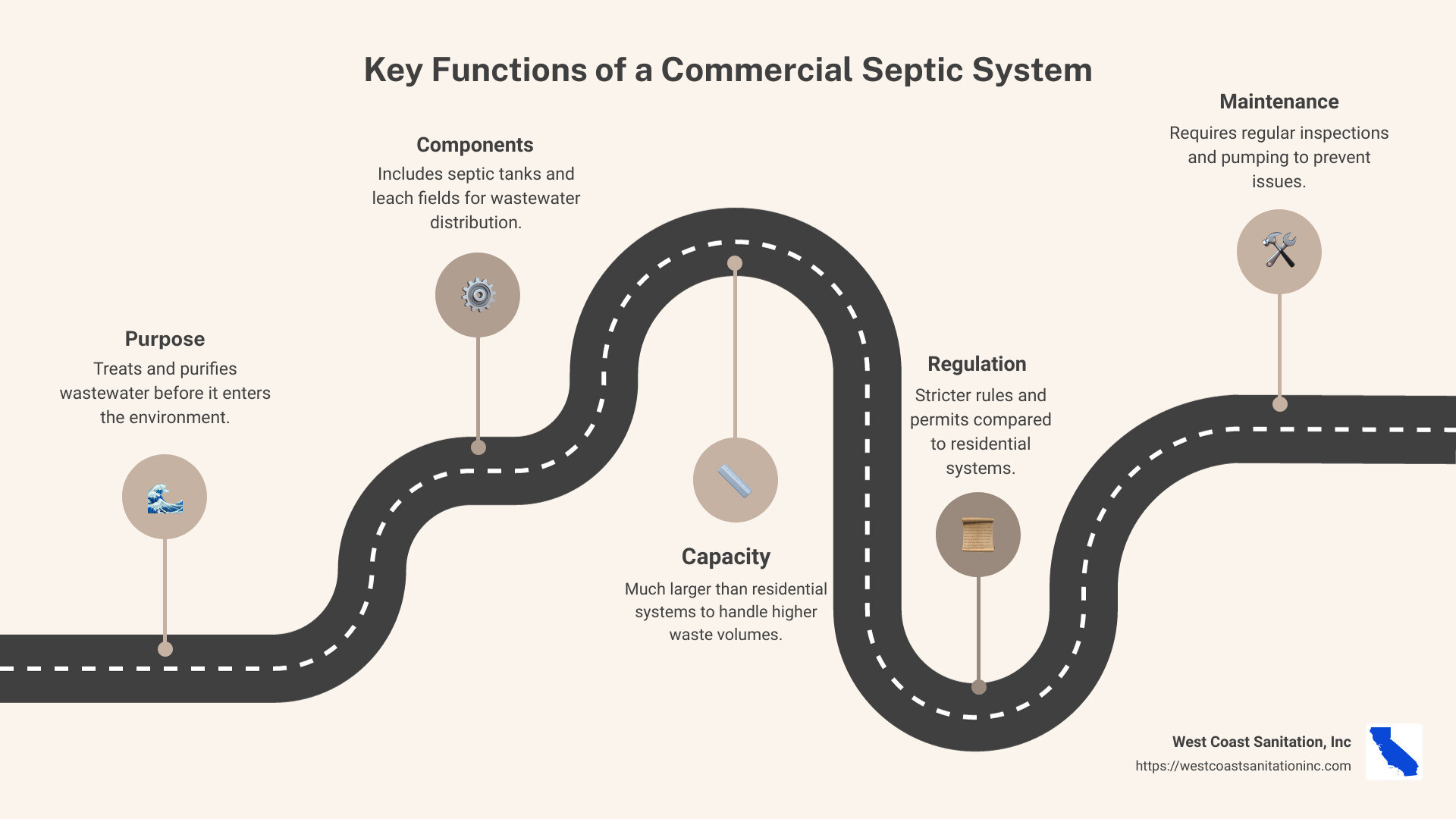
- Purpose: Treats and purifies wastewater before it enters the environment.
- Components: Includes septic tanks and leach fields for wastewater distribution.
- Capacity: Much larger than residential systems to handle higher waste volumes.
- Regulation: Stricter rules and permits compared to residential systems.
- Maintenance: Requires regular inspections and pumping to prevent issues.
Commercial septic systems play a vital role in treating wastewater from businesses of all sizes. Unlike the residential systems designed for single families, these larger systems handle the increased volume and complexity of waste generated by commercial activities. Effective management and maintenance are essential, especially in places like Southern California, where businesses depend on reliable and efficient systems. Understanding these systems more deeply can help ensure compliance with regulations and protect both public health and the environment.
Understanding Large-Capacity Septic Systems
When it comes to managing wastewater for businesses, understanding large-capacity septic systems (LCSSs) is crucial. These systems are designed to handle the sanitary waste from multiple dwellings or non-residential establishments. They are essential for facilities like hotels, schools, and shopping malls, where more than 20 people use the system daily.
What Defines a Large-Capacity Septic System?
A septic system becomes a large-capacity septic system if it receives only sanitary waste and serves 20 or more people per day. This definition includes a wide range of establishments, from apartment buildings to state parks.
Why the EPA Regulates LCSSs
The Environmental Protection Agency (EPA) plays a key role in regulating these systems. The primary reason for regulation is to protect underground sources of drinking water (USDWs) from contamination. The EPA mandates specific construction, operation, and closure requirements to prevent harmful substances from entering the groundwater.
Focus on Sanitary Waste
Importantly, LCSSs are only designed to handle sanitary waste. If a system receives anything other than this, such as industrial or vehicular maintenance waste, it no longer qualifies as an LCSS. Such misuse can lead to contamination, as toxic chemicals can pass untreated into groundwater, posing significant health risks.
By adhering to these regulations and ensuring proper usage, businesses can maintain an efficient and safe commercial septic system. This not only ensures compliance with federal regulations but also safeguards the environment and public health.
Components of a Commercial Septic System
Understanding the components of a commercial septic system is essential for businesses to ensure effective wastewater management. These systems are more complex than residential ones due to their larger capacity and the diverse types of waste they handle. Let’s break down the key components:
Septic Tank
The septic tank is the heart of any septic system. For commercial septic systems, these tanks are typically much larger, often holding several thousand gallons of wastewater. They are designed to accommodate the high volume of waste produced by businesses like restaurants, hotels, and factories. The tank’s primary role is to separate solids from liquids, allowing the heavier solids to settle at the bottom and form sludge, while oils and grease float to the top as scum.
Effluent Distribution
Once the wastewater is partially treated in the septic tank, the liquid effluent is directed to the next critical component: the effluent distribution system. This system ensures that the effluent is evenly distributed throughout the drainfield or leach field. In a commercial septic system, this might involve a series of distribution boxes and pipes that help manage the flow and prevent overloading any part of the field. Proper distribution is vital to avoid system failures and ensure the efficient treatment of wastewater.
Soil Absorption
Finally, the effluent reaches the soil absorption area, often referred to as the drainfield. This is where the magic of natural filtration happens. The soil acts as a biological filter, removing harmful bacteria and nutrients from the wastewater as it percolates through the ground. Commercial septic systems often require larger and more carefully designed drainfields to handle the increased volume and complexity of the effluent. The soil type and condition play a crucial role in the system’s effectiveness. Sandy soils, for instance, allow for quicker absorption, while clay soils might require additional engineering solutions.
By understanding these components, businesses can better manage their commercial septic systems, ensuring they operate efficiently and comply with environmental regulations. Proper maintenance and regular inspections are key to extending the lifespan of these systems and preventing costly repairs or replacements.
Designing and Sizing a Commercial Septic System
Designing a commercial septic system requires careful planning to ensure it effectively handles the volume of wastewater generated by a business. The design process involves calculating the expected flow of wastewater, selecting the appropriate tank size, and assessing application suitability based on specific business needs.
Flow Calculation
The first step in designing a commercial septic system is calculating the daily wastewater flow. This involves estimating how much water will be used by the business daily. For example, a restaurant might have a higher flow rate due to frequent dishwashing and restroom usage, while an office building might have a lower rate. According to the EPA, if more than 20 people use the facilities daily, a large-capacity system is needed. Understanding the flow helps in determining the overall capacity required for the septic system.
Tank Size
Once the daily flow is calculated, the next step is to determine the appropriate tank size. The tank must be large enough to handle the peak flow of wastewater while allowing sufficient time for solids to settle and for bacteria to break down the waste.
Here’s a quick reference for tank sizes based on daily flow:
| Daily Flow (gallons) | Recommended Tank Size (gallons) |
|---|---|
| Up to 1,240 | 1,900 |
| Up to 900 | 1,500 |
| Up to 700 | 1,200 |
| Up to 500 | 900 |
These sizes ensure the system can handle the load without overflowing or backing up, which is crucial for maintaining a healthy and efficient septic system.
Application Suitability
Finally, application suitability is a critical consideration. Different businesses produce different types of waste, which can affect how the septic system is designed. For instance, restaurants require grease traps to prevent fats and oils from clogging the system. Industrial facilities might need additional filtration to handle specific contaminants. The soil’s permeability and local zoning regulations also influence design decisions. Sandy soils, for example, may require less extensive drainfields compared to clay soils, which absorb water more slowly.
By carefully considering these factors, businesses can ensure their commercial septic systems are both effective and compliant with environmental regulations. Proper design and sizing are essential for the longevity and reliability of these systems.
Maintenance and Longevity of Commercial Septic Systems
Maintaining a commercial septic system is crucial for its longevity and efficiency. Because these systems handle a large volume of waste, they require more frequent maintenance than residential systems.
Frequent Maintenance
Regular maintenance is key to preventing failures and extending the life of your septic system. A well-maintained system can last 20 to 30 years or more, while neglect can lead to costly repairs or replacements.
-
Regular Inspections: Have a professional inspect your system annually to identify any potential issues early. This helps in catching problems like leaks or blockages before they become severe.
-
Pumping Schedule: Commercial septic tanks should be pumped regularly to remove solids that accumulate over time. The frequency depends on the size of the tank and the amount of waste generated. Typically, commercial tanks need pumping every 1 to 3 years, but high-use facilities might require more frequent service.
Lifespan Considerations
Several factors influence the lifespan of a commercial septic system:
-
Usage Levels: High usage increases wear and tear on the system. Businesses with heavy water use, like restaurants or laundromats, may need more frequent maintenance and pumping.
-
Water Conservation: Implementing water-saving measures can reduce the strain on your system. Using water-efficient fixtures and educating employees about conserving water can make a significant difference.
-
Proper Waste Disposal: Avoid flushing non-biodegradable items or chemicals down the drain. These can disrupt the bacterial balance in the tank and lead to clogs or system failure.
-
Soil and Site Conditions: The type of soil and its ability to absorb effluent affect system performance. Regularly assess the drain field to ensure it is functioning properly and not compacted or flooded.
By adhering to a regular maintenance schedule and being mindful of water usage and waste disposal, businesses can maximize the lifespan of their commercial septic systems. This proactive approach not only ensures compliance with environmental regulations but also protects the investment in your septic infrastructure.
Frequently Asked Questions about Commercial Septic Systems
What is a commercial septic system?
A commercial septic system is designed to handle wastewater from non-residential properties. Unlike residential systems, these are large-capacity systems that manage waste for more than 20 people per day. They are typically found in places like restaurants, hotels, and schools. These systems must comply with EPA regulations to ensure they handle only sanitary waste and protect water sources from contamination.
How do you size a septic tank for commercial use?
Sizing a septic tank for commercial use involves calculating the expected flow per day. This is determined by the type of business and the number of people using the facilities. For example, a restaurant will have different water usage needs compared to an office building.
To calculate the tank size, you should estimate the daily water usage and then apply local guidelines or consult with a professional. Typically, commercial systems require larger tanks to accommodate the increased flow and ensure efficient waste processing. Regular assessment and adjustment may be necessary to align with changes in business operations or regulations.
West Coast Sanitation Can Help!
At West Coast Sanitation, Inc, we take pride in being the go-to experts for septic services in the Inland Empire. Our commitment to excellence is unwavering, and we are dedicated to providing the best solutions for your commercial septic system needs.
Our team understands the unique challenges that businesses face when it comes to managing wastewater. That’s why we offer custom services to ensure your system operates efficiently and complies with all regulations. Whether you need a new installation, routine maintenance, or emergency repairs, we are here to help.
With our family-owned business roots, we bring a personal touch to every project. We treat your property as if it were our own, ensuring high-quality service and peace of mind. Our use of the latest technology and equipment means we can handle any septic challenge with ease.
We serve a wide range of locations, including Riverside, Moreno Valley, Corona, Temecula, Murrieta, San Bernardino, and beyond. No matter where you are in Southern California, our team is ready to provide you with reliable and efficient septic solutions.
If you’re ready to experience the best in commercial septic services, contact us today to learn more about how we can help. Let us turn your wastewater worries into wonders with our expertise and dedication.