


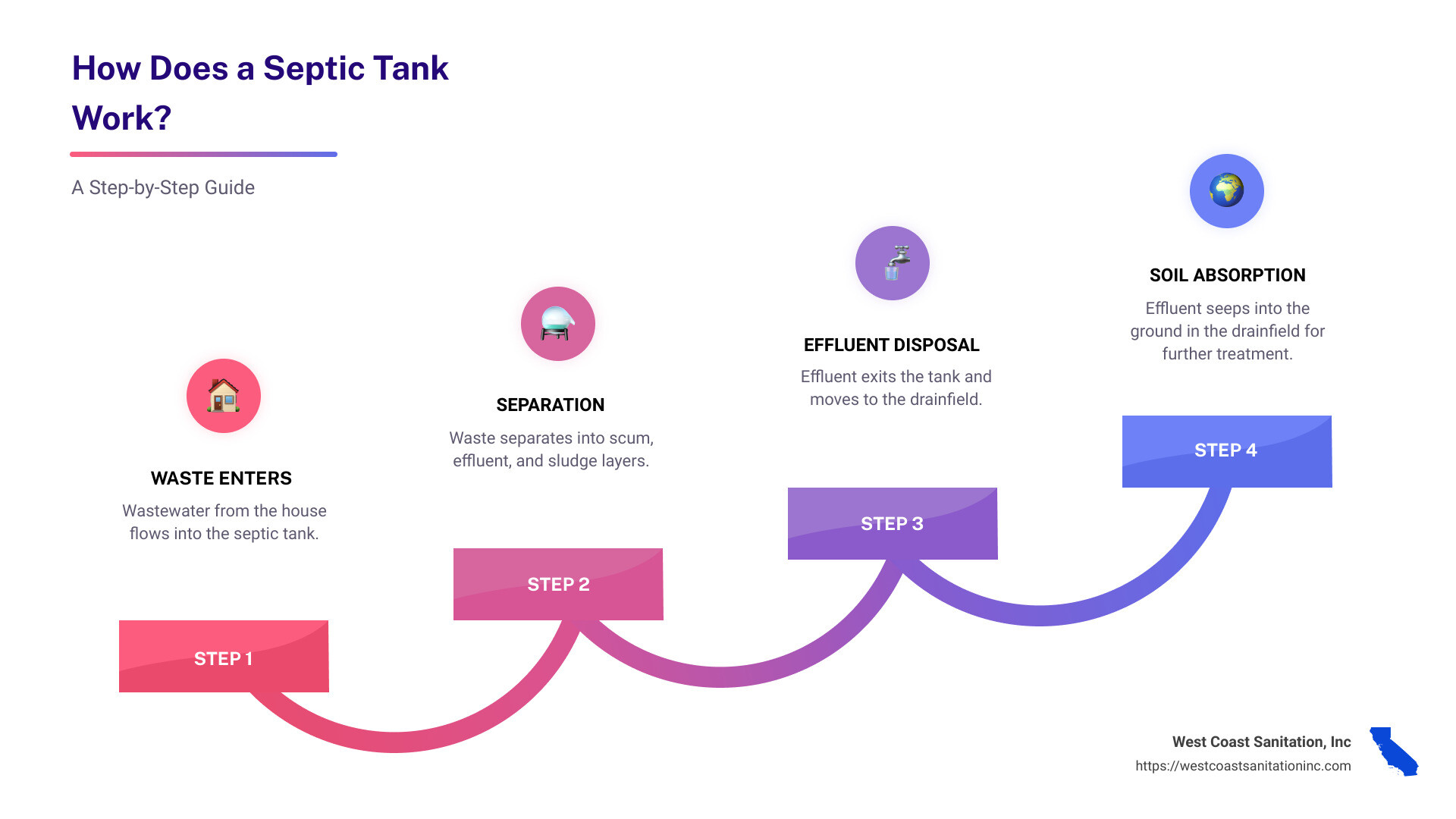
How does a septic tank work? It’s a question that many rural homeowners, especially in areas without municipal sewers, might find themselves asking. Here’s a simple rundown:
- Septic Tank: The waste from your home goes into a large, buried container.
- Waste Separation: Inside the tank, waste separates into three layers: scum (top), effluent (middle), and sludge (bottom).
- Effluent Disposal: The effluent flows out to a drainfield where it seeps into the ground for further treatment.
Septic systems are essential for treating household wastewater in homes not connected to a city’s sewer system.
They effectively manage waste from toilets, drains, and other household water uses, ensuring it is broken down and properly absorbed into the soil. This system not only keeps your property clean and safe but also protects the environment by treating wastewater naturally.
What is a Septic Tank?
A septic tank is a large, watertight container buried underground, designed to treat and dispose of wastewater from homes that are not connected to a municipal sewer system. It’s a crucial component for rural properties, ensuring that waste is managed efficiently and safely.
Purpose of a Septic Tank
The primary purpose of a septic tank is to separate and treat household wastewater. This includes water from toilets, sinks, showers, dishwashers, and washing machines. By doing so, it prevents harmful contaminants from entering the environment and maintains a healthy living space.
Key Components of a Septic Tank
A septic tank consists of several crucial parts that work together to treat wastewater:
- Main Drainage Pipe: All wastewater from the home flows into this pipe, which leads directly to the septic tank.
- Septic Tank: The tank, typically made of concrete, fiberglass, or polyethylene, holds the wastewater long enough for solids to settle at the bottom (forming sludge) and oils and grease to float to the top (forming scum).
- Effluent: The middle layer of the tank, which consists of partially treated wastewater, flows out of the tank into the drainfield.
- Drainfield: Also known as the leach field, this is a network of perforated pipes buried in trenches filled with gravel or other materials. The effluent is distributed through these pipes and seeps into the soil for further treatment.
- Soil: Acts as a natural filter, removing remaining contaminants from the effluent before it reaches groundwater.
Inside the Septic Tank
When wastewater enters the septic tank, it naturally separates into three layers:
- Scum: The top layer made up of oils, fats, and grease.
- Effluent: The middle layer of clear wastewater that exits the tank into the drainfield.
- Sludge: The bottom layer consisting of heavier solids that settle and decompose over time.
Importance of Bacteria
Bacteria play a vital role in the septic tank by breaking down organic matter in the sludge and scum layers. This biological process reduces the volume of solid waste and prevents the tank from filling up too quickly.

Understanding how a septic tank works helps homeowners maintain their systems effectively, avoiding common issues like backups and overflows. Proper maintenance, including regular pumping and avoiding harmful substances, ensures the septic system functions smoothly for years.
Next, we’ll dive deeper into the step-by-step process of how a septic tank treats wastewater and the critical role bacteria play in this system.
How Does a Septic Tank Work?
Understanding how a septic tank works helps homeowners maintain their systems effectively, avoiding common issues like backups and overflows. Proper maintenance, including regular pumping and avoiding harmful substances, ensures the septic system functions smoothly for years.
Step-by-Step Process
Let’s break down the process of how a septic tank treats wastewater:
- Main Drainage Pipe: Wastewater from your home flows into a single main drainage pipe. This pipe carries all the waste from your toilets, sinks, showers, and appliances to the septic tank.
- Septic Tank: The tank is a buried, watertight container typically made of concrete, fiberglass, or polyethylene. Its primary function is to hold the wastewater long enough to allow solids to settle into sludge at the bottom and oils and grease to float to the top as scum.
- Sludge and Scum: Inside the tank, the wastewater separates into three layers:
- Scum: The top layer made up of oils, fats, and grease.
- Effluent: The middle layer of partially treated wastewater.
- Sludge: The bottom layer of heavier solids.
- Effluent: The effluent, or liquid wastewater, exits the tank through a T-shaped outlet and flows into the drainfield. This is the middle layer of the tank, free from most solids and floatable matter.
- Drainfield: Also known as the leach field, this is a network of perforated pipes buried in trenches filled with gravel or other materials. The effluent is distributed through these pipes and seeps into the soil for further treatment. The soil acts as a natural filter, removing remaining contaminants before the water reaches the groundwater.

Role of Bacteria
Bacteria are the unsung heroes in a septic tank, playing a crucial role in breaking down organic matter. Here’s how they work:
- Organic Matter Decomposition: The bacteria in the septic tank break down the organic matter in the sludge and scum layers. This biological process reduces the volume of solid waste and prevents the tank from filling up too quickly.
- Types of Bacteria: Two main types of bacteria work in a septic system:
- Anaerobic Bacteria: These bacteria thrive without oxygen and primarily work in the septic tank, breaking down solids into simpler compounds.
- Aerobic Bacteria: These bacteria need oxygen to survive and are found in the drainfield, where they further treat the effluent as it percolates through the soil.
Keeping the bacterial environment healthy is essential for the system’s efficiency. This means avoiding flushing harmful substances like bleach, non-biodegradable items, or excessive chemicals down the drain.
Next, we’ll explore the components of a septic system, including the septic tank, drainfield, and the role of soil bacteria in treating wastewater.
Components of a Septic System
Septic Tank
A septic tank is a buried, watertight container, usually made of concrete, fiberglass, or polyethylene. It’s typically installed about 6 feet from your home. The tank’s job is to hold wastewater long enough for solids to settle down and form sludge, while oils and grease float to the top as scum.
Key Features:
- Concrete, Fiberglass, Polyethylene: These materials are strong and watertight, ensuring the tank doesn’t leak.
- Watertight: Prevents untreated wastewater from seeping into the ground.
- T-shaped Outlet: Keeps sludge and scum from flowing into the drainfield.
Drainfield
The drainfield, also known as a leach field, is a crucial part of the septic system. It consists of a network of perforated pipes buried in shallow trenches filled with gravel or other materials. The effluent from the septic tank flows into these pipes and trickles out, where it undergoes further treatment by the soil.
Key Features:
- Perforated Pipes: These pipes allow effluent to seep out gradually.
- Gravel or Filler: Surrounds the pipes, helping distribute the effluent evenly.
- Soil Absorption: The soil acts as a natural filter, removing contaminants before the water reaches the groundwater.
Soil Bacteria
Soil bacteria play a vital role in treating the wastewater that exits the drainfield. These bacteria live in the soil and break down contaminants in the effluent, ensuring that by the time the water reaches the groundwater, it is clean.
Key Points:
- Contaminant Breakdown: Bacteria digest harmful substances in the wastewater.
- Filtration: The soil layers act as a physical barrier, trapping impurities.
- Groundwater Protection: Ensures that clean water returns to the groundwater system.
Understanding these components helps you appreciate the septic system‘s complexity and importance. Next, we’ll explore the different types of septic systems and their unique features.
Types of Septic Systems
Conventional Systems
Conventional septic systems are the most common type, especially in rural areas. These systems rely on natural processes and soil-based treatment to handle wastewater. Here’s how they work:
- Main Drainage Pipe: All wastewater from your home flows through a main drainage pipe into the septic tank.
- Septic Tank: In the tank, solids settle to the bottom forming sludge, and oils float to the top as scum. The effluent, or liquid wastewater, exits the tank.
- Leach Field: The effluent flows into a network of perforated pipes buried in a leach field. The soil in the leach field acts as a natural filter, removing contaminants as the effluent percolates through it.
Key Features:
- Soil-Based Treatment: Uses the natural filtering abilities of soil.
- Effluent: The partially treated liquid that moves from the septic tank to the leach field.
- Leach Field: A network of perforated pipes that distribute the effluent for further treatment by the soil.
Alternative Systems
Alternative septic systems are used in areas where conventional systems aren’t suitable, such as locations with poor soil conditions or high water tables. These systems often employ additional methods to treat wastewater more thoroughly.
- Pumps and Gravity: Some systems use pumps or gravity to move effluent through various treatment stages.
- Sand, Peat, and Wetlands: These materials can be used as additional filtration media. Effluent trickles through sand or peat beds, or specially constructed wetlands, which help remove or neutralize pollutants.
Key Features:
- Pumps: Assist in moving effluent through the system.
- Gravity: Used to help effluent flow naturally through different stages.
- Filtration Media: Sand, peat, and wetlands offer additional treatment layers to clean the effluent.
Aerobic Systems
Aerobic septic systems introduce air into the treatment process, making them different from conventional and alternative systems. These systems are particularly effective in areas where soil conditions are not ideal for effluent absorption.
- Air Pump: A large air pump injects oxygen into the system, promoting the growth of aerobic bacteria that break down waste more efficiently.
- Settling Tanks: The system typically includes multiple tanks where waste undergoes several stages of treatment.
- Chlorine Tablets: Before the treated effluent is discharged, it is often sanitized with chlorine tablets to kill any remaining pathogens.
Key Features:
- Air Pump: Provides oxygen to aerobic bacteria, enhancing waste breakdown.
- Settling Tanks: Multiple tanks allow for thorough treatment of wastewater.
- Chlorine Tablets: Ensure the effluent is disinfected before being released.
Understanding the different types of septic systems can help you choose the best option for your property and ensure proper maintenance. Next, we’ll dive into the essentials of septic tank maintenance.
Septic Tank Maintenance
Proper maintenance is crucial for the longevity and efficiency of your septic system. Let’s break down the essentials of septic tank maintenance, including how often to pump your tank, signs that it might be full, and the cleaning process.
How Often to Pump
Your septic tank needs regular pumping to remove accumulated sludge and scum. On average, you should pump your tank every 3 to 5 years. The exact frequency depends on factors like the size of your tank, the number of people in your household, and your water usage habits.
- Household Size: Larger families produce more wastewater, filling the tank faster.
- Tank Size: Bigger tanks need less frequent pumping.
- Usage Habits: Using a garbage disposal or flushing non-biodegradable items can increase the need for pumping.
Signs of a Full Tank
Knowing when your septic tank is full can prevent costly repairs and unpleasant situations. Here are some common signs:
- Backups: Wastewater backing up into sinks, toilets, or drains is a clear indicator.
- Pooling Water: Unexplained puddles or soggy spots in your yard, especially around the tank area.
- Odors: Foul smells coming from drains or the area around the septic tank.
Cleaning Process
When it’s time to clean your septic tank, it’s essential to hire a licensed pumper. Here’s a step-by-step look at the cleaning process:
- Inspection: The technician will inspect the tank to determine the levels of sludge and scum.
- Pumping: Using specialized equipment, the pumper will remove the liquid and solid waste, known as “septage.” This is done through the large central service hole, not the smaller inspection ports, to avoid damaging the tank.
- Breaking Up Layers: The scum layer on top and the sludge layer at the bottom must be broken up and stirred into the liquid portion for complete removal.
- Checking Components: The technician will check the condition of the baffles or tees, which prevent solids from entering the drainfield. If these components are damaged or missing, they should be replaced.
- Safety Measures: Never enter a septic tank. The gases produced are toxic and can be fatal. All work should be done from the outside, with proper ventilation and safety protocols.
Maintaining your septic tank by following these steps can help you avoid problems and extend the life of your system. Next, we’ll answer some frequently asked questions about septic tanks.
Frequently Asked Questions about Septic Tanks
How does a septic tank work step by step?
Understanding how a septic tank works can help you maintain it better and avoid problems. Here’s a simple step-by-step breakdown:
- Wastewater Exit: All wastewater from your house flows through a main drainage pipe into the septic tank. This includes water from toilets, sinks, showers, and laundry.
- Separation of Solids and Liquids: Inside the tank, heavy solids sink to the bottom forming a sludge layer, while lighter materials like grease and oils float to the top creating a scum layer. The middle layer is liquid, known as effluent.
- Bacterial Breakdown: Bacteria in the tank begin to break down the solid waste. This natural process helps reduce the amount of sludge and scum over time.
- Effluent Discharge: The partially treated effluent flows out of the tank into the drainfield. This happens through a pipe with small holes, allowing the liquid to spread out and filter through the soil.
- Soil Filtration: As the effluent percolates through the soil, bacteria in the soil further treat the wastewater by removing harmful contaminants before it reaches the groundwater.
Do septic tanks ever need to be emptied?
Yes, septic tanks need to be emptied, or pumped out, periodically. Over time, the sludge and scum layers build up and can clog the system if not removed. The Environmental Protection Agency recommends pumping your tank every 3 to 5 years. The frequency depends on several factors:
- Household Size: More people mean more wastewater and faster sludge buildup.
- Tank Size: Larger tanks can hold more waste and may need less frequent pumping.
- Water Usage: High water usage or the use of garbage disposals can increase the need for more frequent pumping.
What happens when a septic tank is full?
When a septic tank is full, several issues can arise, leading to unpleasant and costly problems. Here are the common signs and consequences:
- Backups: Wastewater may start backing up into your home’s sinks, toilets, or drains. This is often the first noticeable sign of a full tank.
- Pooling Water: You might see puddles or soggy spots in your yard, especially around the septic tank area. This indicates that the effluent has nowhere to go and is surfacing.
- Foul Odors: A full tank can cause unpleasant smells around the tank or from your drains. This is due to gases and untreated waste escaping.
- Lush Grass: The liquid from the tank acts as a fertilizer. If you notice unusually green and thick grass over your drainfield, it might be a sign that the tank is overflowing.
When you notice these signs, it’s crucial to contact a professional to pump and inspect your tank. Regular maintenance can prevent these issues and extend the life of your septic system.
Next, we’ll explore the different types of septic systems and their unique features.
Conclusion
A well-maintained septic tank is crucial for a healthy home and environment. To summarize, your septic system collects and treats wastewater on-site, separating solids from liquids and allowing bacteria to break down waste. The treated effluent is then safely returned to the soil.
Regular maintenance is essential. Without it, sludge and scum can build up, leading to backups, foul odors, and even system failure. The Environmental Protection Agency recommends pumping your septic tank every 3 to 5 years, depending on household size, tank size, and water usage.
At West Coast Sanitation, Inc, we understand the importance of keeping your septic system in top shape. As a local family-owned business in the Inland Empire of Southern California, we provide same-day, high-quality service using the latest high-tech equipment. Our professional team is here to help you with all your septic system needs, from installation to regular maintenance.
Don’t wait for problems to arise. Contact us today to schedule a septic system inspection or maintenance service. Your home and family will thank you!