


How long does it take to install a septic system? This is a question many homeowners ask, especially those in rural or suburban areas where septic systems are a common solution for wastewater treatment.
The complete process can take anywhere from six weeks to two months, depending on several factors. These include soil testing, obtaining permits, planning, and the actual installation. While this may sound extensive, it’s essential for ensuring a properly functioning system that will serve you for years.
A well-installed septic system is crucial for managing household wastewater. It impacts everything from your kitchen sink to your toilets and washing machine. Without a reliable system, you risk frequent backups, unpleasant odors, and expensive repairs.
In this guide, you’ll find what to expect during each phase of septic system installation, from initial tests to the final inspection. Knowing the timeline and steps involved will help you plan better and find professionals who can get the job done right.

Pre-Installation Steps
Soil Testing and Percolation Test
Before installing a septic system, soil testing and a percolation test (or “perc” test) are essential. These tests evaluate the soil’s texture, volume, and consistency, and determine how well it can filter wastewater.
The percolation test is crucial because it tells you if your property can support a septic system. It measures how quickly water disperses through the soil, ensuring it can handle wastewater without causing contamination or backups.
Steps Involved in a Percolation Test:
- Excavate a Hole: Typically, a 300mm square hole is dug to a depth of 250mm below the proposed invert level of the land drain.
- Fill with Water: The hole is filled with water to a depth of 250mm and left overnight to saturate the soil.
- Measure Seepage Time: The next day, refill the hole and measure the time it takes for the water to seep away completely. This process is repeated at least three times for accuracy.
- Calculate Percolation Rate: The time taken for the water to drop 1mm is recorded as the percolation rate.
Important Factors:
- Soil Texture: Sandy soils drain quickly but may not filter pathogens effectively. Clay soils filter well but drain slowly.
- Soil Structure: Well-structured soils with good porosity are ideal.
- Soil Permeability: Optimal permeability ensures efficient wastewater treatment.
Expect the results of these tests to take around two to three weeks.
Obtaining Permits and Planning
Once the soil passes the percolation test, the next step is obtaining the necessary permits and planning the system. This involves meeting local regulations and codes, which can vary significantly.
Steps to Obtain Permits:
- Check Local Regulations: Each locality has specific requirements for septic system installation. It’s essential to understand these before proceeding.
- Submit Applications: The septic company will submit the necessary applications to local authorities.
- Engineer Planning: An engineer will design the septic system and drain field based on factors like the slope of your land and nearby trees.
Key Considerations:
- Local Codes: Compliance with local health department regulations is mandatory.
- Land Slope: The system must be designed to accommodate the natural slope of your land.
- Nearby Trees: Trees and their root systems can affect the placement and performance of the septic system.
This planning stage may take an additional two to three weeks, depending on the complexity and local bureaucracy.

Once you have the permits and the engineer’s plan, you can move on to the actual installation. This is the phase where your septic system takes shape, changing from blueprints and tests into a functional wastewater treatment system.
Next, we’ll dive into the installation timeline, the factors that affect its duration, and what to expect during the excavation and site preparation.
How Long Does It Take to Install a Septic System?
Excavation and Site Preparation
The first step in installing a septic system is excavation and site preparation. This involves digging the ground to make space for the septic tank and leach field. The duration for this stage can vary widely based on several factors:
- Soil Suitability: If the soil is rocky or has a lot of clay, excavation can take longer. In contrast, sandy or loamy soils are easier to dig.
- Weather Conditions: Rain or snow can delay excavation. Dry conditions are ideal for quicker progress.
- Site Accessibility: Easy access to the site for heavy machinery can speed up the process. If the area is hard to reach, it will take longer.
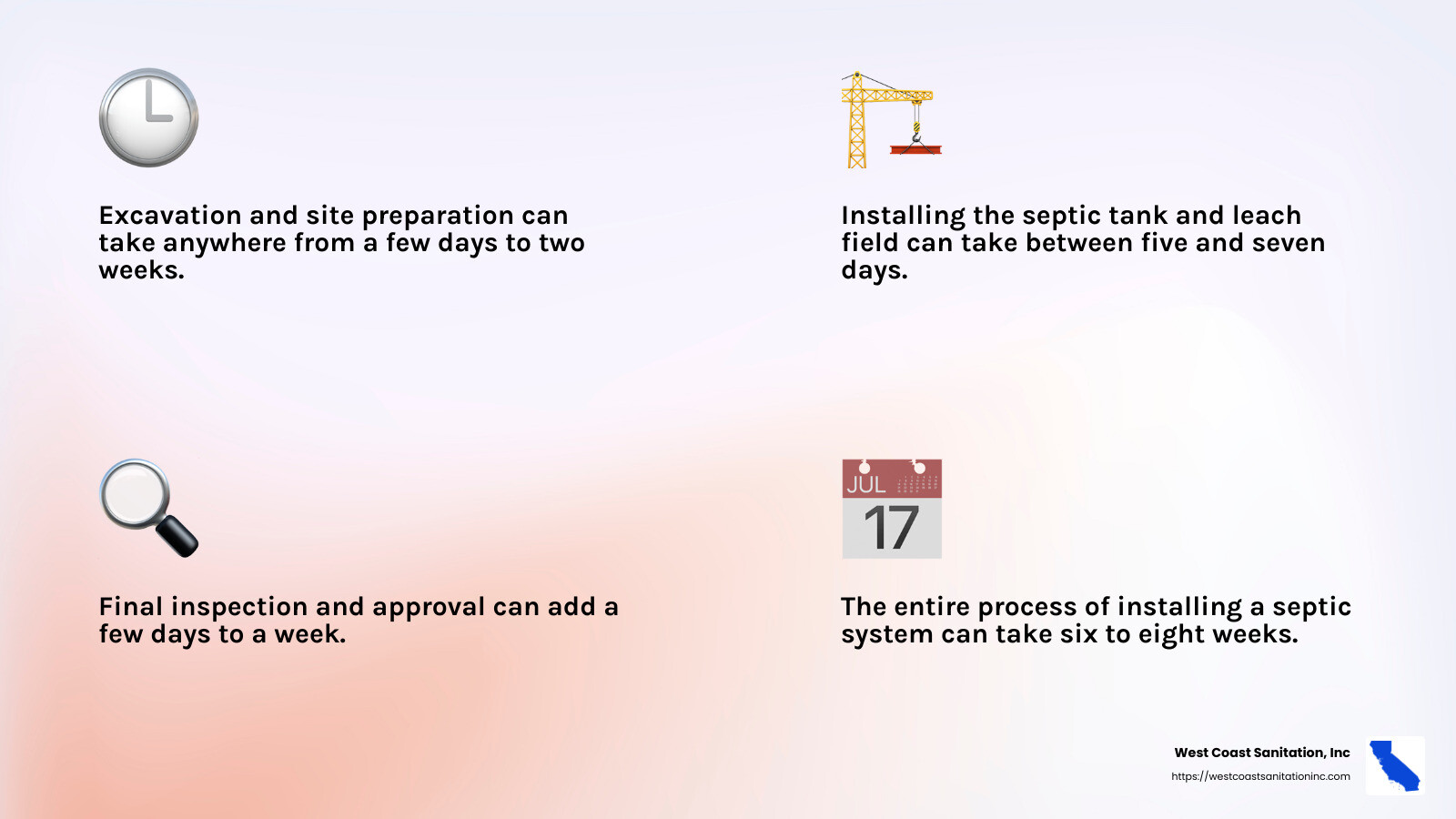
In general, excavation and site preparation can take anywhere from a few days to two weeks.
Installing the Septic Tank and Leach Field
Once the site is prepared, the next step is installing the septic tank and leach field. This stage is usually quicker but can be influenced by:
- Complexity of Design: A more complex system with multiple tanks or a larger leach field will take longer to install.
- Material of the Tank: Plastic tanks are lighter and easier to install compared to concrete tanks, which are heavier and require more effort to position correctly.
- Size of the System: Larger systems for bigger households will naturally take more time to install.
In a perfect scenario, installing the septic tank and leach field can take between five and seven days.
Final Inspection and Approval
After the installation, the system must undergo a final inspection and approval to ensure it complies with the engineer’s plan and local regulations. This involves:
- Inspection: Local authorities will inspect the system to check for any issues or deviations from the approved plan.
- Compliance Check: The system must meet all local health and safety codes.
- Engineer’s Approval: The engineer who designed the system will also review the installation to ensure it matches the design.
The inspection process can add a few days to a week to the timeline, depending on how quickly the inspectors can schedule and complete their review.
Typical Duration
From start to finish, including all the pre-installation steps, the entire process of installing a septic system can take anywhere from six to eight weeks. This timeline includes soil testing, obtaining permits, excavation, installation, and final inspection.
Factors like soil conditions, weather, and the complexity of the system can affect this timeline. But with proper planning and a skilled team, the process can be smooth and efficient.
Next, we’ll dive into post-installation considerations, such as the settling period and maintenance tips to keep your septic system running smoothly for years to come.
Post-Installation Considerations
Once your septic system is installed, there are several important steps to ensure it operates efficiently and lasts for many years. This section will cover the settling period, topsoil leveling, roof downspouts, finish grade options, and maintenance essentials.
Settling Period and Topsoil Leveling
After installation, the ground around the septic tank and leach field will need time to settle. This process can take several months. During this period, you might notice slight depressions in the soil.
- Topsoil Leveling: It’s crucial to level the topsoil after the settling period. This helps prevent water pooling, which can damage your system.
- Finish Grade Option: Ensure the final grade slopes away from the septic system. This directs surface water away, reducing the risk of saturation and system failure.
Roof Downspouts
Redirect roof downspouts away from the septic system. Excess water from downspouts can flood the drain field, leading to poor wastewater treatment and potential system failure.
Maintenance and Longevity
Proper maintenance is key to extending the life of your septic system. Here are some critical steps:
- Regular Inspections: Have your system inspected every 2-3 years. This helps catch minor issues before they become major problems.
- Pumping Schedule: Pump your septic tank every 3-5 years, depending on usage and tank size. Regular pumping prevents solids from clogging the drain field.
- Sludge Judge: Use a sludge judge to measure the solids in your tank. Pump the tank when solids reach about 25% of its capacity.
- Effluent Filter: Install an effluent filter to trap solids before they reach the drain field. Clean or replace this filter during each pumping.
Choosing Between Plastic and Concrete Septic Tanks
When it comes to septic tanks, you have two main options: plastic and concrete.
Plastic Septic Tanks:
- Durability: Plastic tanks are crack-resistant and immune to corrosion. However, they can be crushed under heavy pressure.
- Lifespan: With proper maintenance, plastic tanks can last 30-40 years.
- Environmental Changes: Plastic tanks are lighter and can shift if the ground moves, so they require stable soil conditions.
Concrete Septic Tanks:
- Durability: Concrete tanks are very sturdy and can withstand heavy loads.
- Lifespan: These tanks can last 40-50 years or more with proper care.
- Environmental Changes: Concrete tanks are less likely to shift with ground movement, making them ideal for areas with varying soil conditions.
Choosing between plastic and concrete depends on your specific needs and environmental conditions. Concrete tanks are more expensive but offer longer lifespan and stability, while plastic tanks are cost-effective and easier to install.
Next, we’ll explore frequently asked questions about septic system installation, including how long it takes to install a septic bed, build a septic tank, and for a septic tank to settle.
Frequently Asked Questions about Septic System Installation
How long does it take to install a septic bed?
Installing a septic bed, also known as a leach field, typically takes 1 to 3 days. This timeline can vary based on factors like soil type, weather conditions, and the complexity of the design. For example, if the soil is rocky or there are a lot of tree roots, it might take longer.
How long does it take to build a septic tank?
Building and installing a septic tank usually takes 1 to 2 days. This includes excavating the site, placing the tank, and connecting it to your home and the leach field. The actual duration can depend on the size of the tank and the ease of access to the installation site.
How long does it take for a septic tank to settle?
After installation, a septic tank and its surrounding soil need time to settle. This process can take several months. During this period, it’s important to monitor the area for any signs of uneven settling or depressions in the soil. Proper topsoil leveling after settling helps prevent water pooling and potential damage to your system.
Conclusion
At West Coast Sanitation, Inc., we understand that a properly installed septic system is crucial for the long-term health of your home. Our team of highly-trained technicians ensures that every installation is done right the first time, minimizing the risk of future problems.
From start to finish, our professional installation services cover everything. We handle the initial site evaluation, soil testing, and permitting, ensuring compliance with all local regulations. Our experts then proceed with the excavation, septic tank installation, and leach field setup, all while keeping you informed at every step.
But our commitment doesn’t end there. We also offer comprehensive maintenance services to keep your septic system running efficiently for years to come. Regular inspections, timely pumping, and expert advice on best practices help extend the life of your system and prevent costly repairs.
For a detailed look at our services or to get started on your septic system installation, visit our Residential Septic System Installation page. Let us be your trusted partner in ensuring a safe, efficient, and long-lasting septic system for your home.
Feel free to contact us with any questions or to schedule a consultation. We’re here to help!