


When it comes to keeping your home running smoothly, how often should a septic tank be pumped is a crucial question. For most households, the go-to answer is every 2 to 5 years. The actual timing, though, hinges on a few key factors like household size, the amount of wastewater generated, and the volume of solids. These variables decide the best schedule for your unique setup to prevent inconvenient emergencies and lasting damage.
A septic system plays a hidden yet essential role in your home, managing all the wastewater so you can go about your daily life without a hitch. However, the efficiency and longevity of your septic system depend heavily on regular maintenance, especially periodic pumping. This not only keeps the pipes flowing smoothly but also saves you from costly repairs or replacements.
Routine pumping benefits can’t be overstated. It improves the performance of your system, boosts your home’s value, and most importantly, safeguards health by preventing backflow and contamination. For homeowners in Southern California, especially in the Inland Empire, maintaining your septic system with professional help is vital to enjoy peace of mind and a reliable service for years.
How Often Should a Septic Tank Be Pumped?
Every 2 to 5 years is the typical interval for pumping a septic tank. However, this is not a one-size-fits-all situation. Several factors influence how often you should pump your septic tank.
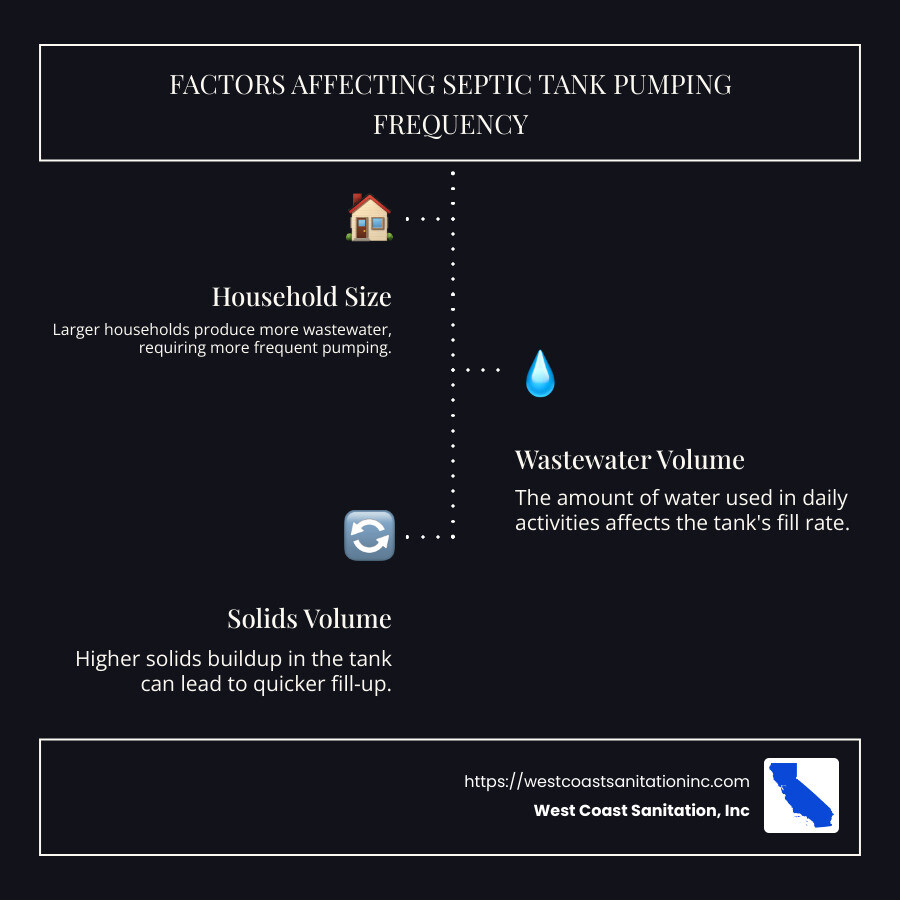
Factors Influencing Pumping Frequency
-
Household Size:
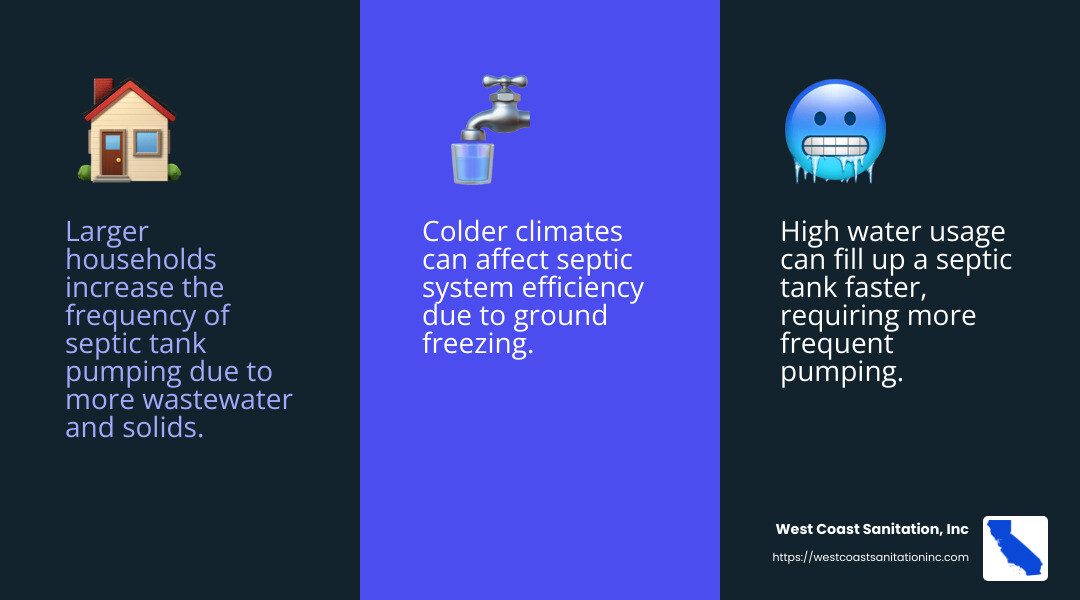
- The more people living in your home, the more wastewater and solids are generated. This increases the frequency of pumping needed.
-
Wastewater Volume:
- High water usage can fill the tank faster. Consider how much water your household uses daily.
-
Solids Volume:
- The amount of solid waste affects how quickly your tank fills. More solids mean more frequent pumping.
-
Garbage Disposal Usage:
- Using a garbage disposal can increase the volume of solids in the tank by up to 50%. This requires more frequent maintenance.
-
Tank Size:
- Larger tanks can hold more waste and may require less frequent pumping. Smaller tanks fill up faster.
-
Climate:
- In colder regions, the ground can freeze, affecting the system’s efficiency. Warmer climates might lead to faster bacterial activity and decomposition.
Signs Your Septic Tank Needs Pumping
Knowing when your septic tank needs attention can save you from costly repairs and health hazards. Look out for these warning signs:
-
Slow Drains:
- If sinks, tubs, and toilets are draining slowly, it might be a sign that your septic tank is full.
-
Foul Odors:
- Unpleasant smells around your home or in the yard can indicate a full tank.
-
Sewage Smells:
- A strong sewage odor in your home is a clear sign that something is wrong.
-
Standing Water:
- Puddles of water around the drain field may suggest that the tank is overflowing.
-
Clogged Pipes:
- Frequent clogs can be a sign that the septic system is struggling to manage the waste load.
If you notice any of these signs, it’s crucial to get a professional diagnosis. A septic expert can confirm whether your tank needs pumping or if there’s another issue at play. Regular inspections and timely pumping help maintain a healthy septic system, ensuring its longevity and efficiency.
Benefits of Regular Septic Tank Maintenance
Maintaining your septic tank might not be the most glamorous task, but it’s absolutely essential for a happy and healthy home. Let’s explore why regular septic tank maintenance is such a smart move.
Health and Safety Benefits
Good Health and Hygiene:
A well-maintained septic tank is vital for keeping your family safe. When septic systems are neglected, they can lead to backwash flow, which introduces harmful bacteria into your home. This can pose serious health risks, especially for children and the elderly.
Preventing Bacteria Exposure:
When septic tanks are not cleaned regularly, bacteria can seep into the soil and potentially contaminate your groundwater. This not only affects your drinking water but also the environment. Regular maintenance helps to keep these harmful bacteria at bay, ensuring a safer home and community.
Financial and Property Value Benefits
Avoiding Maintenance Emergencies:
Imagine waking up to find your yard flooded with sewage or dealing with foul odors wafting through your home. Regular septic tank maintenance helps you avoid these unpleasant surprises by catching issues before they become emergencies.
Enhancing Home Value:
A well-functioning septic system is a valuable asset when it comes to selling your home. Buyers are more likely to pay a premium for a property that has documented regular maintenance. This can lead to a higher resale value.
Avoiding Bad Home Purchases:
If you’re in the market for a new home, checking the septic system is crucial. A thorough inspection can save you from buying a property with hidden septic issues, which could lead to costly repairs down the line.
Promoting Better Performance:
Just like your car needs regular oil changes, your septic system needs routine care. This keeps it running smoothly and efficiently, reducing the likelihood of breakdowns and extending its lifespan.
Financial Savings:
Routine maintenance might seem like an expense, but it’s a wise investment. It helps you avoid costly repairs or replacements. Replacing a septic system can cost anywhere between $5,000 and $15,000, whereas regular maintenance is just a fraction of that.
Increasing Property Value:
Proper septic maintenance not only saves you money but also increases the value of your property. Potential buyers will appreciate a well-maintained system, making your home more attractive in the real estate market.
In summary, regular septic tank maintenance is key to a safe, efficient, and cost-effective home. By investing in routine care, you’re not just protecting your property; you’re enhancing its value and ensuring the health and safety of your family.
How to Check If Your Septic Tank Is Full
Ensuring your septic tank is not overfilled is essential for maintaining a healthy home environment. Here’s how you can determine if your tank needs pumping.
DIY Methods for Checking Tank Levels
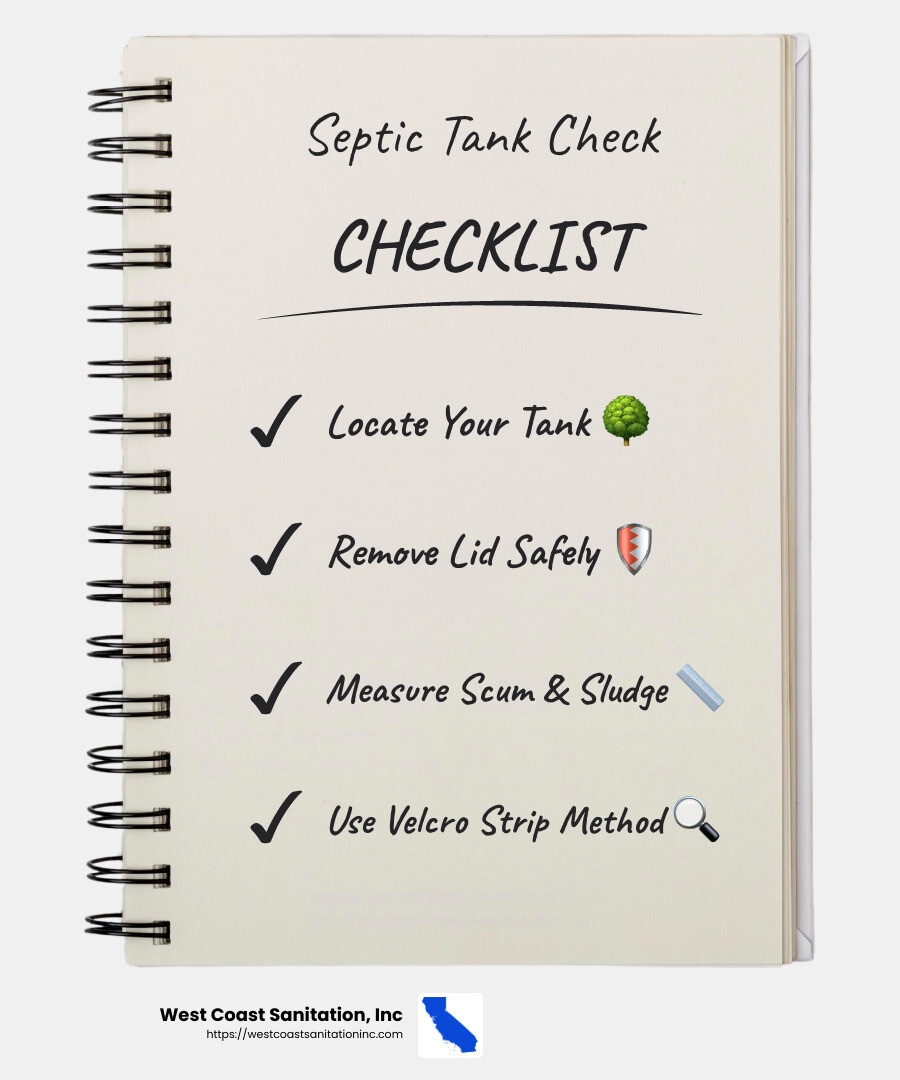
Locate Your Septic Tank:
The first step is to find your septic tank. If you have a map from your home inspection documents, this will help. If not, look for small hills or pits in your yard that might indicate the tank’s location. Be cautious, as old systems can be dangerous if not handled properly.
Remove the Lid Safely:
Once you’ve found your tank, carefully remove the lid. It’s heavy, so take precautions to avoid injury. Never leave the tank open and unattended, as it poses a safety risk to both humans and pets.
Measure Scum and Sludge Levels:
You can check the levels using a homemade measuring stick. Attach an 18-24 inch velcro strip to a 7-foot stick. Lower it into the tank until it hits the bottom. The sludge will stick to the velcro, showing you the depth. If the sludge is more than 12 inches, it’s time for a pump.
Velcro Strip Method:
The velcro strip method is simple and effective. It allows you to see how thick the sludge layer is. Regular checks can prevent overflow and damage.
Professional Inspection Services
West Coast Sanitation, Inc.:
If DIY isn’t your style, or you prefer expert advice, professional services are available. West Coast Sanitation, Inc. offers thorough inspections with photo documentation. This service provides a clear picture of your tank’s condition and helps in planning maintenance.
Customized Maintenance Schedule:
Based on your household’s usage, professionals can create a maintenance schedule custom to your needs. This personalized approach ensures your septic system remains efficient without unnecessary service calls.
Regular checks, whether DIY or professional, are crucial for maintaining your septic system. By staying proactive, you avoid costly repairs and keep your home safe and clean.
Best Practices for Septic Tank Maintenance
Keeping your septic system in top shape doesn’t have to be complicated. By following a few simple practices, you can ensure your system runs smoothly for years.
Inspect and Pump Frequently
Regular Inspections:
Have your septic system inspected by a professional every three years. If your system has mechanical components like pumps, aim for yearly check-ups. These inspections help catch issues early before they become costly problems.
Scheduled Pumping:
How often should a septic tank be pumped? Typically, every 2-5 years. This depends on household size, wastewater volume, and tank size. Keeping a record of sludge and scum levels helps you track when it’s time for a pump.
Use Water Efficiently
Conserve Water:
The less water you use, the less strain on your septic system. Consider installing high-efficiency toilets and faucet aerators to cut down on water usage.
Smart Laundry Practices:
Avoid doing all your laundry on one day. Instead, spread it out over the week to prevent overloading the system. Use full loads, but select the proper load size on your machine to save water.
Properly Dispose of Waste
Mindful Flushing:
Only flush human waste and toilet paper. Avoid non-decomposable items like wipes, feminine products, and diapers. These can clog your system and lead to backups.
Limit Garbage Disposal Use:
Garbage disposals add unnecessary solids to your tank. If you must use one, reduce its use and pump your tank more frequently.
Avoid Chemical Drain Openers:
Opt for a drain snake or boiling water instead. Chemicals can harm the bacteria that help break down waste in your tank.
Maintain Your Drainfield
Protect the Area:
Never park or drive on your drainfield. The weight can compact soil and damage pipes, leading to system failure.
Smart Planting:
Plant trees at a safe distance to prevent roots from invading your system. Native grasses and ground covers are the best choices for planting over your drainfield.
Manage Runoff:
Keep roof drains and sump pumps away from your drainfield area. Excess water can flood the system and hinder wastewater treatment.
Avoid Impermeable Materials:
Do not cover your drainfield with concrete or asphalt. These materials block oxygen, which is vital for the bacteria that break down sewage.
By following these best practices, you can extend the life of your septic system and avoid costly repairs. Next, we’ll tackle some frequently asked questions about septic tank pumping to clear up any lingering doubts.
Frequently Asked Questions about Septic Tank Pumping
How often should a septic tank be pumped for a family of 4?
For a family of four, a common septic tank pumping interval is every 2.5 to 4 years. The exact timing depends on several factors like the size of your tank and your household’s water usage. A 1,000-gallon tank might need pumping every 2.5 years, while a 1,500-gallon tank could last up to 4 years. Regularly monitoring sludge and scum levels can help determine the optimal schedule for your home.
What are the signs that my septic tank is full?
Recognizing early signs of a full septic tank can save you from messy and costly issues. Here are some common indicators:
-
Slow Drains: If sinks and toilets are draining slowly, your tank might be nearing capacity.
-
Foul Odors: Unpleasant smells in your yard or home can signal that your tank needs attention.
-
Standing Water: Unexpected pools of water in your yard, especially near the drainfield, may indicate an overflowing tank.
-
Greener Grass: If the grass over your drainfield is suddenly more lush, your system might be leaking liquids.
If you notice any of these signs, it’s time to call in a professional for an inspection.
Can I use a garbage disposal with a septic system?
Using a garbage disposal with a septic system is generally not recommended. Garbage disposals can increase the volume of solids in your tank by up to 50%, which may lead to clogging and require more frequent pumping. If you choose to use one, minimize its use and be prepared for more regular maintenance. Instead, consider composting food waste or disposing of it in the trash.
By understanding these key aspects of septic tank maintenance, you can keep your system running efficiently and avoid potential problems.
West Coast Sanitation Can Help!
Regular maintenance of your septic system is not just a good idea—it’s essential. Without it, you risk costly repairs, health hazards, and even a decrease in your property’s value. Routine pumping ensures your septic tank operates efficiently, preventing issues like foul odors, slow drains, and potential system failures.
The benefits of professional services cannot be overstated. Experts like us at West Coast Sanitation, Inc. have the knowledge and equipment to handle your septic tank with care. We offer comprehensive inspections and cleanings, catching minor issues before they become major problems. Our team is committed to delivering same-day, high-quality service using the latest high-tech equipment.
It’s time to take action. Protect your home and health by contacting West Coast Sanitation, Inc. for expert septic tank services. Our local family-owned business is ready to assist you in maintaining a reliable and efficient septic system. Reach out today to schedule your next septic tank pumping and enjoy peace of mind knowing your system is in good hands.