


Why Your Septic Pumping Schedule Isn’t One-Size-Fits-All
Proper septic pumping is not a one-size-fits-all task; the frequency and timing depend heavily on both household size and water usage. A small household with minimal water consumption may require pumping far less often than a large family that generates a higher volume of wastewater. Understanding these differences is essential for maintaining a healthy septic system, preventing costly backups, and protecting the surrounding environment from contamination.
Factors such as the number of residents, daily water usage, and even the types of appliances or fixtures in the home all influence how quickly a septic tank fills. For example, homes with multiple bathrooms, frequent laundry loads, or high-flow fixtures may need more frequent pumping to avoid system overload. By tailoring pumping schedules to the specific needs of a household, homeowners can extend the lifespan of their septic system and ensure it operates efficiently year-round.
Here’s a quick reference based on typical household sizes and tank capacities:
| Household Size | Tank Size | Pumping Frequency |
|---|---|---|
| 1-2 people | 1,000 gal | Every 4-5 years |
| 3-4 people | 1,000-1,500 gal | Every 2-3 years |
| 5-6 people | 1,500-2,000 gal | Every 2-3 years |
| 7+ people | 2,500+ gal | Every 1-2 years |
The EPA recommends pumping most residential septic tanks every 3 to 5 years — but that’s just a starting point. Your actual schedule depends on how many people live in your home, how much water you use daily, and the size of your tank.
For Southern California homeowners in the Inland Empire, getting this schedule wrong can mean costly emergency calls, drain field damage, or worse — sewage backing up into your home.
The average household uses around 300 gallons of water per day, according to the EPA. A larger family pushes that number higher, filling your tank faster and leaving less room for error.
Primary Factors Influencing Septic System Longevity
When we talk about how long a septic system lasts—often 20 to 30 years with the right care—we have to look at what’s happening inside that underground tank. It isn’t just a “holding tank”; it’s a living biological processor. Understanding why septic tank size matters is the first step in protecting your investment.
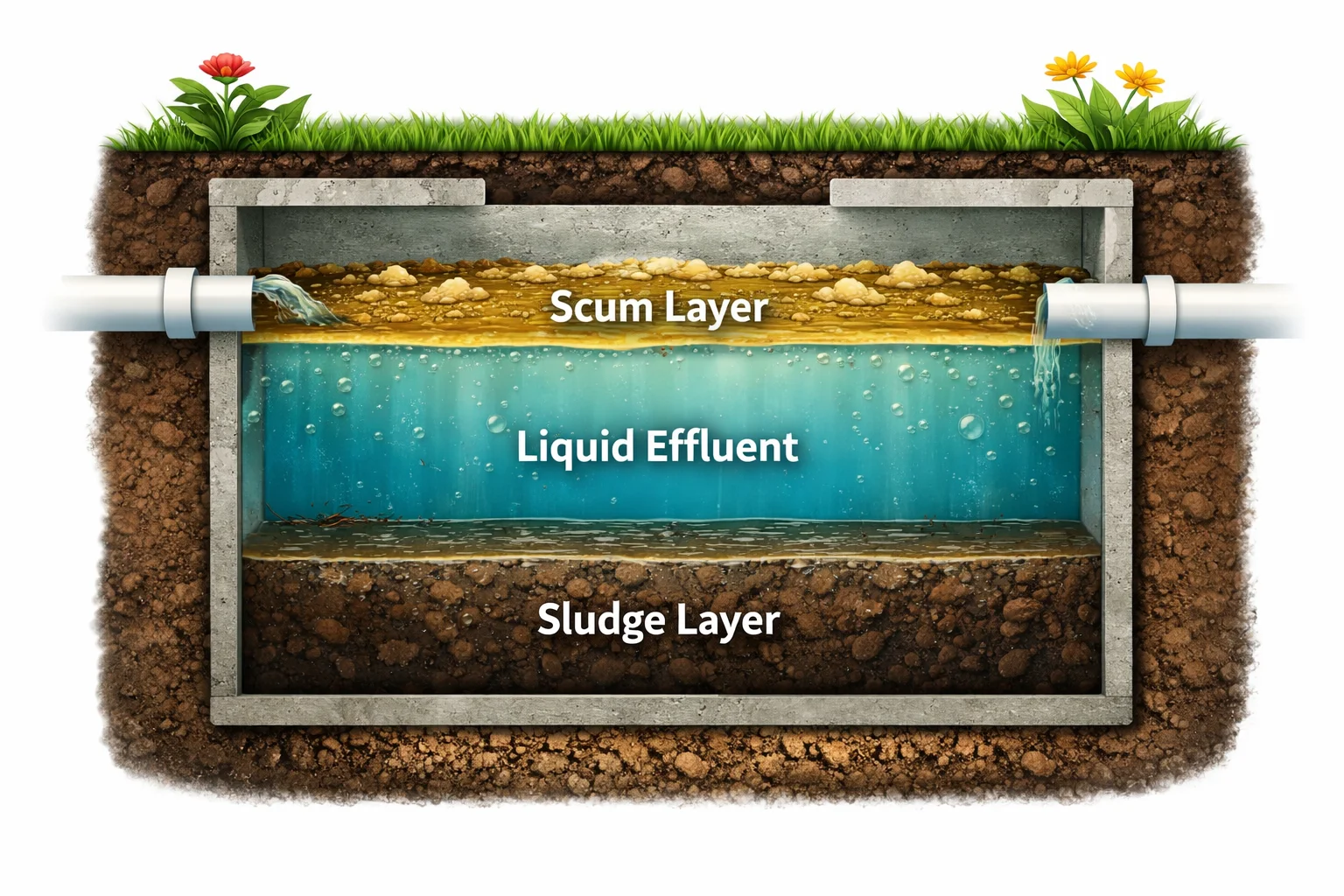
The Three Layers of Waste
Inside your tank, gravity does the heavy lifting. Waste separates into three distinct layers:
- The Scum Layer: Fats, oils, and grease (FOG) float to the top.
- The Liquid Effluent: The middle layer of relatively clear water that exits to the drain field.
- The Sludge Layer: Heavy solids that sink to the bottom.
As we use our sinks and toilets, sludge accumulation and scum layers grow. If the sludge gets too high, it begins to flow out into the drain field, which can lead to a total system failure. This is why what happens during a septic pump is so critical—we remove those solids before they can cause damage.
The Role of Bacteria
Healthy septic systems rely on anaerobic bacteria to break down organic solids. These tiny workers are surprisingly efficient, but they have limits. They cannot break down inorganic materials, plastics, or excessive amounts of grease. Furthermore, the age of your system plays a role. Older systems, common in parts of Riverside and San Bernardino, may have smaller capacities or older materials that require more frequent monitoring.
Soil and Drainage
Soil percolation (how well your soil absorbs water) is another major factor. In the Inland Empire, soil types vary from sandy to heavy clay. If your soil doesn’t drain well, your tank has to work harder to process wastewater, which can influence your pumping frequency.
How Proper Pumping Schedules Differ by Household Size and Usage
Determining the right frequency isn’t just guesswork; it’s a calculation of volume versus capacity. How Proper Pumping Schedules Differ by Household Size and Usage is essentially a math problem where the variables are your family size and your tank’s gallon capacity.
The following table provides a more detailed breakdown of industry-standard recommendations:
| Number of People | 750 Gallon Tank | 1,000 Gallon Tank | 1,250 Gallon Tank | 1,500 Gallon Tank |
|---|---|---|---|---|
| 1 | 6.8 years | 9.1 years | 11.5 years | 13.8 years |
| 2 | 3.2 years | 4.3 years | 5.4 years | 6.5 years |
| 3 | 1.9 years | 2.6 years | 3.3 years | 4.0 years |
| 4 | 1.3 years | 1.8 years | 2.3 years | 2.8 years |
| 5 | 1.0 years | 1.3 years | 1.7 years | 2.0 years |
| 6 | 0.7 years | 1.0 years | 1.3 years | 1.5 years |
As you can see, how often should a septic tank be pumped changes drastically when you add even one person to the home. This is because occupancy impact isn’t just about more toilet flushes; it’s more showers, more laundry, and more dishes.
How Proper Pumping Schedules Differ by Household Size and Usage for Small Households
For households with 1-2 people, such as retirees in Sun City or newlyweds in Ontario, the system experiences a much lower “surge” of wastewater. If you have a 1,000-gallon tank, you might comfortably wait 4 to 5 years between pumpings.
However, even with low usage, we recommend an inspection every 2-3 years. Why? Because small leaks (like a running toilet) can silently saturate your drain field. Taking advantage of cost-effective maintenance strategies like regular inspections can prevent a small issue from becoming a $10,000 repair.
How Proper Pumping Schedules Differ in High-Occupancy Homes
In homes with 5 or more residents, the septic system is under constant “peak demand.” Think of it like a highway during rush hour; if the traffic never slows down, the road wears out faster. For a family of 5 or 6 living in a home with a 1,500-gallon tank, annual pumping is often the safest bet.
If you’ve recently added family members or moved into a larger home, it is worth asking: Is your tank the right size for your family? If your household size has outgrown your tank’s capacity, your pumping schedule will need to be much more aggressive to prevent overflow.
Impact of Water Consumption and Waste Habits
While household size is the biggest predictor, how you use your water is just as important. According to the U.S. Environmental Protection Agency (EPA), the average American uses about 82 gallons of water per day at home. For a family of four, that’s over 300 gallons hitting the septic tank every 24 hours.
The Garbage Disposal Dilemma
Many homeowners don’t realize that a garbage disposal is a septic system’s worst enemy. Using a disposal can increase the amount of solids in your tank by up to 50%. If you use one frequently, you should plan to pump your tank twice as often. We generally suggest scraping plates into the trash instead of the sink to keep those solids out of your system.
Water-Saving Fixtures
Installing low-flow showerheads and high-efficiency toilets can significantly extend the time between pumpings. The National Oceanic and Atmospheric Administration (NOAA) notes that outdoor water use accounts for about 30% of household water, but indoor conservation is what truly saves your septic tank.
Laundry Scheduling
One of the most common causes of “septic shock” is doing five loads of laundry on a Saturday. This sends a massive surge of water through the tank, which can stir up the sludge and push it into the drain field. We recommend spreading laundry out over the week to give the tank time to settle. If you ignore these habits, you might find out the hard way what happens when you do not pump your tank regularly.
Recognizing Warning Signs and Environmental Factors
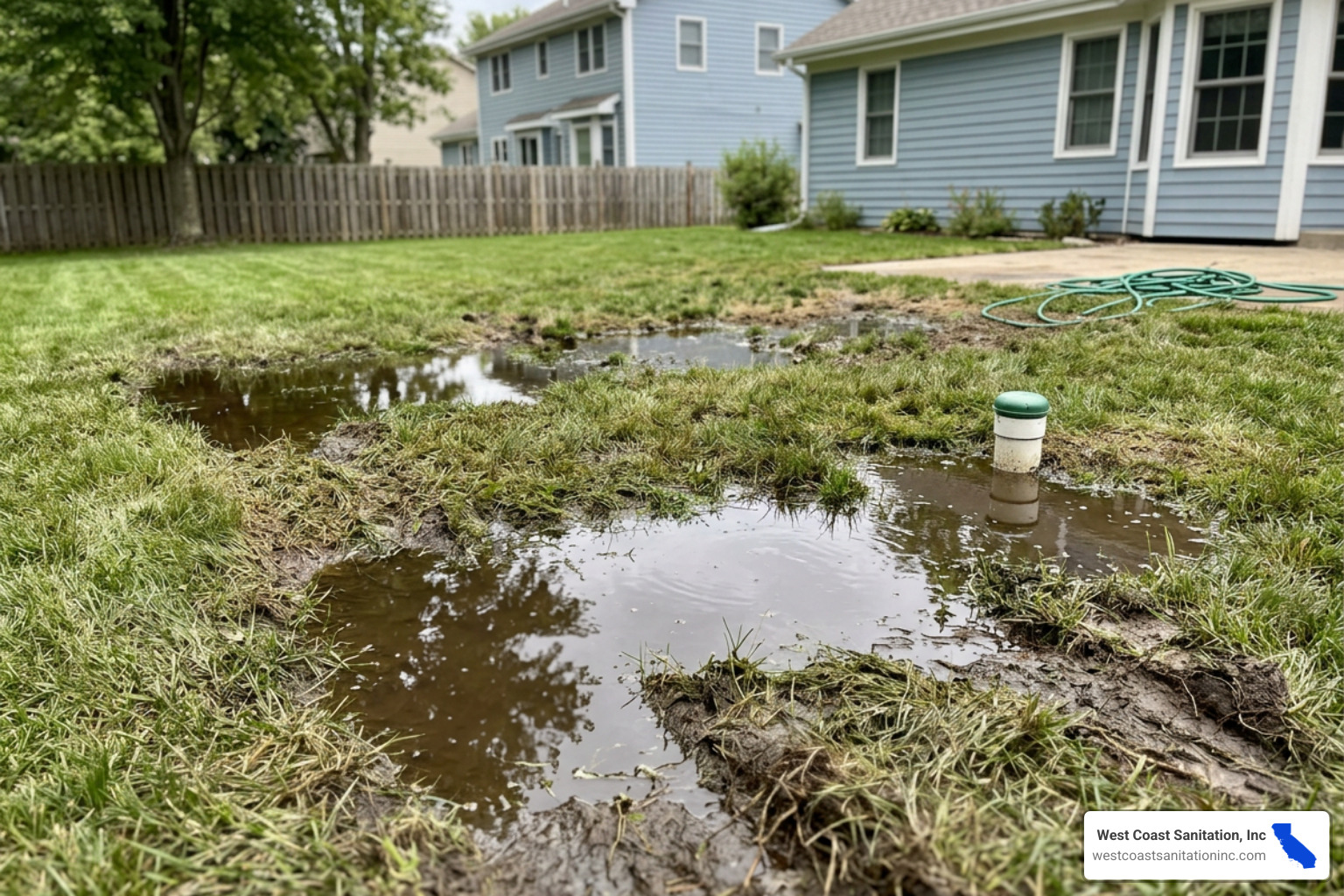
Even if you are following a strict schedule, your system might give you “early warning signs” that it needs attention. In Southern California, our environment plays a unique role in how our systems behave.
Common Red Flags
- Slow Drains: If your sinks or toilets are sluggish throughout the house, it’s not just a simple clog; your tank is likely full.
- Foul Odors: A healthy septic system shouldn’t smell. If you notice a “rotten egg” odor near the tank or drain field, it’s time for a check-up.
- Lush Green Grass: While we all want a green lawn, if the grass over your drain field is suddenly much greener and spongier than the rest of the yard, it may be receiving too much “fertilizer” from an overflowing tank.
- Pooling Water: Seeing standing water in your yard when it hasn’t rained is a major septic system emergency sign.
The Inland Empire Climate
We don’t get much rain in places like Riverside or Moreno Valley, but when we do, it can be intense. Heavy rains can saturate the soil, making it impossible for the drain field to accept more effluent. This causes water to back up into the tank. If your tank is already near its pumping limit, a single storm can push it over the edge.
Seasonal changes also matter. During the warmer months, bacterial activity in the tank is high, which is good. However, if you have a vacation home or a property that sits empty for months, the lack of “food” for the bacteria can actually cause the biological process to stall, leading to issues when you return.
Frequently Asked Questions About Septic Pumping
How often should a family of four pump a 1,000-gallon tank?
For a typical family of four using a 1,000-gallon tank, we recommend pumping every 2 to 3 years. If the family uses a garbage disposal or does a high volume of laundry, every 2 years is much safer. Monitoring sludge and scum levels during an annual inspection is the only way to know the exact timing for your specific home.
Do septic tank additives replace the need for pumping?
The short answer is: No. While some bacterial treatments can help maintain a healthy colony of microbes to break down organic solids, they cannot dissolve inorganic waste, plastics, or the heavy sludge that builds up at the bottom. Some additives can even be harmful if they contain harsh chemicals that kill the natural bacteria. There is no substitute for physical removal of waste.
Call West Coast Sanitation Today!
Maintaining your septic system doesn’t have to be a mystery. By understanding how proper pumping schedules differ by household size and usage, you can protect your home, your health, and your wallet. Whether you’re in a quiet two-person home in Redlands or a bustling household in Corona, the key is consistency.
At West Coast Sanitation, Inc, we are proud to be your local, family-owned experts. We serve the entire Inland Empire and Southern California region, from Riverside to Los Angeles. We use high-tech equipment to ensure your system is pumped thoroughly and inspected for any signs of trouble.
Don’t wait for a backup to happen—proactive care is the best way to ensure your system lasts for decades. If you’re unsure when your tank was last serviced, or if you’ve recently added more people to your household, give us a call today.
Schedule your residential septic tank pumping with West Coast Sanitation, Inc and let our family take care of yours!