


A septic camera inspection lets technicians see the inside of your system without digging, protecting both your landscaping and your wallet.
Top Benefits at a Glance
- Early Problem Detection – address issues before they escalate
- Accurate Diagnosis – no guessing, just clear visuals
- Cost-Effective – avoid unnecessary excavation
- Visual Evidence – receive recorded footage for your records
- Preventative Maintenance – extend the life of your septic system
- Property Value Protection – safeguard one of your biggest investments
For Inland Empire homeowners, the technology delivers peace of mind: tree-root invasions, cracked lines, or hidden blockages are located within inches—no torn-up yard required. If you’re new to septic systems, this quick primer on how a septic tank works shows why internal inspections matter so much.
What is a Septic Camera Inspection and How is it Performed?
Think of a septic camera inspection as giving your septic system a thorough medical exam – but instead of a stethoscope, we use cutting-edge technology to see what’s really going on inside your pipes. This process involves a waterproof camera that’s specifically designed to handle the challenging environment of underground septic systems.
The camera itself is quite remarkable. It captures high-resolution video and is mounted on a flexible fiber-optic cable that can steer through the twists and turns of your septic lines. Powerful LED lights illuminate the dark interior of your pipes, while everything is displayed on a real-time monitor so we can see exactly what’s happening as it happens.
What makes this approach so valuable is that it’s a completely non-destructive method. We can examine your entire septic system without digging up your beautiful landscaping or disrupting your daily routine. Whether we’re locating blockages, assessing pipe condition, or checking for damage, the camera gives us the clear picture we need to make accurate diagnoses. How Does a Septic Tank Work?
Modern septic inspection cameras have come a long way from the early days of this technology. Today’s equipment offers adjustable lighting, recording capabilities, and can even work with specialized attachments for clearing minor blockages finded during the inspection process.
The Step-by-Step Inspection Process
Every septic camera inspection starts with finding the right access point – usually a cleanout or access port in your septic system. We take our time to set up properly, ensuring all safety equipment is in place and checking for any obvious issues before we begin.
The magic happens during camera insertion. We carefully lower the waterproof camera into your system and begin navigating pipes with precision. The flexible fiber-optic cable is like having a skilled explorer that can follow every twist and turn of your septic lines. As the camera travels through your system, we’re watching the real-time viewing on our monitor, carefully examining each section of pipe.
One of the most valuable aspects of our process is recording footage of everything we find. This isn’t just for our records – it gives you visual proof of your system’s condition. Whether you need documentation for insurance claims, warranty issues, or simply want to understand what’s happening with your septic system, this video evidence is invaluable.
For those tricky situations where we need to know exactly where the camera is located underground, we use sonde transmitter technology. This small radio transmitter attaches to the camera head and works with radio detection equipment to pinpoint the exact location, even when it’s buried beneath your driveway or garden.
Traditional Methods vs. Camera Inspection
Before camera technology revolutionized septic diagnostics, the industry relied heavily on guesswork and often required unnecessary digging. Picture this: a technician would make an educated guess about where a problem might be, then start digging exploratory holes across your property. Not exactly the gentle approach most homeowners prefer!
The old-school method was notorious for causing property damage. Beautiful landscaping, pristine lawns, and even concrete driveways weren’t safe when traditional diagnostic methods were the only option. The process could take days, create a mess, and still might not accurately identify the real problem.
Camera inspection has completely transformed this experience. The cost-effectiveness is immediately apparent – no more paying for unnecessary excavation or repairs that don’t address the actual issue. The accuracy we achieve with visual inspection means we know exactly what we’re dealing with before we start any work.
The efficiency gains are remarkable too. What once might have taken days of digging and detective work can now be accomplished in hours with complete certainty. Plus, the visual evidence we provide gives you confidence that any recommended repairs are truly necessary. Do I Need a Plumbing Snake or Hydro Jetting?
The Power of a Professional Septic Camera Inspection
When you’re dealing with septic system problems, there’s nothing quite like the peace of mind that comes from actually seeing what’s happening inside your pipes. A professional septic camera inspection gives you that crystal-clear view, and trust me – it’s a game-changer for homeowners in the Inland Empire.
The real power of camera inspection lies in early detection. Think of it like getting a health checkup for your septic system. We can spot problems while they’re still small and manageable, long before they turn into the kind of expensive emergencies that make you want to hide under the covers. A tiny crack today doesn’t have to become a collapsed pipe tomorrow – but only if you catch it in time.
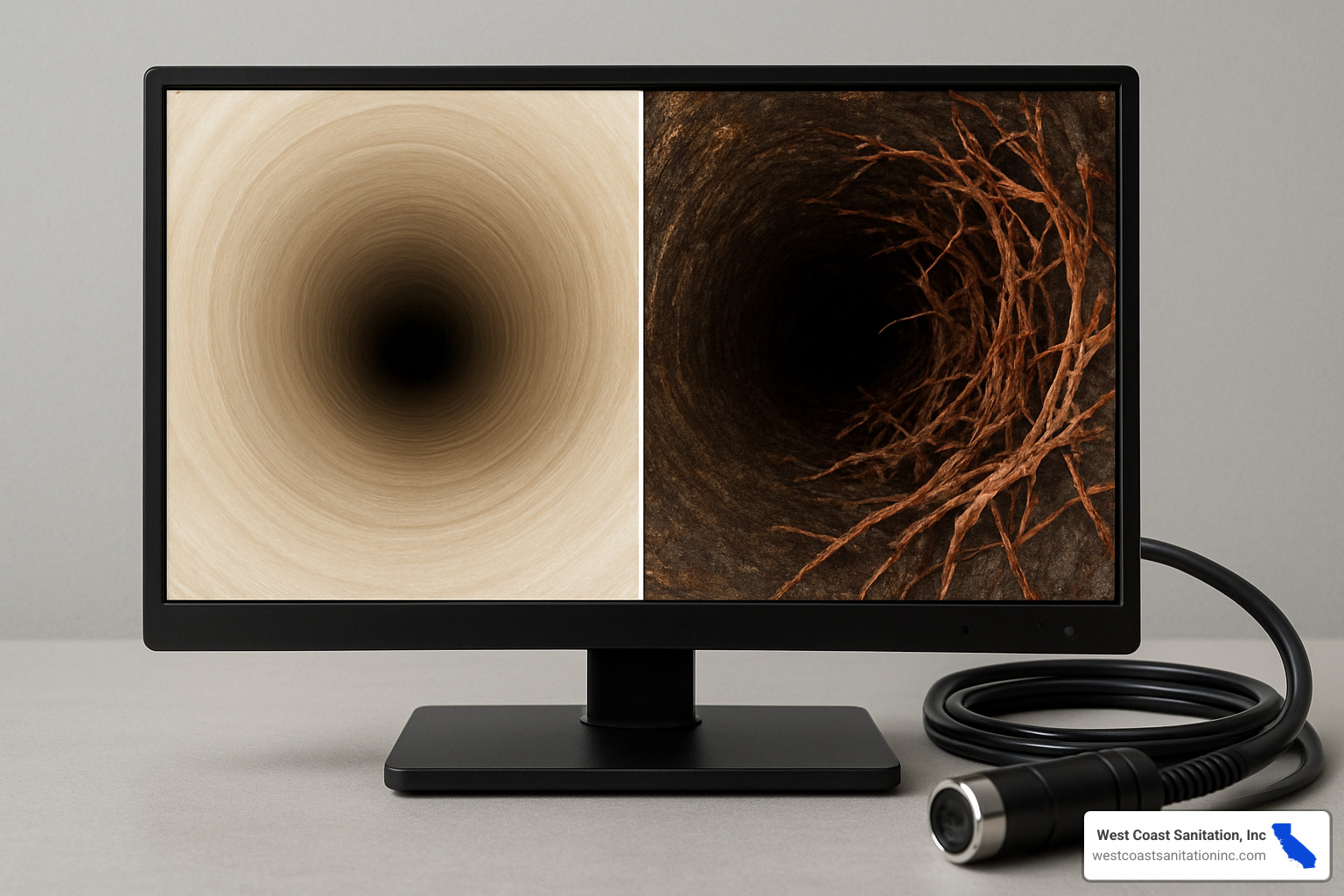
What makes camera inspection so powerful is the accurate diagnosis it provides. No more guessing games or “well, it might be this or that” conversations. When we can see exactly what’s wrong, we can fix it right the first time. This visual confirmation means you’re not paying for unnecessary repairs or watching the same problem come back six months later.
The beauty of this technology really shines when it comes to preventing catastrophic failure. Many septic disasters could be completely avoided if homeowners knew what was brewing underground. A camera inspection reveals those warning signs – like hairline cracks, early root intrusion, or partial blockages – before they cause serious damage. Why Do Septic Systems Fail?
What Problems Can a Camera Inspection Uncover?
A comprehensive septic camera inspection is like having X-ray vision for your septic system. We can identify problems that might stay hidden for years, quietly getting worse until they cause major headaches.
Root intrusion is probably the most common culprit we find. Tree roots are incredibly persistent – they’ll find the tiniest crack or loose joint and work their way in, growing bigger and stronger until they create serious blockages. Cracked or broken pipes often start small but allow sewage to leak out and groundwater to seep in, creating a mess both above and below ground.
Sometimes we find collapsed pipes – usually the result of ground settling or old age finally catching up with the system. Offset or misaligned joints might seem minor, but they create perfect spots for debris to collect and cause backups. Corrosion in older metal pipes creates rough surfaces that catch everything flowing through, while grease and sludge buildup can turn your pipes into a slow-moving nightmare.
Bellied or sunken pipes are particularly tricky because they create low spots where waste settles instead of flowing freely. And faulty connections between pipe sections can cause leaks that damage your property and contaminate the surrounding soil.
The good news? Once we can see these problems clearly, we can develop targeted solutions that address the root cause instead of just treating symptoms. How to Prevent Roots From Damaging the Septic Tank
Advanced Technologies and Equipment Used
Modern septic camera inspection equipment is pretty impressive stuff. We use self-leveling cameras that automatically adjust to stay upright, giving us consistently clear images no matter how the camera moves through your pipes. No more trying to figure out what we’re looking at from a sideways angle!
High-dynamic-range (HDR) imaging helps us see clearly even when lighting conditions change dramatically as the camera travels through different sections of your system. Pan-and-tilt cameras can rotate and move to examine every angle of your pipes, ensuring we don’t miss anything important.
One of the coolest features is our locating sondes – small radio transmitters that attach to the camera head. These work with radio detection equipment to pinpoint exactly where the camera is underground, even beneath concrete or landscaping. When we need to locate a specific problem for repair, this technology is invaluable.
Video recording capabilities mean you get complete documentation of your system’s condition. This footage can be reviewed later, shared with repair specialists, or used for insurance purposes. It’s like having a permanent record of your septic system’s health.
At West Coast Sanitation, we’ve invested in the latest high-tech equipment because we believe you deserve the most accurate diagnosis possible. Our advanced camera technology reflects our commitment to providing top-quality septic services throughout the Inland Empire.
When Should You Schedule a Septic Camera Inspection?
The best time to schedule a septic camera inspection is before you actually need one. Think of it like getting a physical checkup – you don’t wait until you’re sick to see your doctor. Setting up a routine maintenance schedule with camera inspections every 3-5 years is one of the smartest investments you can make in your septic system’s health.
Of course, life doesn’t always follow a neat schedule. Your septic system’s inspection needs might vary based on system age, how many people live in your home, and even local soil conditions here in the Inland Empire. Older systems or homes with large families might benefit from more frequent inspections.
Real estate transactions are another prime time for camera inspections. Whether you’re buying your dream home or selling the one you’ve loved for years, a camera inspection provides valuable peace of mind. Nobody wants surprises when it comes to septic systems – they’re rarely pleasant or cheap.
If you’re dealing with recurring plumbing issues like slow drains that keep coming back or mysterious odors that won’t go away, it’s time to look deeper. Rather than playing whack-a-mole with symptoms, a camera inspection can reveal what’s really going on down there.
Construction planning is another often-overlooked reason for camera inspections. Planning to add a deck, install a pool, or plant new landscaping? Knowing exactly where your septic components are located can save you from some very expensive mistakes.
Before Buying or Selling a Home
Buying a home with a septic system without a camera inspection is like buying a used car without looking under the hood. You might get lucky, but why take the chance? A pre-purchase septic camera inspection can reveal hidden problems that won’t show up during a standard home inspection.
For home buyers, this information is pure gold. You can use inspection findings to negotiate repairs with the seller or adjust your offer to account for necessary work. Many mortgage companies now require septic certifications before approving loans, and a camera inspection is often part of this process. It’s better to know about problems before you own them.
Sellers benefit from camera inspections too. California law requires sellers to disclose known septic system problems, and a camera inspection provides clear documentation of your system’s condition. This transparency often leads to smoother transactions and fewer headaches after closing.
The inspection can also serve as a powerful negotiation tool. If problems are found, sellers can choose to address them before listing or adjust the sale price accordingly. Either way, everyone knows what they’re dealing with upfront.
Septic System Inspection Necessary When Buying Home and Point of Sale Septic Inspections: What to Expect
Responding to Telltale Warning Signs
Your septic system has ways of telling you when something’s wrong – you just need to know how to listen. Slow drains throughout your home, especially when multiple fixtures are affected, often indicate problems in your main septic lines. One slow drain might just need a good cleaning, but when everything’s sluggish, it’s time for a camera inspection.
Gurgling sounds from drains, toilets, or plumbing fixtures are your system’s way of crying for help. These sounds usually mean air is trapped somewhere it shouldn’t be, often due to blockages or venting problems.
Sewage backups are the septic system equivalent of a fire alarm – they demand immediate attention. If sewage is backing up into your home through drains or toilets, there’s likely a significant blockage or system failure that needs professional diagnosis right away.
Foul odors around your property, particularly near septic system components, can indicate leaks, blockages, or system failures. These aren’t just unpleasant – they can pose real health risks to your family.
Lush green patches in your yard might seem like a good thing, but when they’re over your drain field, they’re actually warning signs. This usually means sewage is leaking from your system and fertilizing the grass – definitely not the kind of fertilizer you want.
Signs You May Need a New Septic Tank and Septic System Backup: Causes, Warnings, and How to Fix It
The Long-Term Value: Savings and System Longevity
When you schedule a septic camera inspection, you’re buying insurance against surprise failures. Catching a $300 root intrusion today can prevent an $8,000 pipe replacement tomorrow.
How a Septic Camera Inspection Saves You Money
- Pinpoint precision – we dig (or don’t dig) exactly where needed.
- Smaller repairs, not replacements – many “total failures” turn out to be single-section fixes.
- Landscaping stays intact – preserving trees, turf, and hardscape means no costly restoration.
- Lower future bills – routine inspections create a history that helps plan maintenance instead of funding emergencies.
What to Expect After Your Inspection
You’ll receive:
- A video file and written report in plain language
- Clear repair or maintenance options with up-front pricing
- Tips to maximize system life and water efficiency
That documentation becomes a baseline for future check-ups, an aid for insurance claims, and a selling point if you ever list your home.
Frequently Asked Questions about Septic Camera Inspections
How long does an inspection take?
Most residential inspections run 30–90 minutes. Systems with long pipe runs or heavy blockages can push the visit closer to two hours.
Should I inspect a brand-new septic system?
Yes—an initial camera pass confirms the installer’s work, checks for construction debris, and provides a “day-one” video record for future comparisons.
Can the camera find something I dropped down the drain?
Often, yes. High-resolution footage helps us locate rings, earrings, or other small valuables so they can be retrieved with minimal plumbing disassembly.
For more information, see our complete Residential Camera Inspection service page.
Call West Coast Sanitation Today!
When it comes to maintaining your septic system, septic camera inspections represent one of the smartest investments you can make. Think of it as getting an annual physical for your septic system – you’re checking for problems before they become painful (and expensive) emergencies.
The benefits we’ve covered throughout this guide – early problem detection, accurate diagnosis, significant cost savings, and extended system life – all add up to one thing: peace of mind. You’ll sleep better knowing exactly what’s happening beneath your property instead of wondering if disaster is lurking underground.
Informed decision-making becomes possible when you have clear visual evidence of your system’s condition. Whether you’re troubleshooting mysterious slow drains, preparing for a home sale, or simply being proactive about maintenance, camera inspections give you the facts you need to make smart choices.
Your home is likely your largest investment, and your septic system is a crucial part of that investment. Protecting that investment means taking a proactive approach rather than waiting for problems to announce themselves with sewage backups or system failures. Regular camera inspections are like having a crystal ball for your septic system.
Here in the Inland Empire, we understand the unique challenges that Southern California’s soil conditions and climate create for septic systems. At West Coast Sanitation, we’ve built our reputation on providing same-day, professional service using the latest high-tech equipment. As a local family-owned business, we’re not just your septic service provider – we’re your neighbors, and we care about keeping your system running smoothly.
Whether you’re in Riverside, San Bernardino, Corona, Temecula, or anywhere else in our service area, we’re here to help you stay ahead of septic problems. Don’t wait for that sinking feeling that comes with septic system failure – take control with regular septic camera inspections.
Schedule your professional camera inspection today and find what’s really happening inside your septic system. Your future self (and your wallet) will thank you.