


Understanding the Importance of a Septic Inspection Service
Septic inspection service is often overlooked by many homeowners, yet it plays a crucial role in maintaining a healthy living environment. Septic systems handle household waste, and if they aren’t properly maintained, it could lead to costly repairs and health hazards.
Quick Answers:
- Septic inspections should be done every 3-5 years.
- A visual inspection checks drains and the drain field.
- A full inspection includes tank inspection and pumping.
- Pumping is generally recommended every 3-5 years.
A well-maintained septic system quietly keeps everything running smoothly beneath the surface. The septic tank separates solids from wastewater, allowing bacteria to break down organic matter. But when neglected, these systems can malfunction, causing sewage backups, foul odors, and even environmental damage.
In this guide, we’ll walk you through everything you need to know about septic system inspections. This includes types of inspections, their importance, and a step-by-step guide to understanding the process.
What is a Septic Inspection?
A septic inspection is a thorough check-up of your septic system to ensure it’s functioning properly. This involves examining the septic tank, the drain field, and other components. The goal is to catch issues early and avoid costly repairs or health hazards.
The Inspection Process
1. Visual Inspection:
A visual inspection is the first step. The technician will check all indoor and outdoor drains. They’ll flush toilets, run showers, and turn on faucets to make sure everything drains properly. The drain field will also be checked for standing water, which could indicate a problem.
2. Full Inspection:
A full inspection goes deeper. After the visual check, the technician will access the septic tank. They’ll look for structural issues like cracks or root intrusion. High-tech tools like sewer cameras can be used to examine the interior of the tank and the effluent pipes.
Key Components
Septic Tank:
The septic tank is a watertight container buried underground. It holds wastewater long enough for solids to settle at the bottom and oil and grease to float to the top. Bacteria in the tank break down organic matter, but a residue remains and needs regular cleaning.
Drain Field:
The drain field is where the treated wastewater goes after it leaves the septic tank. It’s a network of perforated pipes buried in shallow, gravel-filled trenches. The wastewater is filtered through the soil, removing harmful bacteria and nutrients.
Tools and Technology
Sewer Cameras:
Modern inspections often use sewer cameras. These tiny cameras are fed through the septic system to provide a clear view of the inside. This helps identify blockages, cracks, and other issues without needing extensive digging.
Effluent Pipe and Distribution Box:
The effluent pipe carries wastewater from the septic tank to the distribution box. The distribution box then evenly distributes the wastewater into the drain field. Both components are checked during an inspection to ensure they’re in good condition.
Why It Matters:
Regular septic inspections help prevent unexpected failures. They ensure your system is working efficiently and safely. Ignoring routine checks can lead to severe problems like sewage backups, which are not only costly but also pose serious health risks.
In the next section, we’ll dive into why getting a septic inspection is crucial for every homeowner.
Why Should You Get a Septic Inspection?
Septic inspections are not just about maintaining your system; they’re about safeguarding your home, your health, and the environment. Here’s why you should consider getting a septic inspection service regularly:
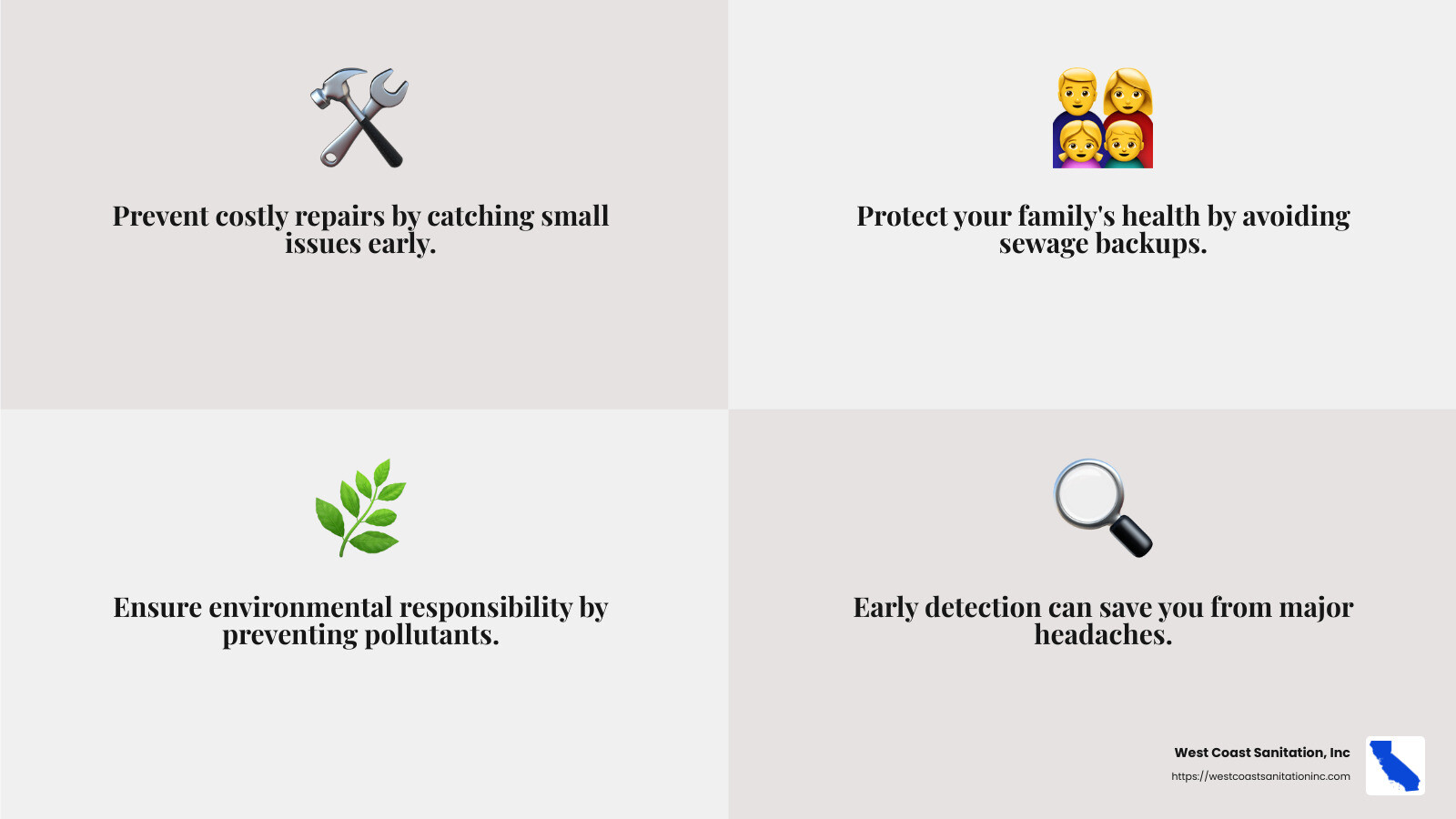
Prevent Costly Repairs
One of the main reasons to schedule regular septic inspections is to avoid expensive repairs. Catching small issues early can save you from hefty repair bills down the line. For example, a simple blockage in your effluent pipe can lead to a complete system failure if left unchecked. Regular inspections help you spot these problems before they escalate.
Health Issues
A malfunctioning septic system can pose serious health risks. If your septic tank overflows, it can lead to sewage backups in your home. This not only creates a foul odor but also exposes your family to harmful bacteria and viruses. As noted in the research, “Smelly wastewater can seep into surface waters, polluting lawns and causing health hazards.” Regular inspections ensure your system is functioning correctly, keeping your home safe and sanitary.
Environmental Responsibility
Septic systems play a crucial role in treating household wastewater. When they work correctly, they prevent pollutants from entering the groundwater. However, a faulty system can leak harmful substances like nitrogen and phosphorus into the soil and water, causing environmental damage. By scheduling regular inspections, you can make sure your septic system is environmentally friendly.
Early Detection
Routine septic inspections are essential for early detection of potential issues. Technicians can spot signs of wear and tear, root intrusion, or sludge buildup that you might miss. Early detection means you can address problems before they turn into major headaches. According to the research, “Routine septic inspections can help you avoid drain problems before they become serious.”
In summary, regular septic inspections help you maintain a healthy, efficient, and environmentally responsible home. They prevent costly repairs, protect your family’s health, and ensure your septic system operates smoothly.
In the next section, we’ll walk you through a step-by-step guide to septic system inspections.
Step-by-Step Guide to Septic System Inspections
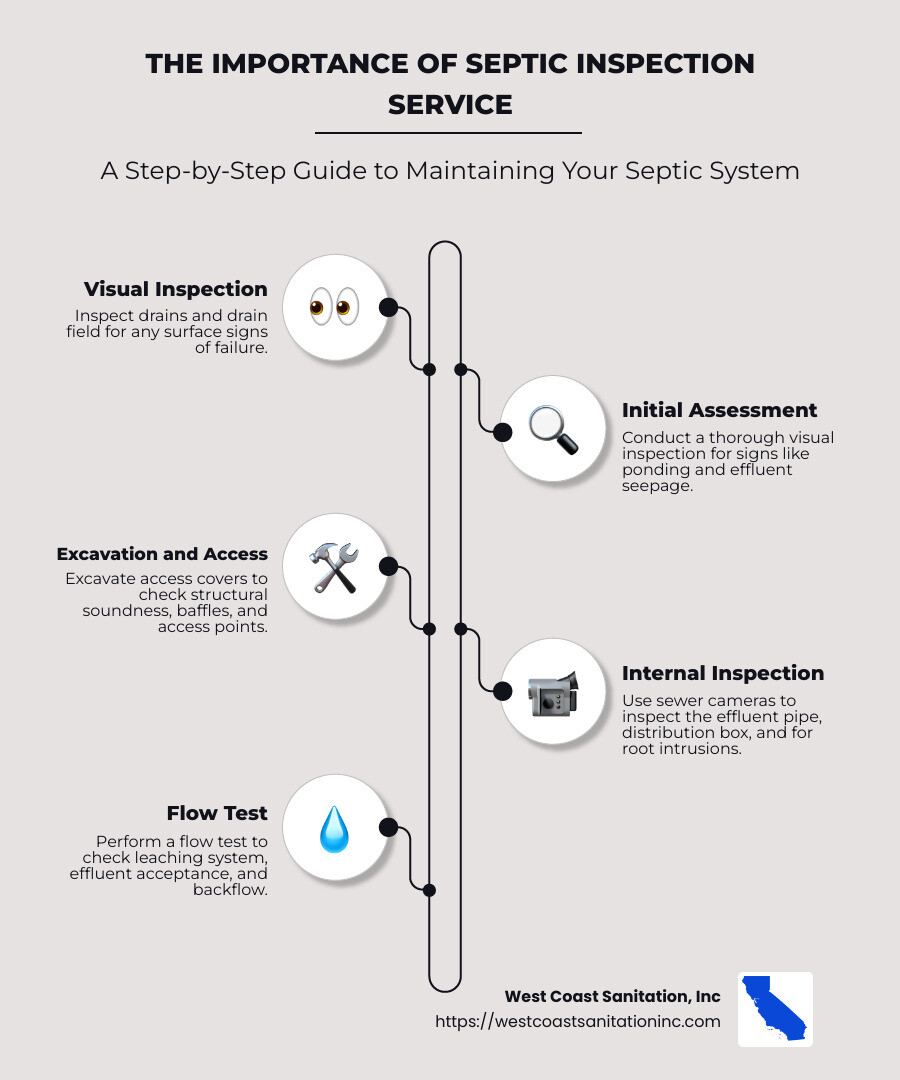
Step 1: Initial Assessment
The first step in a septic inspection service is the initial assessment. This is a visual inspection where the technician looks for surface signs of issues. They check for ponding water, which can indicate a problem with the drain field. They also look for effluent seepage, which might suggest a leak in the system. These surface signs are critical for identifying potential problems early.
Step 2: Excavation and Access
Next, the technician excavates to access the septic tank. The access covers are opened to inspect the tank’s structural soundness. They check for cracks, decay, or root intrusion. The baffles and access covers are also examined to ensure they are intact and functioning properly. Excavation is usually limited to a small area, but additional digging may be required if problems are suspected.
Step 3: Internal Inspection
For a thorough internal inspection, a camera is fed through the outlet baffle. This helps evaluate the condition of the effluent pipe and the distribution box. Root intrusion is a common issue that can be identified using this method. The camera inspection ensures that no detail goes unnoticed, providing a clear picture of the system’s internal health.
Step 4: Flow Test
The flow test is crucial for assessing the leaching system. The technician monitors the effluent acceptance to ensure there is no backflow into the septic tank. This involves running water through the system to observe its flow and identify any blockages or inefficiencies. If water backs up, it can indicate a serious problem that needs immediate attention.
Step 5: Comprehensive Report
After the inspection, the technician provides a comprehensive report of their findings. This report includes details on the current condition of the septic system, any issues detected, and recommended repairs or maintenance. The technician also offers maintenance tips to help you keep your system running smoothly. A walkthrough with the client is often conducted to answer any questions and explain the findings in detail.
In summary, a septic inspection is a multi-step process that involves initial visual checks, excavation, internal inspections with a camera, flow tests, and a detailed report. This thorough approach ensures that any issues are identified and addressed promptly, helping you maintain a healthy, efficient, and environmentally responsible septic system.
Costs Associated with Septic Inspections
Understanding the costs of a septic inspection service is crucial for planning and budgeting. Several factors influence the overall expense, including routine maintenance, real estate transactions, location, tank size, and the type of inspection.
Routine Maintenance
Regular septic system maintenance is essential to keep everything running smoothly. Most homes should have septic tank inspections every 3 to 5 years. Routine inspections can range from $300 to $600, depending on the tank’s size and condition. This cost typically includes a visual inspection and pumping if necessary.
Real Estate Transactions
If you are buying or selling a home, a septic inspection is often required. In states like California, a septic system must be inspected before the property can be transferred. These inspections are more detailed and can cost more due to the need for a comprehensive report. Expect to pay around $400 to $800 for a real estate transaction inspection.
Location
The cost of a septic inspection can vary based on your location. Areas with a higher cost of living will generally have higher inspection fees. For example, an inspection in a rural area might be less expensive than in a metropolitan area. It’s always a good idea to get quotes from local professionals to understand the going rate in your area.
Tank Size
The size of your septic tank directly impacts the cost of an inspection. Larger tanks require more time and resources to inspect and pump. For instance, a 1,000-gallon tank inspection might cost around $300, while a 2,000-gallon tank could be closer to $600. Make sure to know your tank size when requesting quotes to get accurate pricing.
Inspection Type
There are two main types of septic inspections: visual and full inspections.
- Visual Inspections: These are less comprehensive and involve checking indoor and outdoor drains, as well as the drain field. They are typically less expensive, ranging from $100 to $300.
- Full Inspections: These include all the steps of a visual inspection plus opening and inspecting the septic tank itself. This thorough inspection can cost between $300 and $600, but it provides a complete assessment of the system’s health.
By understanding these cost factors, you can better plan for your septic system’s maintenance and ensure it remains in good working order. Regular inspections help catch problems early, saving you from costly repairs down the line.
Frequently Asked Questions about Septic Inspection Services
Who pays for septic inspection in California?
In California, the cost of a septic inspection service can be a point of negotiation between the buyer and the seller. Typically, the buyer pays for the inspection as part of their due diligence before purchasing a home. However, it’s common for sellers to cover the cost if issues are found that need immediate attention. The inspection costs can range from $300 to $600, which often includes both the inspection and any necessary pumping.
How much does a septic inspection cost in California?
The cost of a septic inspection in California varies based on several factors such as location, tank size, and the type of inspection. On average, a routine septic inspection can cost between $400 and $700.
- Visual Inspections: These are less thorough and usually cost around $100 to $300.
- Full Inspections: These include a complete examination of the septic tank and can cost between $300 and $700.
Real estate transactions often require a more detailed inspection, which can be on the higher end of the price range.
How much is a septic inspection in California?
In California, the cost of a septic inspection can vary widely depending on whether it’s for routine maintenance or a real estate transaction. For routine maintenance, expect to pay between $300 and $600.
For real estate transactions, especially those requiring a Title 5 inspection (which is more detailed), the cost can range from $400 to $800. Title 5 inspections are particularly comprehensive, ensuring that the septic system meets all state and local regulations before a property sale.
By understanding these costs and who typically pays for them, you can better steer the process whether you’re buying or selling a home. Regular septic inspection services are crucial for maintaining a healthy septic system and avoiding costly repairs down the line.
Conclusion
Regular septic inspections are crucial for maintaining the health and longevity of your septic system. They help you catch problems early, preventing costly repairs and potential health hazards. Skipping regular inspections can lead to issues like groundwater contamination, foul odors, and even system failure.
At West Coast Sanitation, Inc., we specialize in providing top-notch septic inspection services. Our team uses the latest high-tech equipment to ensure your system is thoroughly inspected and maintained. We pride ourselves on offering same-day service, so you don’t have to wait to get your septic issues resolved.
By choosing us, you’re opting for a family-owned business that values honesty and customer satisfaction. We understand the importance of a well-functioning septic system and are committed to helping you keep yours in excellent condition.
For expert septic inspection services, contact West Coast Sanitation, Inc. today. We’re here to ensure your septic system runs smoothly, giving you peace of mind.