


Choosing the Right Septic Tank for Your Southern California Property
Single vs. Double Compartment Septic TanksWhich Is Better for Your Home? The answer depends on your household size, water usage, budget, and long-term goals. Here’s what you need to know:
Quick Answer:
- Single-compartment tanks: Best for smaller homes (1-3 bedrooms), lower water usage, tighter budgets ($2,000-$5,000)
- Double-compartment tanks: Better for larger families, higher water usage, superior treatment quality ($4,000-$8,000)
- Winner for most homes: Double-compartment tanks offer better drain field protection and require less frequent pumping
For homeowners in the Inland Empire, choosing a septic system is a major decision. With over 21 million US households relying on septic systems, understanding the difference between single and double-compartment tanks is crucial for your property.
Single-compartment tanks are the original, simple design where all wastewater treatment occurs in one chamber. They are cost-effective and suitable for smaller homes with low water usage.
Double-compartment tanks are the modern evolution, with two chambers for a multi-stage treatment process. The first chamber handles primary settling, and the second provides additional treatment before effluent reaches the drain field.
The stakes are high. Research shows that two-stage septic systems do a better job of filtering out solids, which can extend your drain field’s lifespan and reduce costly repairs. For Southern California homeowners, factors like soil conditions, local regulations, and water usage are critical in determining the best system.
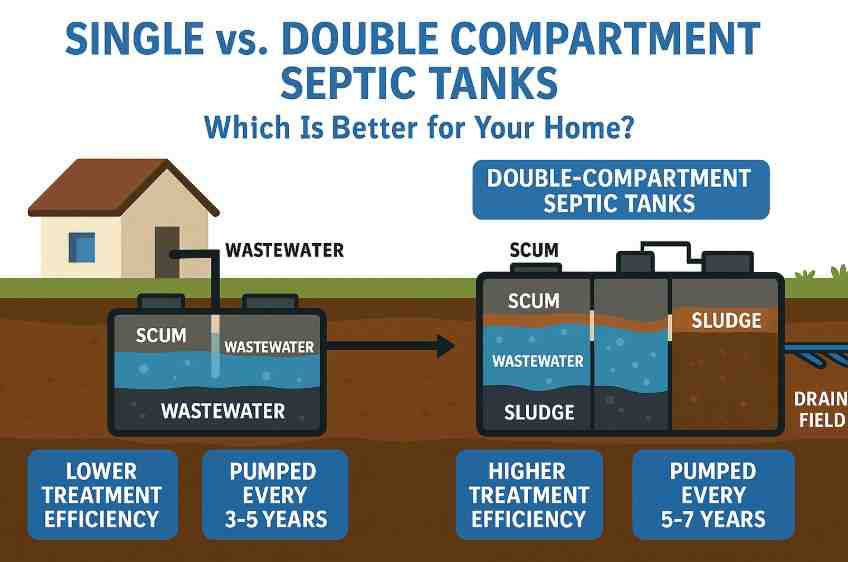
Understanding How Septic Tanks Work
Your septic tank is your home’s private wastewater treatment plant. Both single and double-compartment tanks use natural gravity and a process called anaerobic digestion to separate solids from liquids. In this process, beneficial bacteria break down organic matter without oxygen, turning waste into safer byproducts before it returns to the environment.
What is a Single-Compartment Septic Tank?
A single-compartment septic tank is a large underground box, the original design found in many older Southern California homes. It has one chamber where all treatment occurs.
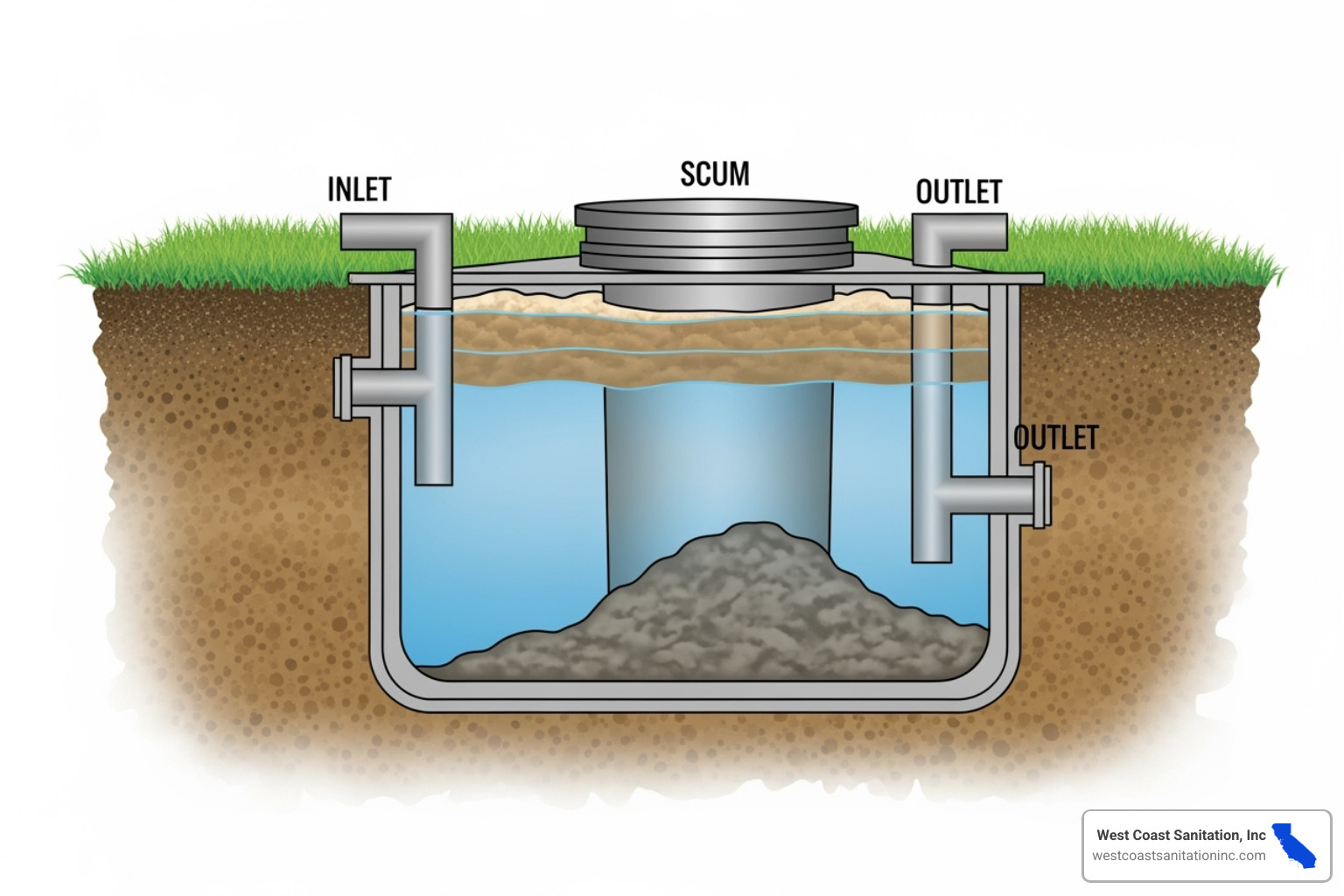
Inside, gravity separates wastewater. Heavy solids sink to form a sludge layer at the bottom, while lighter oils and grease float to create a scum layer on top. The middle layer of partially treated liquid, called effluent, flows out to the drain field through a T-shaped outlet pipe designed to keep sludge and scum in the tank.
This simple design has its limitations, as all digestion happens in one space. For more details, see our guide on how septic tanks work.
What is a Double-Compartment Septic Tank?
The double-compartment tank is the modern design evolution, often recommended for new builds or upgrades throughout the Inland Empire. It features two chambers separated by a baffle wall, creating a two-step treatment process.
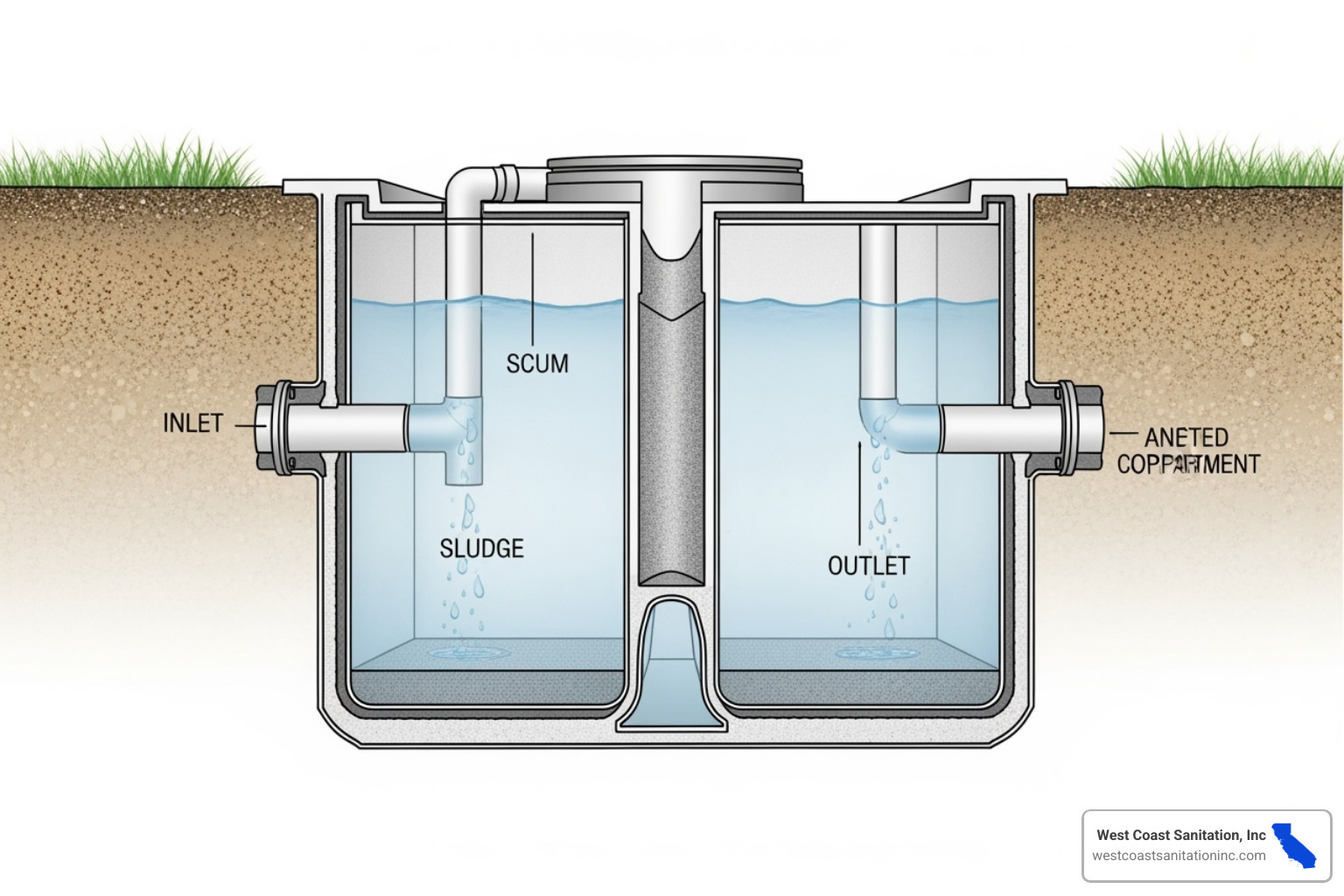
Wastewater first enters the larger chamber for primary treatment, where solids settle out just like in a single-compartment tank. Then, the partially treated water flows into the second chamber for secondary settling. This extra step allows more solids to settle, resulting in much cleaner effluent.
This improved filtration protects your drain field, improves soil absorption, and extends the life of your system. This two-stage approach aligns with modern environmental standards and provides better protection for groundwater. The EPA provides an excellent overview of septic system types for further reading.
Single vs. Double Compartment Septic Tanks: Which Is Better for Your Home?
Deciding between a single and double-compartment tank is a critical choice that can save you money and prevent future headaches. The answer isn’t always straightforward, especially given the unique challenges of Southern California properties, from the clay soils of Riverside to the rocky terrain of San Bernardino County.
Head-to-Head Comparison
Here is a straightforward comparison of what matters most to homeowners:
| Feature | Single-Compartment Septic Tank | Double-Compartment Septic Tank |
|---|---|---|
| Treatment Efficiency | Basic primary treatment; less efficient solids separation | Improved primary and secondary treatment; much cleaner effluent |
| Drain Field Protection | Higher risk of solids reaching drain field, shorter lifespan | Significantly reduces solids, extends drain field lifespan |
| Upfront Cost | Generally lower ($2,000-$5,000) | Generally higher ($4,000-$8,000) |
| Maintenance Frequency | More frequent pumping (every 2-3 years) | Less frequent pumping (every 3-5 years) |
| Ideal Household Size | Smaller homes, low water usage (1-3 bedrooms) | Larger homes, higher water usage (4+ bedrooms) |
| Footprint | Smaller, more compact | Larger, requires more installation space |
Advantages and Disadvantages of Single-Compartment Tanks
Single-compartment tanks are a traditional, functional choice, but they come with trade-offs.
Pros:
- Lower Upfront Cost: Potentially saving $2,000-$3,000 compared to a double-compartment system makes them an attractive option for those on a tight budget.
- Simpler Installation & Smaller Footprint: Their simple design and compact size make them easier to install, especially on smaller properties.
Cons:
- Less Efficient Treatment: More suspended solids can escape into your drain field.
- Higher Risk of Drain Field Clogs: This inefficiency increases the risk of premature drain field failure, a repair that can cost $15,000 to $25,000.
- More Frequent Pumping: They typically require pumping every 2-3 years, which adds to the long-term cost.
Advantages and Disadvantages of Double-Compartment Tanks
Double-compartment systems are a modern solution that offers better performance and long-term value.
Pros:
- Superior Wastewater Treatment: The second chamber acts as a final filter, catching more solids and producing much cleaner effluent.
- Better Drain Field Protection: Cleaner effluent means a longer lifespan for your drain field, potentially 25-30 years or more with proper care.
- Less Frequent Maintenance: They typically need pumping only every 3-5 years, saving time and money.
- Handles Higher Water Usage: They are better equipped to manage the demands of larger families or households with high water consumption.
Cons:
- Higher Initial Cost: The upfront investment is significantly higher.
- Larger Installation Space: They require more room, which can be a challenge on smaller lots.
For most Southern California homeowners, especially those planning to stay in their homes long-term, the double-compartment system is the smarter financial choice due to its lower total cost of ownership.
Key Factors to Consider for Your Southern California Home
Choosing the right septic system isn’t a one-size-fits-all decision. Your property, lifestyle, and long-term goals all play a role. This section covers the key variables for homeowners in areas from San Bernardino to Pasadena.
Household Size and Water Usage
Understanding your water usage is crucial. Septic tank size is based on the number of bedrooms, which accounts for future use. A typical four-person family needs a 1,000-1,250 gallon tank.
- Daily Habits: High water usage from long showers or frequent laundry puts more strain on a system. Double-compartment tanks are better designed to handle this increased demand.
- Garbage Disposals: These add significant solids to your tank. If you use one, a double-compartment tank is almost essential to protect your drain field.
- High-Efficiency Appliances: Low-flow toilets and water-conserving washing machines reduce the load on your system and can extend pump-out intervals.
- Peak Flow: Surges from doing multiple loads of laundry at once can overwhelm a single-compartment tank. Double-compartment tanks handle these surges better due to their two-stage design.
Property Constraints and Local Regulations
Working with your property’s unique features is key to a successful installation.
- Property Size: Single-compartment tanks have a smaller footprint, making them suitable for smaller lots.
- Soil Conditions: In areas with heavy clay or rocky soil, the cleaner effluent from a double-compartment tank is a major advantage, reducing strain on the drain field.
- High Water Tables: Common in parts of Southern California, high groundwater levels make the superior filtration of double-compartment systems critical for environmental protection.
- Local Regulations: Rules vary significantly across Riverside, San Bernardino, and Los Angeles Counties. Some jurisdictions now mandate double-compartment tanks for new installations to protect groundwater. Our team is well-versed in these local codes and the permitting process. This is especially important when buying a property, as covered in our guide on The importance of a septic system inspection when buying a home.
Budget and Long-Term Investment
While budget is important, looking only at upfront costs can be shortsighted.
- Upfront Costs: Single-compartment systems typically cost $2,000 to $5,000 to install, while double-compartment systems run $4,000 to $8,000.
- Long-Term Savings: Double-compartment tanks often provide more long-term savings due to less frequent pumping and a longer drain field life.
- Drain Field Replacement Cost: This is the biggest financial risk, often costing tens of thousands of dollars. A double-compartment tank protects your drain field, significantly reducing the risk of this massive expense.
- Return on Investment: Over a 20-30 year lifespan, the reduced maintenance and lower risk of drain field failure often make double-compartment tanks the better investment.
Installation, Maintenance, and System Longevity
Understanding installation, maintenance, and longevity helps you get the most value from your investment. This section covers the practical aspects of owning a septic tank.
Installation and Material Choices: Plastic vs. Concrete
The material you choose is as important as the design. Both plastic and concrete have distinct advantages.
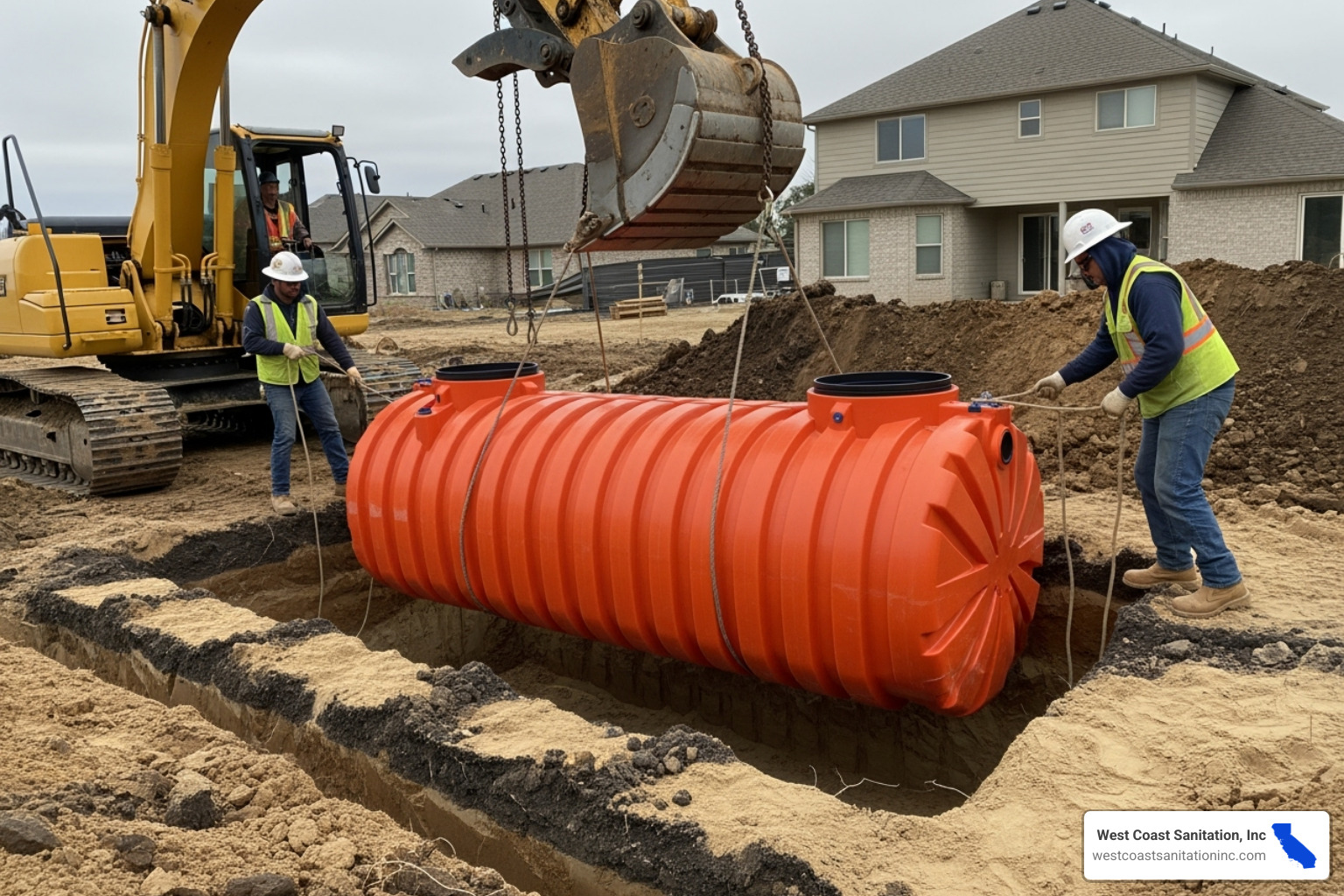
- Plastic Tanks: These are lightweight, corrosion-resistant, and generally easier and faster to install, which can lower labor costs. Modern plastic tanks are durable and cost-effective, and proper installation techniques prevent issues like flotation in high water tables.
- Concrete Tanks: The traditional choice, concrete tanks are extremely durable and heavy, which helps them stay in place. They can be buried deeper than plastic tanks but may develop cracks over time.
Our team uses high-tech equipment to ensure a smooth installation for both Single vs. Double Compartment Septic Tanks, whether you choose plastic or concrete.
Maintenance and Pumping Schedules for Single vs. Double Compartment Septic Tanks
Your system’s maintenance schedule directly impacts your budget and peace of mind.
- Pumping Frequency: This is a key difference. Single-compartment tanks need pumping every 2 to 3 years due to less efficient solids separation. Double-compartment tanks typically need pumping only every 3 to 5 years, saving you money over the system’s life.
- Effluent Filters: Now standard on most modern systems, these filters provide a final safety net to catch particles before they reach the drain field. They work more efficiently with the cleaner effluent from double-compartment tanks.
- Regular Inspections: Annual professional inspections are crucial for both systems to assess sludge levels and determine the optimal pumping schedule for your household. For more guidance, see our article on how often a septic tank should be pumped.
Protecting Your Investment for the Long Haul
Your septic system is a major investment. Protecting it pays off for decades.
- System Lifespan: The tank itself can last a lifetime with proper care. The real vulnerability is the drain field, which is why the compartment choice is so important.
- Drain Field Longevity: This is the most compelling reason for a double-compartment system. By keeping more solids out of the drain field, it can extend its life from 20 years to 40 years or more.
- Preventing Backups: A well-maintained double-compartment system significantly reduces the risk of sewage backing up into your home.
The long-term benefits of double-compartment tanks—better drain field protection, less maintenance, and better performance—make the higher upfront cost a smart financial decision, especially when a drain field replacement can cost $15,000 to $30,000. Learn more about maximizing your system’s life in our guide on how long a septic system can last.
Frequently Asked Questions
Here are answers to the most common questions we hear from homeowners in Pomona, El Monte, and across the Inland Empire about Single vs. Double Compartment Septic Tanks: Which Is Better for Your Home?
When is a single-compartment septic tank still an appropriate choice for a home?
While we often recommend double-compartment tanks, single-compartment systems are a good fit in specific situations:
- Small Homes: For one or two-bedroom homes with low water usage.
- Vacation Properties: Intermittent use puts less stress on the system.
- Tight Budgets: They offer a lower upfront cost when funds are limited.
- Small Lots: Their smaller footprint may be the only practical option for properties with limited space.
A single-compartment tank can work well if you commit to a more frequent maintenance schedule (pumping every 2-3 years).
Are double-compartment septic tanks required by law in some areas?
Yes. Regulations vary significantly across Southern California. Many local jurisdictions, especially those with sensitive groundwater or poor soil conditions, are updating their codes to require double-compartment tanks for new construction to ensure better environmental protection. It is essential to check your local regulations first, as the rules in Riverside County can differ from those in Los Angeles County. Our team stays current on all local codes to ensure compliance.
Can you convert a single-compartment tank to a double-compartment system?
While technically possible, we rarely recommend it. The process is often not cost-effective and can compromise the tank’s structural integrity. Modifying an existing tank can also lead to problems with code compliance. In most cases, a complete replacement is the smarter, more reliable move. A new, factory-built double-compartment tank guarantees performance, proper design, and peace of mind.
Call West Coast Sanitation Today!
Research shows that double-compartment tanks are generally better due to more efficient solids settling and cleaner effluent. Considering a drain field replacement can cost tens of thousands of dollars, the higher upfront cost for a two-stage system is a wise investment in protecting your property.
A professional assessment is crucial. Your household size, soil conditions, and local Inland Empire regulations will determine the best system for you. As a local family-owned business, West Coast Sanitation, Inc. understands the unique challenges of properties across Southern California. We use high-tech equipment to provide high-quality service, helping you choose a system that fits your needs and budget.
Ready to move forward with confidence? For expert guidance on choosing and installing the right septic system for your Inland Empire home, explore our residential septic system installation services. We’re here to ensure your system is efficient, reliable, and built to last.