


Understanding Your Septic System
Top 5 Mistakes That Lead to Septic System Failures are preventable issues that cost homeowners thousands of dollars in emergency repairs. Here’s what you need to know:
The 5 Most Common Septic System Mistakes:
- Neglecting regular pumping (should be done every 3-5 years)
- Flushing inappropriate items like wipes, grease, and chemicals
- Overloading with excessive water from multiple loads of laundry or leaky fixtures
- Damaging the drain field by driving over it or planting trees too close
- Ignoring early warning signs like slow drains, odors, or soggy yard spots
If you’re a homeowner in Southern California’s Inland Empire, your septic system is literally out of sight, out of mind – until something goes wrong. According to the US Census Bureau, more than 21 million homes rely on septic systems, with 95% being traditional septic tank and drain field systems.
The problem? Most homeowners don’t think about their septic system until they’re facing a crisis. The average cost to replace a septic system is $7,500 – money that could be saved with proper maintenance and avoiding these common mistakes.
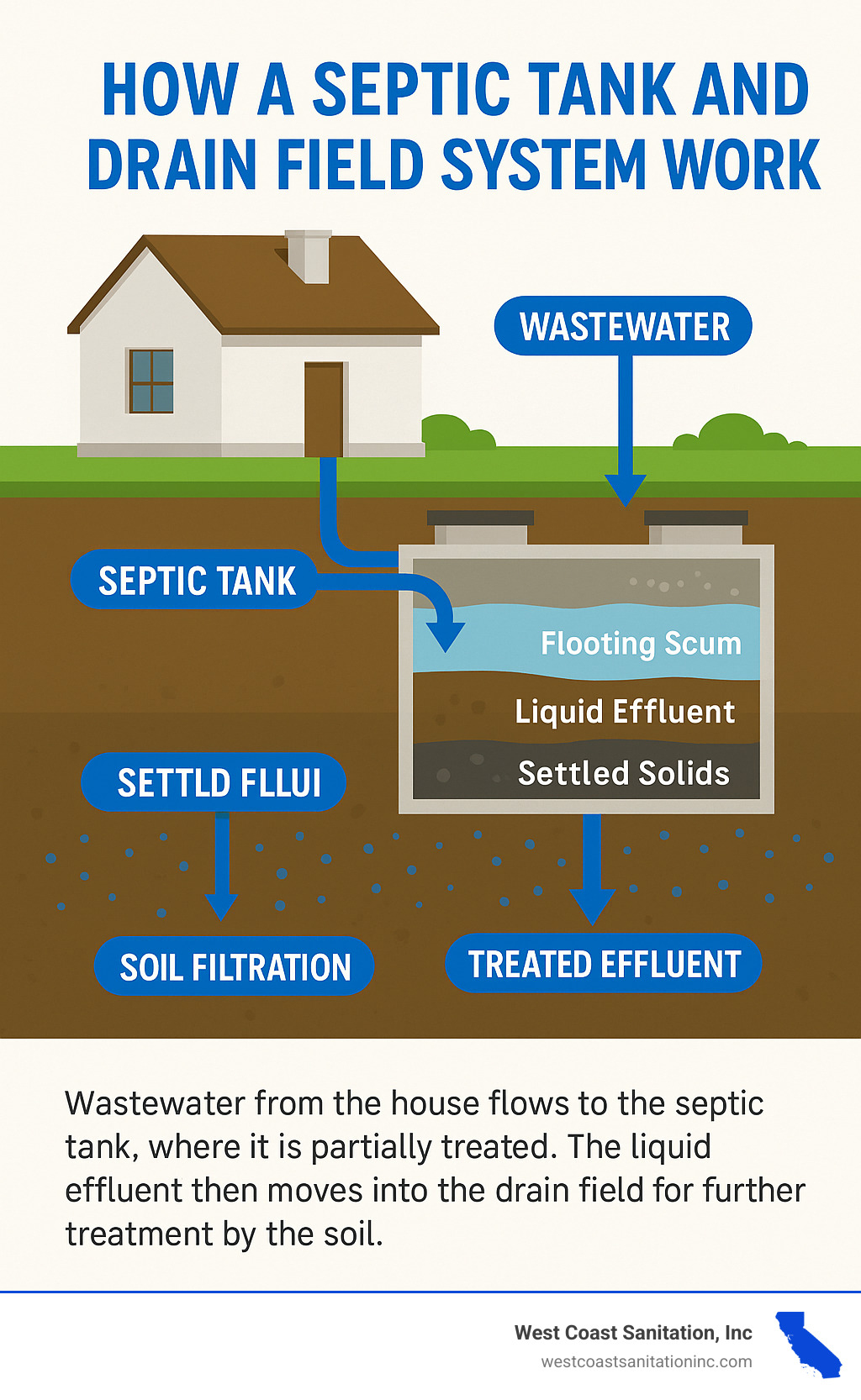
Your septic system works 24/7 to treat all the wastewater from your showers, sinks, and toilets. When beneficial bacteria in the tank break down solid waste, the treated water flows to your drain field where soil provides the final filtration. But when homeowners make these five critical mistakes, this natural process breaks down – leading to backups, environmental contamination, and expensive repairs.
The Top 5 Mistakes That Lead to Septic System Failures
Your septic system works quietly underground, day and night, treating thousands of gallons of wastewater from your home. But here’s the thing – most homeowners never think about it until something goes terribly wrong. This “set it and forget it” mentality is exactly why we see so many preventable failures here in the Inland Empire.
Let’s walk through each mistake so you can keep your system running smoothly for years to come.
Mistake #1: Neglecting Regular Pumping and Maintenance
Think of your septic tank like your car – it needs regular maintenance to keep running properly. Yet this is hands down the biggest mistake we see among the Top 5 Mistakes That Lead to Septic System Failures.
Here’s what happens inside your tank every day: solids settle to the bottom forming sludge, while lighter materials like cooking oils float to the top creating a scum layer. The middle layer of liquid effluent flows out to your drain field. It’s a beautifully balanced system when it’s working right.
But when you skip pumping, those sludge and scum layers keep growing thicker. Eventually, they overwhelm the beneficial bacteria that break down waste. Even worse, solids start escaping to your drain field – and that’s when things get expensive fast.
Your drain field is designed to filter liquid only. When solids clog those delicate soil pores, you’re looking at drain field failure. We’ve seen homeowners face $15,000+ replacement costs because they skipped a $300 pumping appointment.
Most septic tanks need pumping every 3-5 years, but your specific timeline depends on your household size, tank size, and water usage. A family of five with a smaller tank might need pumping every 2-3 years, while empty nesters could go longer.
Professional inspections help us determine exactly when your tank needs attention. We check if the scum layer is within three inches of the outlet or if combined sludge and scum layers exceed one-third of your tank’s depth. These are clear signals it’s time to pump.
Don’t wait until you have clogged pipes or backups. Regular maintenance is always cheaper than emergency repairs.
For more details on what happens when pumping is delayed, check out our article on What Happens When You Do Not Pump Your Septic Tank. The EPA guidelines on septic care also provide excellent maintenance recommendations.
Mistake #2: Treating Your Drains and Toilets Like a Trash Can
Your septic tank is actually a living ecosystem, home to millions of beneficial bacteria that work around the clock breaking down waste. But many common household habits accidentally harm these microscopic helpers or introduce materials they simply can’t handle.

Harsh chemicals like bleach, drain cleaners, and lye products can kill these essential bacteria when used excessively. While normal household cleaning won’t hurt your system, pouring large amounts down the drain disrupts the natural decomposition process. Avoid flushing automotive fluids, pesticides, paints, or solvents – these don’t just kill bacteria, they can contaminate groundwater too.
Fats, oils, and grease (FOG) cause some of the worst clogs we see. When you pour cooking grease down the drain, it hardens and sticks to pipes like concrete. It also adds to that scum layer we talked about, which can eventually overflow into your drain field. Always scrape plates into the trash and dispose of cooking oils in containers, not down the sink.
Your garbage disposal might seem convenient, but it’s not your septic system’s friend. Every time you grind up food scraps, coffee grounds, or eggshells, you’re adding to the solid load your bacteria must process. This means more frequent pumping and higher maintenance costs.
Here are the worst offenders that should never go down your drains: “flushable” wipes (they don’t actually break down), paper towels and napkins (too thick and fibrous), feminine hygiene products (they expand and cause major blockages), diapers (absolutely will clog everything), coffee grounds (they accumulate into sludge), cat litter (clay-based and indigestible), medications (harm bacteria and contaminate water), and cotton balls or dental floss (synthetic materials that won’t decompose).
The simple rule: if it’s not human waste or septic-safe toilet paper, it doesn’t belong in your system. Your bacteria – and your wallet – will thank you.
Learn more about protecting your system in our guide on Protecting Your Septic Tank System From Cleaning Chemicals.
Mistake #3: Overloading the System with Excessive Water
You might think more water helps flush things through your system, but the opposite is true. Hydraulic overload is a sneaky problem that can damage your septic system without you realizing it.
Your septic tank needs time to work properly. Solids must settle, bacteria need time to break down waste, and the liquid effluent should be properly treated before reaching your drain field. When too much water rushes through too quickly, this delicate process gets disrupted.
Excessive water pushes solids into the drain field before they’re properly broken down. Think of it like stirring up mud at the bottom of a pond – all that settled material gets mixed up and flows where it shouldn’t go. Once solids clog your drain field’s soil pores, you’re facing expensive repairs.
The problem is worse with reduced wastewater treatment time. Bacteria need adequate contact time with waste to do their job effectively. Rush the process, and poorly treated effluent enters your drain field, causing faster deterioration.
Common culprits include doing multiple loads of laundry back-to-back, leaky faucets and running toilets (a running toilet can waste hundreds of gallons daily), and taking long showers during peak usage times.
Spacing out laundry loads throughout the week instead of cramming them into one day makes a huge difference. Fix those leaky fixtures promptly – they’re constantly feeding water into your system. Consider high-efficiency appliances like low-flow toilets and water-saving washing machines to reduce your overall water usage.
Your drain field has limited capacity to absorb water, especially in Southern California’s clay-heavy soils. Keep it manageable and your system will last much longer.
Find more water-saving tips in our article on Simple Tips to Extend the Life of Your Septic System.
Mistake #4: Damaging the Drain Field
Your drain field (also called a leach field) is where the magic happens – it’s the final treatment stage where soil naturally filters your wastewater. But because it’s buried and invisible, it’s easy to accidentally damage this critical component.
Soil compaction from vehicles is one of the worst things you can do to your drain field. Never drive cars, park RVs, or place heavy objects like storage sheds over this area. The weight compacts the soil, making it less able to absorb water. Even worse, it can crush the perforated pipes buried underneath, causing immediate system failure.
Construction damage happens more often than you’d think. We’ve seen homeowners build beautiful patios or decks right over their drain field, only to tear them down later when the system fails. Not only does the weight cause problems, but permanent structures prevent evaporation and make future maintenance nearly impossible.
Invasive tree roots are attracted to the moisture and nutrients in your septic system like magnets. Once roots infiltrate your pipes, they can cause major blockages and expensive damage. Large trees should be planted at least 20-30 feet away from your septic tank and drain field. Smaller trees need at least 10 feet of clearance.
The best approach? Keep your drain field area clear except for grass or shallow-rooted plants. Mark the location so family members and contractors know where not to dig or build. A little prevention now saves thousands in repairs later.
Learn more about drain field protection in our articles on Why Do Leach Fields Fail? and How to Prevent Roots from Damaging the Septic Tank.
Mistake #5: Ignoring Early Warning Signs
Your septic system is pretty good at telling you when something’s wrong – if you’re paying attention. Ignoring early warning signs is like ignoring your car’s check engine light. Small problems become big, expensive emergencies when left untreated.
Minor issues escalate quickly in septic systems. That slow drain today could be a sewage backup next week. A faint odor might indicate a small clog that’s easily fixed, but ignore it and you could face widespread contamination and costly cleanup.
Watch for slow drains in your sinks, showers, or tubs – this often signals buildup in your tank or pipes. Gurgling pipes make strange sounds when air pressure changes due to blockages. Foul odors inside your home (from drains) or outside (near your tank or drain field) mean waste isn’t being properly contained.
Sewage backups are the most obvious sign something’s seriously wrong. Don’t wait if waste is backing up into your toilets or sinks – call for help immediately.
Outside your home, look for soggy spots in your yard, especially over your septic tank or drain field. Standing water or unusually spongy ground means your system is overflowing. Ironically, unusually lush grass over your drain field can also signal problems – it might mean untreated wastewater is surfacing and feeding the plants extra nutrients.
The temptation to hope these signs go away on their own is strong, but we’ve never seen that work out well. Early intervention is always cheaper than emergency repairs, and it protects your family’s health and your property value.
If you’re noticing any of these warning signs, don’t wait. Professional help now prevents disasters later. For more detailed information about these symptoms, visit our page on Signs You May Need a New Septic Tank.
The Consequences of Septic System Failure
When homeowners make the mistakes listed above, the results can be devastating in ways you might not expect. What starts as a minor oversight can quickly spiral into a nightmare that affects your health, your wallet, and even your neighbors.

The health risks alone should make every homeowner take notice. When your septic system fails, it’s not just backing up into your home – it’s releasing a cocktail of dangerous pathogens that can make your family seriously ill. We’re talking about E. coli infections that can land you in the hospital with severe stomach problems, and hepatitis A, a viral infection that attacks your liver and can take months to recover from.
The scary part? Children and pets are especially vulnerable because they’re more likely to come into contact with contaminated soil in your yard. That septic tank smell wafting from your drains isn’t just unpleasant – it’s a warning sign that harmful bacteria and viruses are making their way into your living space.
Environmental damage is another serious consequence that extends far beyond your property line. Your septic system is designed to protect local water sources, but when it fails, untreated wastewater seeps directly into the ground. This groundwater contamination doesn’t stay put – it spreads to wells, streams, and lakes throughout your community.
In Southern California’s Inland Empire, where many of us rely on wells for drinking water, this contamination can affect entire neighborhoods. The drain field that’s supposed to filter out harmful substances becomes useless, and suddenly you’re contributing to pollution that could take years to clean up.
Let’s talk about the financial hit, because it’s often worse than homeowners expect. While we mentioned earlier that the average septic system replacement costs $7,500, that’s just the beginning. When your drain field fails completely – which often happens when people ignore the warning signs – you’re looking at emergency repairs that can easily reach $15,000 to $25,000 or more.
Here’s what really stings: insurance companies typically won’t cover septic failures caused by poor maintenance. They consider it preventable, which means you’re stuck with the full bill. Plus, try selling a house with a failed septic system – your property value plummets, and most buyers will walk away rather than deal with the headache.
The day-to-day reality of living with a failed system is something no family should endure. Imagine not being able to use your bathroom because sewage is backing up into your shower. Picture hosting a barbecue when your backyard smells like a sewer because untreated wastewater is pooling near your patio.
These aren’t just inconveniences – they’re health hazards that require professional cleanup crews and can force you to temporarily relocate your family. The stress and disruption to your daily life can be overwhelming, especially when you realize it could have been prevented with proper maintenance.
The good news? Every single one of these consequences is avoidable. When you understand and avoid the Top 5 Mistakes That Lead to Septic System Failures, you’re protecting your family’s health, your financial security, and your community’s environment.
For a deeper dive into the specific health dangers your family faces, check out our comprehensive guide on Common Health Risks Associated With Septic System Failures.
Frequently Asked Questions about Septic System Care
We get it – septic systems can feel like a mystery buried in your backyard. At West Coast Sanitation, Inc., we’ve been answering homeowners’ questions for years, helping families across the Inland Empire avoid the Top 5 Mistakes That Lead to Septic System Failures. Here are the questions we hear most often, along with straight answers that’ll help keep your system running smoothly.
How often should I get my septic tank pumped?
This is hands down the most common question we get, and for good reason – it’s the foundation of septic system care. The standard answer is every 3 to 5 years, but here’s the thing: your septic system doesn’t follow a calendar. It follows your family’s lifestyle.
Household size makes a huge difference. A family of two might stretch their pumping to every 5 years, while a household with six people might need service every 2-3 years. More people means more waste, more laundry, more showers – you get the picture.
Tank size is equally important. If the previous homeowner installed a smaller tank to save money, it’s going to fill up faster than a properly sized system. We often find that homes with undersized tanks need more frequent attention.
Your water usage habits also play a role. Do you take long showers? Run multiple loads of laundry in one day? Have teenagers who seem to live in the bathroom? All of this affects how quickly your tank fills with solids.
Here’s where professional assessment becomes invaluable. During our inspections, we actually measure the sludge and scum layers in your tank. When the scum layer gets within three inches of the outlet pipe, or the sludge layer climbs within eight inches, it’s time to pump. This takes all the guesswork out of scheduling.
Don’t try to stretch your pumping schedule to save money – it always backfires with expensive emergency repairs.
Are septic tank additives helpful?
We love this question because it gives us a chance to save homeowners money! The short answer is no, most systems don’t need them, and some additives can actually harm your system.
Your septic tank is already home to billions of natural bacteria that are perfectly designed for their job. These microscopic workers feast on the organic waste you send down the drain, breaking it down efficiently without any help from store-bought additives.
The biggest misconception we encounter is that additives can replace regular pumping. We’ve had homeowners tell us they haven’t pumped in 10 years because they’ve been using additives religiously. When we inspect their tanks, we find them completely full of solids – the additives didn’t make the inorganic materials disappear.
Additives are not a substitute for regular maintenance. They can’t eliminate the buildup of things like lint from your washing machine, bits of toilet paper that don’t fully break down, or the inevitable accumulation of sludge that needs physical removal.
Some chemical additives are even worse – they can kill the beneficial bacteria in your tank, disrupting the natural balance your system depends on. Regular pumping is the proven solution that’s worked for decades. Don’t let marketing claims convince you there’s a shortcut to proper septic care.
What is the most important thing I can do to protect my septic system?
After years of pumping tanks and fixing systems, we can answer this one without hesitation: mindful usage. It sounds simple, but it’s the golden rule that separates systems that last 30 years from those that fail in 10.
Only flush human waste and septic-safe toilet paper – treat your toilet with respect, not like a convenient trash can. We’ve pulled everything from toys to cell phones out of failed systems, and trust us, it’s never pretty.
Water conservation is your system’s best friend. Spread out laundry loads instead of doing them all on Saturday morning. Fix that dripping faucet you’ve been ignoring. Take shorter showers (your water bill will thank you too). Your septic system needs time to process wastewater properly, and flooding it overwhelms the natural treatment process.
Regular professional maintenance ties everything together. You wouldn’t skip oil changes for your car and expect it to run forever, right? Your septic system deserves the same attention. Regular pumping and inspections catch small problems before they become expensive disasters.
The truth is, protecting your septic system isn’t complicated – it just requires consistent good habits. When you’re mindful about what goes down your drains and stay on top of maintenance, your system will take care of your family for decades to come.
Call West Coast Sanitation Today!
At West Coast Sanitation, we’re not just another service company. We’re your neighbors, a family-owned business that’s been helping Inland Empire families avoid these costly mistakes for years. We bring the latest high-tech equipment and same-day service because we know that septic problems don’t wait for convenient times.
The best time to think about your septic system isn’t when something goes wrong – it’s right now, while everything is working properly. A simple inspection can catch small issues before they become big problems, and regular maintenance keeps your system running smoothly for decades.
Don’t let your septic system become an “out of sight, out of mind” problem that turns into a $7,500+ nightmare. Take action today.
Schedule your residential septic system inspection today and join the thousands of homeowners who’ve learned that prevention is always better than emergency repairs.