


Why Septic System Permits Matter for Inland Empire Homeowners
Understanding septic tank permits and regulations is crucial for anyone installing, repairing, or maintaining an onsite wastewater system. With roughly one in four homes in the U.S. relying on septic systems, following proper permitting procedures not only safeguards public health and prevents environmental contamination but also ensures compliance with local, state, and federal laws. Properly managed septic systems can extend the life of your system, reduce costly repairs, and contribute to the long-term sustainability of water resources in your community.
Key permit requirements include:
- Installation permits – Required before any new septic system installation
- Site evaluation and soil testing – Mandatory percolation tests to assess soil suitability
- Construction permits – Needed for major repairs or system modifications
- Final inspections – Health department approval before system operation
- Setback compliance – Minimum distances from wells (15+ meters), water bodies, and property lines
The permit process typically takes 10 business days to 3 months depending on your county and application completeness. Costs range from $150-$500 for permits, with total system installation running $5,000-$15,000.
Non-compliance consequences are serious. Improperly installed systems can contaminate groundwater, cause sewage backups, and result in fines up to $25,000. They also put your family’s health at risk and can significantly damage your property value.
In Southern California’s Inland Empire, local health departments enforce strict regulations because of our region’s unique soil conditions and environmental sensitivities. Whether you’re dealing with a failing system or planning a new installation, understanding these requirements upfront saves time, money, and prevents costly mistakes.
Why Septic Regulations Exist: Protecting Health and Property
Septic regulations are essential safeguards for your family’s health, property value, and the environment. They ensure wastewater is treated properly, preventing harmful pathogens in raw sewage from contaminating drinking water and causing illnesses like hepatitis or dysentery. A failing system can also pollute groundwater, lakes, and streams, impacting entire communities. Furthermore, a problematic septic system can drastically lower your property’s value and lead to significant legal and financial penalties for non-compliance. Following these rules isn’t just about avoiding fines; it’s about responsible homeownership. You can learn more about the specific requirements in our guide to California Septic System Regulations.
The Role of Governing Bodies
Septic system oversight involves multiple agencies. The Environmental Protection Agency (EPA) sets national guidelines, but the State Water Resources Control Board manages regulations for California. You can find state-level details on their Onsite Wastewater Information (Septic Systems) page. However, your local health department, such as the Riverside County Department of Environmental Health, is your primary contact. They handle permit applications, inspections, and enforcement, ensuring your system is designed for local soil and environmental conditions.
Potential Consequences of Non-Compliance
Ignoring septic regulations can lead to severe consequences:
- System Failure: Sewage backing up into your home, foul odors, and soggy ground are clear signs of failure and immediate health hazards. Our article on Common Health Risks Associated with Septic System Failures covers these dangers.
- Contamination Risks: Untreated wastewater can pollute groundwater and nearby wells, posing a risk to the community.
- Financial Penalties: Fines for non-compliance can reach up to $25,000, plus legal fees and the high cost of emergency repairs.
- Property Damage: Sewage backups can ruin floors, furniture, and make your home uninhabitable during cleanup and repairs.
The Permit Process: From Application to Approval
Obtaining a septic permit is a structured process that ensures your system is safe, legal, and built to last. It involves a professional site evaluation, a custom system design, a detailed application, and a series of inspections by the local health department before you receive final approval to operate.
What Specific Permits Are Required?
Understanding septic tank permits and regulations involves knowing which permit applies to your situation:
- Installation/Construction Permits: Required for any new septic system.
- Repair Permits: Needed for major work, like replacing a tank or drain field.
- Decommissioning Permits: Required when abandoning an old system, usually to connect to a city sewer.
- Other Requirements: Point-of-sale inspections and specific certifications are often required when selling a home or for certain loans, like FHA loans. Our guide on Septic System Certifications: What Are They and Why They Matter explains these in more detail.
A Step-by-Step Guide to Obtaining Your Permit
While specifics vary by county, the permit process generally follows these steps:
- Site Evaluation & Soil Testing: A professional assesses your property’s topography and soil. A percolation (“perc”) test is performed to measure how quickly soil absorbs water, which is critical for drain field design. Learn more in our guide to Percolation Testing & System Design.
- Professional System Design: A licensed engineer uses the site data to create a custom blueprint for your system, considering household size, soil type, and all setback regulations.
- Submitting the Application: You’ll submit the application form, site plan, soil test results, system design, and required fees to the local health department. Incomplete applications are a common cause of delays.
- Plan Review & Inspections: The health department reviews your plans for compliance. Once approved, construction begins, with inspectors visiting at key stages (e.g., before components are buried) to ensure work matches the approved design.
- Final Approval & Operation Permit: After passing the final inspection, you receive an Operation Permit, which is your official authorization to use the system. You will also get an “as-built” drawing showing the system’s final location.
How Long Does the Approval Process Take?
The timeline for septic permit approval can range from a few weeks to three months or more. The speed depends on several factors:
- County Workload: Busy health departments may have longer review times.
- Application Completeness: A complete and accurate application is the fastest way to get approval. Missing information will cause delays.
- Site Complexities: Challenging properties with poor soil, high water tables, or environmental sensitivities require more thorough review.
Key Design and Placement Rules: A Core Part of Understanding Septic Tank Permits and Regulations
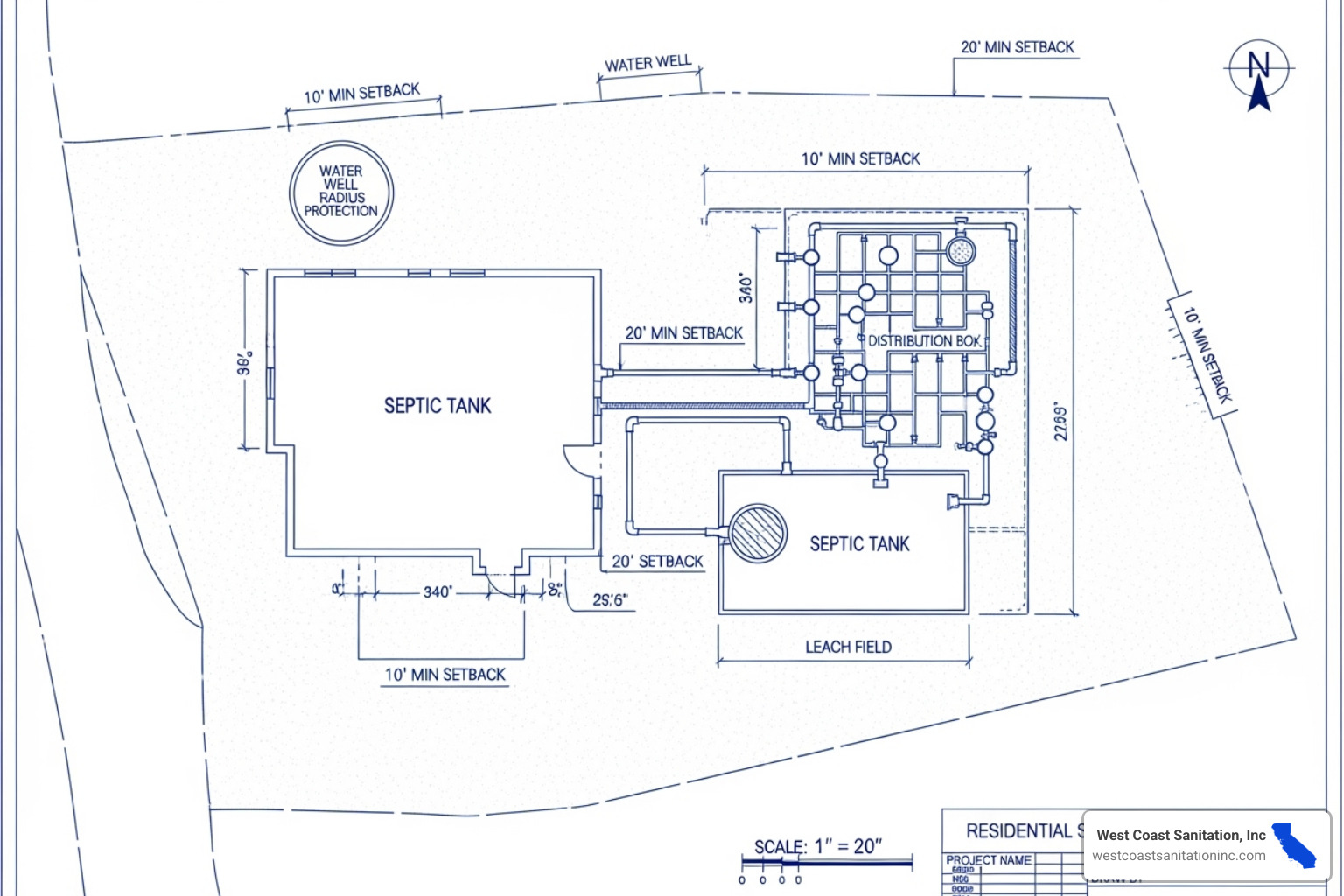
The design and placement of your septic system are governed by strict regulations to ensure long-term functionality and safety. Understanding septic tank permits and regulations means being aware of these non-negotiable requirements. System design begins with determining the appropriate tank capacity, typically based on the number of bedrooms in your home, and extends to crafting a leach field tailored to your soil’s unique characteristics. Proper adherence to these rules not only protects your investment but also prevents costly failures, safeguards local groundwater, and keeps your system operating efficiently for years to come.
Critical Setback Requirements and Placement Guidelines
Setbacks are mandatory minimum distances to protect public health and prevent contamination. Key setbacks include:
- Wells & Water Sources: At least 50 feet from drilled wells and 100 feet from shallower, more vulnerable dug wells.
- Water Bodies: A minimum 50-foot buffer from lakes, streams, and rivers.
- Property Lines: Typically 10 to 16 feet to ensure access for maintenance.
- Buildings & Structures: 3 to 10 feet to protect foundations.
- Swimming Pools: 10 to 50 feet, depending on local codes.
Additionally, regulations require at least 4 feet of separation between the bottom of your drain field and the seasonal high water table to ensure proper filtration. For more on this vital component, see our guide on What is a Drain Field and How Does It Work?.
How Local Zoning and Land-Use Regulations Impact Your System
Local zoning adds another layer of rules that can affect your septic system installation:
- Minimum Lot Size: Your property must be large enough to accommodate the tank, drain field, and a reserve area for future repairs, all while meeting setback requirements.
- Environmentally Sensitive Areas: Properties near floodplains, wetlands, or protected watersheds face stricter rules and may require advanced systems.
- Approved System Types: While conventional systems (tank and leach field) are common, challenging sites often require Advanced Treatment Units (ATUs). These systems, such as aerobic systems, provide a higher level of wastewater treatment. Our comparison of Aerobic vs. Anaerobic Septic Systems can help you understand the options.
- Land-Use Restrictions: Zoning may limit future development on your property, such as adding a rental unit, to prevent overloading your septic system.
Owning a Septic System: Maintenance, Costs, and Troubleshooting
Once your septic system is installed, proactive maintenance is key to ensuring its longevity, which can be up to 25 years or more. Regular care protects your investment, prevents costly emergency repairs, and is a core part of being a responsible homeowner. Our guide on Top Ways to Be a Good Septic Owner offers more tips for keeping your system healthy.
The Financials of Understanding Septic Tank Permits and Regulations: Costs and Budgeting
Understanding the costs associated with a septic system is crucial for budgeting:
- Permit Fees: Typically $150 to $500.
- Installation Costs: $5,000 to $15,000 for a conventional system, but can be $15,000 to $30,000 for advanced systems on challenging properties.
- Ongoing Maintenance: Pumping costs $250 to $400 every three to five years.
- Repair Costs: Minor repairs can cost hundreds, while a full drain field replacement can be $6,000 to $20,000 or more. Proactive maintenance is the best way to avoid major repair bills. Use our guide to How to Calculate Septic Tank Size to understand how your household needs affect system size and cost.
Recommended Maintenance for System Longevity
Follow these best practices to maximize your system’s lifespan:
- Regular Pumping: Have your tank pumped every three to five years to remove solids. The exact frequency depends on tank size and household water usage. Learn more about scheduling in our guide, How Often Should a Septic Tank Be Pumped?.
- Conserve Water: Avoid overloading your system. Fix leaky faucets, install efficient fixtures, and spread out laundry loads.
- Proper Disposal: Only flush human waste and toilet paper. Never put grease, coffee grounds, feminine hygiene products, “flushable” wipes, or harsh chemicals down the drain.
- Protect Your Leach Field: Never drive or build over the leach field. Plant only grass on top and keep deep-rooted trees away from the area. Our guide on Landscaping Around a Septic System: Dos and Don’ts has more details.
Recognizing and Responding to a Failing System
Catching problems early can save you from a costly disaster. Call a professional immediately if you notice these warning signs:
- Foul odors near the tank or inside your home.
- Slow drains or gurgling sounds in your plumbing.
- Soggy ground or unusually green grass over the leach field, which are signs of malfunction. Learn more about Signs the Drain Field is Malfunctioning.
- Sewage backup in your drains or toilets. This is an emergency.
If you suspect a problem, reduce water use immediately and call a septic professional. Do not attempt DIY repairs on the system itself.
Frequently Asked Questions about Septic System Permits
Navigating septic permits can be confusing. Here are answers to some of the most common questions we hear from homeowners in the Inland Empire.
Can I install or repair my own septic system?
In almost all jurisdictions, including Southern California, the answer is no. Septic system installation and major repairs must be performed by a licensed professional. This is not just red tape; it’s a critical requirement to protect public health and the environment. Improper installation is a leading cause of system failure, which can lead to groundwater contamination, sewage backups, and fines up to $25,000. Hiring a qualified professional ensures the job is done correctly and passes all required health department inspections. Use our guide with Questions to Ask a Potential Septic Contractor to help you choose the right expert.
Do I need a permit for a minor septic system repair?
This depends on the scope of the work. Major repairs, such as replacing the septic tank, expanding or replacing the leach field, or replacing the distribution box, almost always require a permit. Minor repairs and routine maintenance, like pumping the tank, cleaning a filter, or replacing a broken lid, typically do not require a permit. However, what seems like a minor issue can sometimes uncover a larger problem that does require a permit. When in doubt, it is always best to contact your local health department or a septic professional before beginning any work.
What happens during a septic system inspection?
A septic inspection is a thorough health check-up for your system, crucial when buying a home or for routine maintenance. Our guide on The Importance of a Septic System Inspection When Buying a Home explains why this is so vital. An inspector will:
- Locate all system components: The tank, distribution box, and leach field.
- Inspect the septic tank: They check liquid levels, measure scum and sludge layers to see if pumping is needed, and look for cracks or signs of leaks.
- Check baffle integrity: Ensure internal walls are intact to prevent solids from clogging the leach field.
- Examine plumbing: Check pipes for proper slope, clogs, or damage.
- Assess the leach field: Look for surface-level signs of failure, such as soggy ground, pooling water, or foul odors.
- Provide a detailed report: Outline the system’s condition, any necessary repairs, and maintenance recommendations.
Call West Coast Sanitation Today!
Septic Tank Permits and Regulations are about more than just paperwork; it’s about protecting your family’s health, your property’s value, and our Southern California environment. The rules for site evaluations, setbacks, and system design all exist to prevent costly and dangerous system failures. Navigating these complexities on your own can be overwhelming.
Working with a qualified septic service provider is the best way to ensure compliance and peace of mind. A professional understands local codes, soil conditions, and how to design and install a system that will function reliably for decades. This expertise saves you time, money, and protects you from the risks of non-compliance.
At West Coast Sanitation, Inc., we are that trusted partner for families throughout the Inland Empire. As a local, family-owned business, we have decades of experience navigating the permit process in Riverside County, San Bernardino County, and Los Angeles County. We provide high-quality, same-day service using the latest equipment to help homeowners get the job done right the first time.
For professional assistance with navigating permits and ensuring a compliant system, explore our Residential Septic System Installation services. We’re here to help you focus on what really matters – enjoying your home.