


Protecting Your Septic System with the Right Cleaners
Which Household Cleaners Are Septic Safe? For quick reference:
| Septic-Safe Cleaners | Cleaners to Avoid |
|---|---|
| ✅ Vinegar | ❌ Bleach (in large amounts) |
| ✅ Baking soda | ❌ Chemical drain cleaners |
| ✅ Lemon juice | ❌ Antibacterial products |
| ✅ Borax (in moderation) | ❌ Powdered detergents |
| ✅ Water-based cleaners | ❌ Phosphate-containing products |
| ✅ Biodegradable products | ❌ Ammonia (in large amounts) |
| ✅ Liquid, low-suds detergents | ❌ Products with methylisothiazolinone |
Did you know that more than one in five homes in the United States rely on septic systems? If you’re among them, what you pour down your drains matters tremendously.
Your septic system depends on a delicate balance of bacteria to break down waste. When harsh chemicals disrupt this balance, you’re looking at potential clogs, backups, and costly repairs that can exceed $10,000.
Here in Southern California’s Inland Empire, where many homes use septic systems, choosing the right cleaning products isn’t just about being eco-friendly—it’s about protecting your investment and avoiding emergency service calls.
Think of your septic system as having a living ecosystem that needs protection. The wrong cleaners can kill beneficial bacteria, while septic-safe options keep everything flowing smoothly.
At West Coast Sanitation, we’ve seen how simple changes in household cleaning habits can extend septic system life by years. The good news? You don’t have to sacrifice cleanliness for septic health.
How Septic Systems Work and Why Cleaner Choice Matters
Ever wondered what happens after you flush? If you have a septic system, there’s quite an impressive operation happening right in your backyard! Unlike city sewer systems that whisk waste away to treatment plants, your septic system handles everything on-site – it’s like having your own mini wastewater treatment plant.
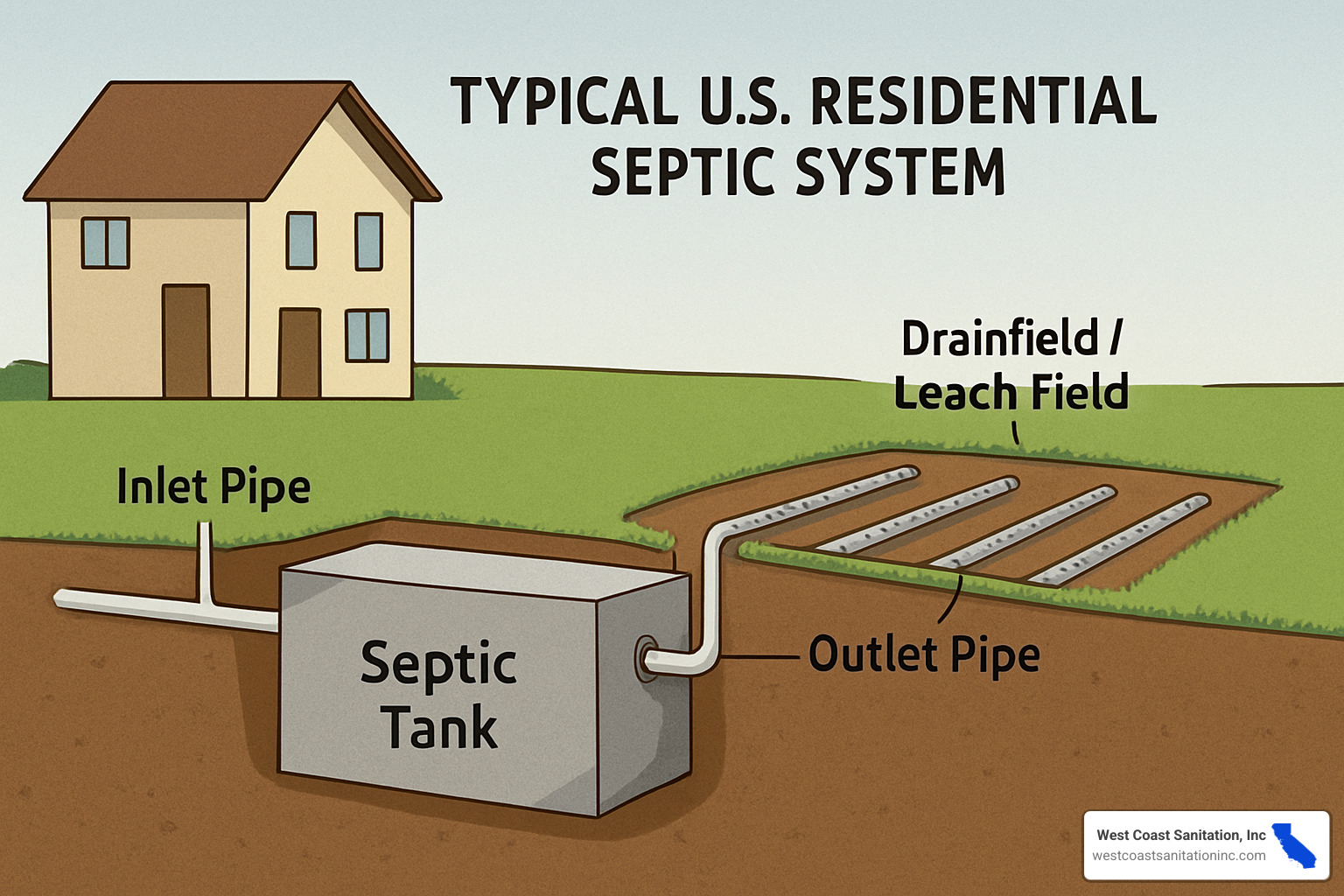
The Septic System Lifecycle
When you wash dishes, do laundry, or flush the toilet, all that water flows into your septic tank. Inside, nature gets to work as the contents separate into three distinct layers:
The scum layer floats at the top, containing oils, fats, and lighter materials. In the middle sits the effluent layer – relatively clear water. At the bottom, you’ll find the sludge layer where heavier solids settle.
Here’s where the real heroes come in – billions of beneficial bacteria! These microscopic workers tirelessly break down solid waste in your tank. Think of them as tiny decomposers, changing solids into liquid that can safely flow into your drain field.
This liquid then travels to your drain field (sometimes called a leach field), where soil acts as a natural filter. As the effluent percolates through the ground, harmful bacteria and nutrients are removed before the water rejoins our groundwater system. Pretty amazing, right?
The Chemical Sensitivity Issue
“I like to tell homeowners that a septic tank is like having millions of tiny workers breaking down waste in your backyard,” says our senior technician at West Coast Sanitation. “Pour harsh chemicals down the drain, and it’s like sending toxic gas into their workplace—they simply can’t do their job.”
This is exactly why your cleaner choices matter so much. Did you know just two gallons of chlorine bleach can wipe out beneficial bacteria in a 1,000-gallon septic tank? Without these hardworking microbes, your system quickly runs into trouble:
Your drains might back up, toilets won’t flush properly, and that soggy spot in the yard? That could be a failing drain field – one of the most expensive septic components to replace. Even worse, improperly treated wastewater might contaminate local groundwater.
According to scientific research on septic systems, a well-maintained system should serve you faithfully for 25-30 years or longer. But harsh chemicals can slash that lifespan dramatically. In our decades serving the Inland Empire, we’ve seen too many preventable failures caused by the wrong household cleaners.
Which Household Cleaners Are Septic Safe?
Now that you understand why choosing the right cleaners matters, let’s explore what makes a product “septic safe” and which ones you can confidently use throughout your home without worrying about damaging your system.
What Makes a Cleaner “Septic Safe”?
Think of septic-safe cleaners as gentle giants – they get the job done without harming those hardworking bacteria in your tank. The best septic-friendly products are biodegradable, breaking down naturally without leaving harmful residues behind. They’re non-toxic to the beneficial bacteria colony working hard in your tank, and they’re low in phosphates (excessive phosphates can cause algae growth that disrupts your system).
Look for cleaners that are water-based – when water is listed as the first ingredient, that’s a good sign there are fewer harsh chemicals present. And perhaps most importantly, avoid antibacterial products, which can’t distinguish between harmful bathroom germs and the beneficial bacteria your septic system depends on.
Which Household Cleaners Are Septic Safe? – Natural & DIY Solutions
Mother Nature provides some of the best septic-friendly cleaning options, and they’re probably already sitting in your pantry.
White vinegar is the Swiss Army knife of septic-safe cleaning. With just 5% acetic acid, it’s strong enough to kill many household germs but gentle enough for your septic bacteria. Pour a cup into your toilet bowl and let it sit for 30 minutes before scrubbing for a sparkling clean. Mix equal parts with water in a spray bottle for an effective surface disinfectant. One of our Riverside customers shared, “I’ve been using vinegar to clean my toilets for years. My septic system has never had issues, and my bathroom still smells fresh and clean.”
Baking soda works wonders as a gentle scouring powder and natural deodorizer. Sprinkle it on surfaces before scrubbing or down drains to neutralize odors. When you combine baking soda with vinegar (about ½ cup of each), you get a satisfying foaming action that helps clear minor clogs without harsh chemicals.
Lemon juice contains natural citric acid that cuts through grease in the kitchen and removes soap scum in the bathroom. It has mild bleaching properties that brighten surfaces without the harmful effects of chlorine bleach. Plus, it leaves behind a fresh, clean scent that everyone loves.
Borax, a natural mineral compound, makes an excellent cleaning ally when used in moderation. Add ½ cup to your laundry as a booster, mix with water to create a paste for tackling bathroom mold, or dilute it (½ cup with a gallon of water) for general disinfecting. Just remember that while borax is more septic-friendly than many alternatives, it should still be used thoughtfully.
Want to make your own all-purpose cleaner? Mix 1 cup white vinegar, 1 tablespoon baking soda, 10 drops of lemon essential oil (for fragrance), and 2 cups warm water in a spray bottle. This combination creates a powerful yet septic-safe solution for most household surfaces.
Which Household Cleaners Are Septic Safe? – Commercial Products & Labels
For those times when you prefer the convenience of store-bought products, here’s how to shop smart:
Check for specific labeling that indicates septic safety. Products marked “Septic Safe,” “Septic Friendly,” “Biodegradable,” or carrying the “EPA Safer Choice” certification are generally good options. These labels mean manufacturers have considered septic system compatibility in their formulations.
Water should be the first ingredient on the list (sometimes listed as “aqua”). This typically indicates a gentler formulation with fewer harsh chemicals that could disrupt your system’s bacterial balance.
Choose liquid over powder whenever possible. Liquid detergents dissolve more completely than powders, which often contain fillers that can build up in your system over time and potentially cause clogs.
Look for trusted third-party certifications from organizations like EcoCert, Green Seal, or the Environmental Working Group (EWG). These independent validations usually indicate products that have been vetted for environmental impact, including septic system compatibility.
As we explain in our guide on cleaning products and your septic tank, moderation is key. Even products labeled “green” or “natural” should be used thoughtfully. No cleaner is completely harmless if you’re pouring gallons down the drain every day.
At West Coast Sanitation, we’ve seen how making simple switches to septic-safe cleaners can add years to a system’s life. Your septic bacteria will thank you – and so will your wallet when you avoid those emergency service calls!
What to Avoid: Non-Septic-Safe Chemicals & Habits
Now that we’ve covered what’s safe, let’s talk about what to avoid. Some products and habits can wreak havoc on your septic system, turning a minor maintenance issue into a major headache.
Cleaning Products to Avoid
Your morning cleaning routine could be secretly damaging your septic system. Chlorine bleach in large quantities tops our list of concerns. While small amounts of diluted bleach (similar to what’s used in drinking water) won’t immediately harm your system, regular use or large quantities can be devastating. As we explain in our article on bleach and your septic system, just two gallons of chlorine bleach can kill the beneficial bacteria in a 1,000-gallon septic tank.
Chemical drain cleaners might be the worst offenders we see. Those products containing lye or sulfuric acid literally dissolve organic matter—including the beneficial bacteria your tank needs to function. They’re like sending a wrecking ball to do a plumber’s job.
“We once serviced a home in Temecula where the homeowner used chemical drain cleaners monthly,” our technician Mike shares. “Their septic system failed after just seven years—less than half its expected lifespan. The repair cost them over $15,000.”
Those antibacterial soaps and cleaners you’re using to keep your family healthy? They don’t stop killing bacteria once they go down the drain. Products with triclosan or other bacteria-killing compounds continue their germ warfare in your septic tank, where beneficial bacteria are essential.
Your laundry habits matter too. Powdered laundry detergents often contain fillers like clay that don’t dissolve completely. These particles can accumulate over time, creating a cement-like layer in your pipes. Liquid detergents are much gentler on your system.
Products containing phosphates encourage algae growth, which reduces oxygen levels needed by beneficial bacteria. And watch out for methylisothiazolinone – this common preservative in many cleaning products is toxic to aquatic life and septic bacteria.
Harmful Habits to Avoid
It’s not just what you clean with—it’s also what you put down your drains. According to our guide on things to avoid dumping into your system, certain habits can damage your septic system beyond repair.
Pouring grease or oil down drains is like inviting a clog to dinner. These liquids solidify as they cool, creating stubborn blockages that can back up your entire system. Instead, collect cooking oils in a container and dispose of them with your regular trash.
Despite what the package says, “flushable” wipes aren’t septic-friendly. These convenient cleaning cloths don’t break down like toilet paper, leading to clogs and backups. One of our customers learned this the hard way after a holiday gathering when their system backed up into their home—all because of wipes labeled “flushable.”
If you have a garbage disposal, use it sparingly. Excessive use adds solids to your tank faster than bacteria can digest them, leading to more frequent pumping needs and potential system overload.
Medications and household chemicals should never go down your drain. These substances can kill beneficial bacteria and potentially contaminate groundwater. Many communities offer safe disposal programs for these items.
Even your laundry schedule matters. Doing multiple loads back-to-back floods your system with too much water at once, potentially pushing solids into your drain field before they can settle properly. Space out your laundry throughout the week instead.
According to scientific research on harmful cleaners, consistent use of harsh chemicals can reduce the effectiveness of your septic system by up to 90%, significantly shortening its lifespan. That’s like taking a 30-year investment and turning it into a 3-year problem.
At West Coast Sanitation, we’ve seen too many preventable failures. The good news? Simple changes in your cleaning routine can add years to your septic system’s life—and thousands of dollars to your wallet.
Cleaning & Maintenance Best Practices (Plus FAQs)
Now that you know which cleaners are septic-safe and which to avoid, let’s talk about keeping your home clean while protecting your septic system. Trust me, finding this balance is easier than you might think!
Bathroom Cleaning
Your bathroom sends more water to your septic system than any other room in your house, making your cleaning choices here especially important.
For toilet cleaning, put those harsh bowl cleaners aside and accept the power of vinegar and baking soda. Pour a cup of vinegar into your toilet bowl before bed, and by morning, you’ll be amazed how easily stains scrub away. A good toilet brush and a little elbow grease will always outperform chemicals.
“I was skeptical about switching from my bleach cleaner,” shares Maria from Redlands, “but vinegar works just as well without that worry about damaging my septic system.”
When tackling shower and tub surfaces, a simple paste of baking soda works wonders on soap scum. For an extra cleaning boost, spray surfaces with vinegar solution after showering to prevent buildup in the first place. If you’re dealing with mold, reach for borax mixed with water instead of bleach-based products.
Kitchen Cleaning
Your kitchen habits matter tremendously for septic health. For sinks and counters, a simple vinegar and water spray works beautifully for daily cleaning. When you need to cut through grease, opt for a biodegradable liquid dish soap rather than harsh degreasers.
One important tip: always wipe cooking oils from pans before washing them. That small step prevents a surprising amount of grease from entering your system.
Drain maintenance is crucial in the kitchen. Use a drain strainer to catch food particles, and pour boiling water down drains weekly to help prevent grease buildup. When faced with a clog, resist the temptation to reach for chemical drain cleaners! Instead, use a mechanical snake – it’s more effective and won’t harm your system.
Laundry Practices
Your washing machine sends gallons of water into your septic system with every load. As we explain in our article on the effects of fabric softener on your septic system, what goes into that water makes a big difference.
Choose liquid detergents labeled “septic safe” or “biodegradable,” and always look for low-sudsing options. More suds don’t mean cleaner clothes – they just mean more chemicals heading into your tank! Space out your laundry loads throughout the week rather than doing everything on “laundry day.” Your system processes water best when it comes in steady, manageable amounts.
“Switching to high-efficiency washing machines was the best decision we made,” shares Tom from Temecula. “Not only did our water bill drop, but our septic system hasn’t needed emergency service since.”
Dish Cleaning
Whether washing by hand or using a dishwasher, your choices impact septic health. When handwashing dishes, use biodegradable dish soap and always scrape food into the trash first. Use just enough water to get the job done – your septic system will thank you.
For dishwashers, choose phosphate-free detergents in liquid or gel form rather than powders, which often contain fillers that can clog your system. Only run full loads to maximize water efficiency.
Flushable Products
Let’s be honest about “flushable” products – most aren’t truly septic-safe. As we discuss in our article on flushable wipes and septic systems, even products marketed as septic-friendly can cause serious problems.
The only things that should ever go down your toilet are human waste and toilet paper – period. Wet wipes, paper towels, feminine hygiene products, cotton balls, dental floss, and cat litter should all go in the trash, never the toilet.
Frequently Asked Questions
How often can I use bleach safely?
I hear this question almost daily from concerned homeowners. Small amounts of bleach won’t immediately destroy your septic system, but moderation is key.
“Think of bleach use in terms of dilution,” I often explain to customers. “A capful in a load of laundry gets diluted by many gallons of water, making it less harmful than pouring bleach directly down a drain.”
For safe bleach use, limit yourself to 1-2 loads of bleach-containing laundry per week, and never pour undiluted bleach down any drain. Allow at least 24 hours between any bleach-containing activities to give your beneficial bacteria time to recover. Better yet, consider oxygen-based bleach alternatives, which are much gentler on septic systems.
Do I need septic tank additives with these cleaners?
Many homeowners ask if they should use additives – products claiming to boost bacterial activity in their tank. The truth is, a properly maintained septic system typically doesn’t need them. Your waste naturally contains all the bacteria needed to break down solids.
However, if you’ve recently used antibacterial products or had your tank pumped, enzyme additives might help restore bacterial balance. But remember – they’re a supplement, not a solution. Focus on using septic-safe cleaners rather than relying on additives to fix problems. And nothing replaces regular pumping every 3-5 years, depending on your household size.
Can I pour vinegar down every drain?
Absolutely! Vinegar is one of the safest cleaners for septic systems. Regular use helps maintain proper pH levels in your tank, prevents mineral buildup in pipes, controls odors naturally, and breaks down soap scum before it reaches your tank.
Try pouring about 1/2 cup of vinegar down each drain weekly as part of your regular maintenance routine. For toilet bowls, you can safely use up to 1 cup.
“I’ve started pouring vinegar down all my drains once a week,” shares a happy homeowner in Corona. “Not only has it helped with odors, but my plumbing seems to be flowing better too.”
These simple changes in your cleaning routine can add years to your septic system’s life while keeping your home just as clean and fresh. And remember – whenever you have questions about your septic system, we at West Coast Sanitation are just a phone call away!
Call West Coast Sanitation Today!
Here in the Inland Empire, from sun-drenched Riverside to San Bernardino and throughout Los Angeles County, we at West Coast Sanitation have seen how proper care transforms septic system longevity. Our family-owned business takes pride in providing same-day service with cutting-edge equipment for all your septic needs.
Whether you’re wondering about a specific cleaner, need routine maintenance, or find yourself facing an unexpected backup, we’re just a phone call away. For more information about our septic installation and repair services, don’t hesitate to reach out.
By making informed choices about which household cleaners are septic safe, you’re not just protecting pipes and tanks—you’re investing in peace of mind. And really, isn’t that what home maintenance is all about? Caring for your space so it can take care of you for years to come.